Golden State Killer: How DNA Solved a 40-Year Mystery
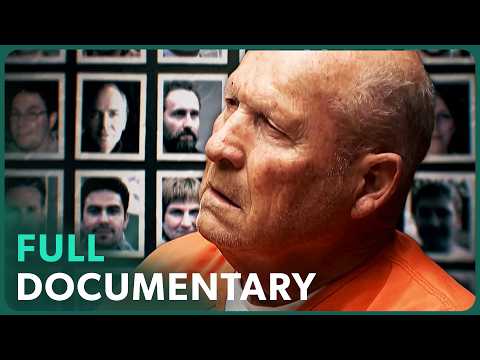 Watch on YouTube →
Overview
The investigation of Joseph James DeAngelo shows how Paul Holes and genealogist Barbara Rae-Venter used DNA from crime-scene evidence, consumer genealogy databases, and family-tree research to identify the Golden State Killer after decades without a suspect. The account also examines related tools—including CeCe Moore’s genetic genealogy and DNA-based facial prediction—and weighs their investigative value against risks involving wrongful identification, reproductive criminalization, privacy, and the future use of genetic data.
Key takeaways
- Paul Holes and Barbara Rae-Venter identified Joseph James DeAngelo by using crime-scene DNA to find distant relatives in a consumer genealogy database, then narrowing the family through records and investigation.
- CeCe Moore’s method turns partial DNA matches into investigative leads by building family trees from census, vital, newspaper, and social-media records; in April Tinsley’s case, police then confirmed the suspect with a direct DNA sample.
- DNA-based investigative leads do not establish guilt by themselves: the Karina Vetrano case shows why investigators must account for possible secondary DNA transfer, alternative leads, and potential bias.
- DNA phenotyping can predict aspects of appearance and approximate age from crime-scene DNA, but its results are probabilistic and can influence investigations even before a suspect is independently confirmed.
- Genetic data collected for one purpose can be repurposed: the transcript describes DNA searches in reproductive-loss investigations, facial identification from litter, and possible use of genetic information by insurers.
- The spread of consumer DNA databases and long-retained newborn samples increases the chance that relatives can be identified even if they never submitted their own DNA.
Chapters
0:00
Joseph James DeAngelo’s Arrest and the Promise of Genetic Genealogy
- On April 24, 2018, authorities arrested Joseph James DeAngelo in suburban Sacramento after linking him to the Golden State Killer crimes.
- The case involved 13 murders and dozens of rapes across California; investigators had failed to identify the perpetrator for decades.
- The arrest introduces genetic genealogy as a combination of DNA analysis, family-tree research, and large genetic databases—and raises questions about privacy.
4:00
The East Area Rapist’s Attacks and California’s Community Response
- The East Area Rapist attacked across Northern California from 1976 to 1979, entering homes at night and threatening victims with a gun or knife.
- He restrained men with shoelaces and used stacked dishes as an alarm, threatening to kill family members if they moved.
- Task forces, helicopter patrols, neighborhood watches, and a sharp increase in gun purchases failed to stop the attacks.
9:00
Paul Holes Uses Family DNA to Narrow the Golden State Killer Suspects
- After decades on the case, investigator Paul Holes partnered with genealogist Barbara Rae-Venter to search for relatives of the unknown offender.
- In March 2018, Holes sent crime-scene DNA to a consumer genealogy service, using a preserved semen sample after other evidence had been exhausted.
- Distant DNA matches gave investigators a starting point; roughly four months of family-tree research narrowed the list to Joseph DeAngelo.
15:00
CeCe Moore Turns Volunteer Genealogy into a Cold-Case Investigative Tool
- CeCe Moore developed genetic genealogy through years of volunteer work identifying biological relatives, including for adopted people.
- Her approach combines DNA matches with records such as censuses, birth and marriage documents, newspaper archives, and social media.
- Moore’s work helped establish a professional service for law enforcement and inspired investigators such as Holes to apply genealogy to violent crimes.
18:00
CeCe Moore’s Family-Tree Method Identifies April Tinsley’s Killer
- Moore examined DNA matches in the 1988 rape and murder of eight-year-old April Tinsley, whose body was found about 500 metres from home.
- She built extensive family trees and traced shared ancestors forward to identify a family with three sons; one had died before the crime.
- Police investigated the two remaining possibilities, identified John Miller, and confirmed the match with DNA collected from his discarded food and trash.
- Miller pleaded guilty; Moore said a database containing profiles from only about 1–3% of the population could help resolve many cold cases.
25:00
DNA Phenotyping Predicts Appearance from Crime-Scene Evidence
- A DNA-phenotyping company described producing investigative portraits for about $4,000 by analyzing genetic markers linked to visible traits.
- Eye colour can be estimated from specific genetic variants, while features such as chin shape require analysis of hundreds or thousands of markers.
- The system also estimates age from DNA-related changes, with reported accuracy of roughly three to four years.
- In a Texas murder investigation, predictions of fair skin, likely blue eyes, and other features were publicized; the suspect later confessed to his church congregation.
31:00
The Karina Vetrano Case Raises Questions About DNA Evidence and Bias
- Chanel Lewis was convicted in the 2016 killing of Karina Vetrano after investigators focused on a DNA profile identified as male donor one.
- The defense argued that DNA transfer could occur without a violent encounter and that the presence of DNA alone does not establish when or how it was deposited.
- Investigators collected samples from 500 Black men in the neighborhood, while critics questioned the investigation’s focus and the treatment of other reported leads.
- The case illustrates how DNA evidence can be powerful yet still depend on interpretation, investigative choices, and the broader evidentiary record.
37:00
DNA Identification Extends from Criminal Cases to Reproductive Surveillance
- Rights advocates warn that DNA-based investigations could be used to prosecute pregnancy loss in states with abortion restrictions.
- In an Augusta, Georgia, case, police used fetal DNA to identify and question a woman; prosecutors later withdrew the charges.
- Advocates cite the risk that miscarriages or stillbirths could be treated as suspected crimes, discouraging people from seeking medical care.
- A Hong Kong anti-litter campaign used DNA from discarded cigarette butts, cans, and masks to generate facial images, raising concerns about public shaming and anonymity.
43:00
Genetic Databases Expose Sensitive Health and Personal Information
- The account estimates that nearly 40 million DNA profiles are stored in Europe across police, hospital, and consumer-testing databases.
- Security researcher Renaud Lifchitz demonstrates how genetic files can expose sensitive information through searchable genetic markers, or SNPs.
- Commercial services may present predictions about traits such as addiction risk, aggression, or burnout, although genes do not determine a person’s future.
- A health-insurance consultant describes insurers’ interest in genetic data, while the segment notes that legal protections differ between countries.
51:00
Newborn Screening Creates Long-Lived Genetic Records
- U.S. newborn screening collects blood through a heel prick to test for dozens of conditions; the procedure is presented to parents as a public-health measure.
- Some populous states, including California and Texas, retain newborn blood-spot samples for extended periods, reportedly for medical research.
- The segment questions how stored samples and genetic records might be used in the future beyond their original health purpose.
- Police files, genealogy records, consumer databases, and newborn samples together raise the central question of whether broader genetic identification makes society safer at the cost of privacy.
Summary, takeaways, and chapters were generated by AI from the video's transcript and may contain errors. The video belongs to its creator, Real Stories.