Where Pepper & Cinnamon Came From | The Spice Trail | Absolute History
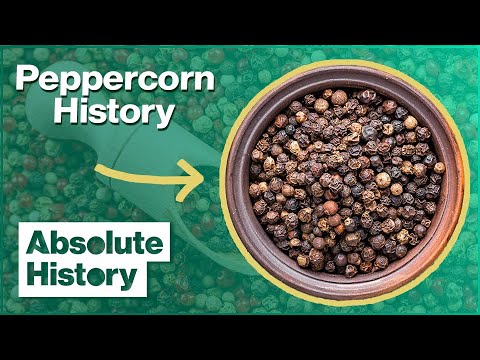 Watch on YouTube →
Overview
Pepper from Kerala and cinnamon from Sri Lanka were once rare, lucrative commodities whose pursuit drew Portuguese explorers into the Indian Ocean and reshaped trade and colonial power. Their histories also reveal how much production depends on local knowledge—from Mannan pepper growers to Salagama cinnamon peelers—while crop disease, unequal prices, and natural disasters continue to affect farming communities.
Key takeaways
- Black, white, and green pepper are not separate spices from different plants: all come from the same pepper vine, with drying and soaking producing different forms.
- Kerala’s Wayanad pepper industry remains vulnerable to crop disease: one plantation’s production fell from 25 tonnes to just over one tonne after a fungal attack.
- Vasco da Gama’s 1498 arrival on the Malabar Coast gave Portugal a sea route to India’s established pepper markets, including the cosmopolitan trading hub of Cochin.
- Sri Lankan cinnamon is made from the inner bark of branches, shaped by skilled peelers into quills that are dried and rolled over roughly two weeks.
- Cinnamon’s retail value can greatly exceed the farm-gate price: Primal’s target of about £4.80 per kilogram contrasted with £1.47 for 13 grams of supermarket cinnamon.
- Pepper and cinnamon shaped local cultures as well as global commerce, appearing in Kerala’s Ayurvedic practice and Onam boat races and in Sri Lankan Buddhist offerings and festivals.
Chapters
0:00
Pepper and Cinnamon: Everyday Spices That Redirected History
- The journey follows black pepper to Kerala in southern India and cinnamon to Sri Lanka.
- By the 15th century, European demand for these spices was driving exploration beyond familiar trade routes.
- The story connects spice cultivation and local traditions with the fortunes and losses generated by global trade.
1:39
How Mannan Growers Harvest and Process Kerala Pepper
- In Kerala’s Idukki hills, Mannan communities have cultivated pepper for centuries; former chef Karen Bakshi now works with tribal growers.
- Pepper is a climbing vine grown up support trees, and harvesters use bamboo poles to reach the berries.
- Black, white, and green pepper come from the same vine: drying produces black pepper, while soaking removes the outer skin for white pepper.
- Workers tread the harvested berries to separate them before sun-drying them for about three days.
8:43
Pepper Myths and the Arab Traders Who Guarded Its Source
- Limited European knowledge of pepper’s origins encouraged tales of venomous flying serpents guarding the pepper forests.
- One legend claimed that fires drove the snakes away and turned the berries black; such stories helped Arab traders protect their source.
- Pepper traveled through long chains of merchants, each adding a markup before it reached wealthy European consumers.
11:38
Vasco da Gama Reaches Kerala and Cochin’s Pepper Market
- On 8 July 1497, Portugal sent Vasco da Gama to find a sea route to the pepper trade; his fleet reached the Malabar Coast in May 1498.
- Cochin was already a wealthy trading hub, with Muslim, Jewish, Arab, and Chinese merchants active in the 15th century.
- Merchants negotiate through concealed hand signals beneath a cloth, a method that developed to bridge language barriers.
- Pepper once served as currency when coins were scarce, giving rise to the term “peppercorn rent”; it remains the only spice quoted on the stock market.
17:38
Wayanad’s Pepper Blight and the Farmers Fighting Back
- A fungal disease devastated pepper vines across Wayanad, Kerala, reducing one 400-acre plantation’s harvest from 25 tonnes to just over one tonne.
- Pepper-growing families faced severe financial distress; farmer Janesh Joseph described how his father died by suicide after the crop failed.
- Janesh and his brother Suresh returned to the farm, using soil nutrients and a new plant strain to bring pepper production back.
- Their family meal shows pepper’s everyday importance, including pepper pickle, peppered beef, beetroot, and soup.
24:22
Ayurvedic Pepper Remedies and Kerala’s Onam Snake Boat Race
- Kerala’s Ayurvedic practitioner Dr. Mary Smitter describes pepper as a traditional decongestant and discusses its use for respiratory ailments.
- Long pepper, once popular in medieval Europe, is used in Ayurveda; a preparation of six grams of its powder in milk is described as a stimulating remedy.
- During the 10-day Onam harvest festival, teams race 2,000-year-old snake boats with about 100 rowers apiece.
- Pepper-growing villages take part in the event, linking the spice to both local livelihood and religious celebration.
34:03
Portuguese Traders Follow Cinnamon from Kerala to Sri Lanka
- After establishing a foothold on India’s spice coast, the Portuguese pursued cinnamon, an even rarer and more expensive spice in 16th-century Europe.
- In 1506, Portuguese sailors pursuing an Arab merchant ship were driven by rough seas to Sri Lanka, then known as Ceylon.
- The island’s competing kingdoms gave the Portuguese opportunities to exploit political divisions as they sought control of cinnamon trade.
- The local expression “taking the Portuguese to Kotte” recalls how visitors were led on a three-day circuitous route instead of a direct journey of a few hours.
37:23
How Sri Lankan Farmers Turn Cinnamon Bark into Quills
- At an organic cinnamon farm near Hikkaduwa, grower Primal Wickramasinghe demonstrates that the spice comes from the inner bark of cinnamon branches.
- Harvesters cut the branches, strip away the outer bark, rub the surface, and make precise incisions to separate the usable inner layer.
- Cinnamon workers are paid by the amount they cut, rewarding speed and skill; experienced peeler Baby Nona demonstrates the specialized technique.
- The process is labor-intensive and depends on skills passed down across generations.
44:03
Salagama Cinnamon Peelers and the Craft of Building Quills
- Baby Nona belongs to the Salagama community, whose cinnamon-peeling skills were central to successive colonial powers’ efforts to control the trade.
- Workers layer peeled cinnamon bark to form quills, then dry and roll them nightly for about two weeks.
- The craft’s detailed manual work contrasts with pepper processing and faces the risk of disappearing as younger people leave the industry.
- The account describes Salagama expertise as both highly valued and historically exploited under colonial rule.
48:13
Kandy’s Resistance to Portuguese Rule and the Esala Perahera
- The Portuguese tried to conquer Kandy and convert its people, but local resistance disrupted their efforts to establish cinnamon plantations.
- The Esala Perahera celebrates Buddhist faith and Kandy’s defiance; its procession centers on a casket believed to carry the Buddha’s tooth relic.
- A Portuguese attempt to steal the relic failed when the tooth they took was a fake, and Kandy was never subdued by them.
- The Dutch followed the Portuguese, and Britain took control in 1796, but Sri Lankan communities continued to resist foreign rule.
52:20
Cinnamon’s Unequal Prices, the 2004 Tsunami, and Farmers’ Offerings
- Primal’s four bundles of organic cinnamon went unsold when a local dealer would not meet his desired price of roughly £4.80 per kilogram.
- A lower-grade, non-organic supermarket product cost £1.47 for 13 grams, illustrating a large gap between retail prices and the amount reaching growers.
- The 2004 tsunami killed 4,200 people and destroyed 300 cinnamon farms in the area, adding disaster to farmers’ economic risks.
- Primal and local growers offer cinnamon at a Buddhist ceremony, asking the deity Deval for a successful harvest and sharing a sample with poor residents.
56:23
How Spice Exploration Enriched Empires but Not Growers
- Pepper and cinnamon helped European explorers reach the ends of the earth and opened new trade routes.
- The profits of the spice trade were unevenly shared: growers in Kerala and Sri Lanka often received little of the value created downstream.
- In both regions, spices remain part of daily food, local economies, medicine, and religious practice.
Summary, takeaways, and chapters were generated by AI from the video's transcript and may contain errors. The video belongs to its creator, Absolute History.