The Legend: Paul Morphy - GM Ben Finegold - 2014.12.18
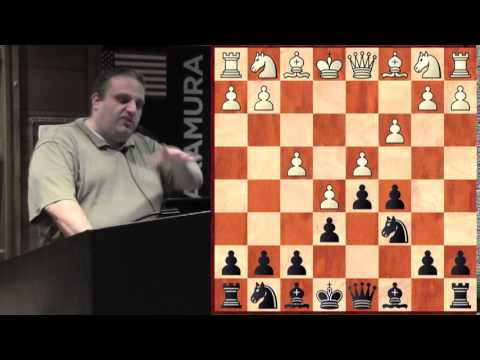 Watch on YouTube →
Overview
Ben Finegold presents Paul Morphy as a historically dominant attacker whose rapid development, pressure on the enemy king, and willingness to sacrifice material overwhelmed opponents, including in casual games and odds exhibitions. Through examples featuring the Scotch Game, French Defense, Fried Liver Attack, and King's Gambit, Finegold also acknowledges that Morphy's rivals were weaker by modern standards while showing why Morphy's tactical play remains instructive.
Key takeaways
- Morphy's attacks depended on development: in the rook-odds Scotch example, he mobilizes his pieces and targets the king before Black can make the extra rook useful.
- When ahead in material, king safety matters more than grabbing another pawn; Morphy's opponents repeatedly opened lines or moved the king into danger while trying to preserve their advantage.
- Morphy created tactical chances by combining threats: the Fried Liver example uses a fork and a pin, while later attacks exploit pinned defenders and exposed kings.
- A sacrifice is most effective when it opens lines or brings more attackers into play; Morphy's pawn advances in the simultaneous game added attacking force even after he had given up several pieces.
- Finegold distinguishes Morphy's historical dominance from modern playing strength: Morphy's opponents were comparatively weak, but his ability to punish their errors was exceptional.
- Morphy's games offer practical attacking lessons, but odds games and nineteenth-century opposition should not be treated as direct evidence of how he would perform against modern grandmasters.
Chapters
0:00
Paul Morphy's Career, Reputation, and Chess Odds
- Finegold calls Morphy his favorite player and argues that Morphy dominated the strongest players of his era.
- Morphy was born in 1837, earned a law degree, toured Europe, and disliked being identified primarily as a chess player.
- Finegold notes the historical caveat: Morphy's opponents were not as strong as modern elite players, but Morphy played much better than they did.
- Morphy's exhibitions included blindfold simultaneous play and games in which he gave opponents material odds.
5:50
Match Scores and Morphy's Relentless Casual-Game Record
- Finegold reviews match results that include scores such as 45 wins in 50 games, illustrating Morphy's extraordinary margins over contemporaries.
- He observes that Morphy's surviving record includes many casual games and that he struggled to find losses while preparing examples.
- The lecture contrasts Morphy's competitive seriousness with the modern idea that casual games are less consequential.
- Finegold introduces games selected to showcase Morphy's attacking style rather than repeat only his best-known wins.
9:38
Rook-Odds Games: Development Beats Material and Queen Chases
- In a Scotch Game, Morphy plays while giving up a rook and prioritizes rapid development and an attack on the exposed king.
- After Black tries to trade queens while ahead in material, Morphy's checks and a tactical sequence lead to mate in roughly a dozen moves.
- A second example shows Black repeatedly moving the queen while Morphy develops with tempo and builds a decisive attack.
- Finegold emphasizes that a material advantage does not compensate for undeveloped pieces and a king trapped in the center.
18:40
Morphy's French Defense Attack Exploits Weak Squares
- Playing Black in a French Defense, Morphy targets weaknesses created when White advances the f-pawn with f4.
- The f-pawn move reduces control of e3, while Morphy's queen and pieces increase pressure on d4.
- Morphy's coordination turns a piece sacrifice into a powerful attack; White's pieces become pinned or poorly placed.
- Finegold uses the game to show how threats against one weakness can divert defenders from another.
22:30
Fried Liver Attack: Forks, Pins, and a King Exposed on e6
- Morphy plays an odds game against the Fried Liver Attack, beginning without a rook and allowing the game to become tactically sharp.
- White's knight fork threatens the king and another piece, while a pin prevents Black from simply capturing the attacker.
- Black's king ventures to e6, and Morphy opens the center with d4 before coordinating his rooks and queen.
- A pinned bishop and exposed king allow Morphy to finish with a mating attack despite the material odds.
27:05
King's Gambit with Knight Odds: Sacrifices Against the Exposed King
- Morphy gives a knight and accepts a King's Gambit, while his opponent responds with further material grabs instead of securing the king.
- Morphy sacrifices additional pieces to open lines, illustrating Finegold's point that attack and king safety can outweigh a large material lead.
- The game features a forcing sequence of checks, a rook sacrifice, and a mating threat that requires precise defense.
- Finegold stresses the practical lesson: when ahead in material, avoid opening lines toward your own king and prioritize stopping mate.
33:20
A Simultaneous King's Gambit Game Ends in an Epaulette Mate
- In a simultaneous exhibition, Morphy again plays with a knight missing from b1 and faces a King's Gambit.
- His opponent gains material but leaves the king vulnerable; Morphy uses queen and rook threats to keep the attack alive.
- Morphy's h-pawn advance brings another attacker into the game, supporting threats against the g7 square.
- The finish features a rook check and an epaulette-style mating pattern, underscoring how Morphy converted sacrifices into direct attacks.
40:08
Why Morphy's Attacking Games Remain Memorable
- Finegold summarizes Morphy's recurring approach: develop quickly, attack the king, and sacrifice material when it opens decisive lines.
- He contrasts Morphy's spectacular mates with quieter modern wins based on small positional advantages.
- Finegold recommends books and online material for further study of Morphy's life and games.
- The lecture closes by imagining a future matchup between Morphy and a modern champion, while acknowledging the impossibility of comparing eras directly.
Summary, takeaways, and chapters were generated by AI from the video's transcript and may contain errors. The video belongs to its creator, Saint Louis Chess Club.