The Greatest Films You Don't Know
 Watch on YouTube →
Overview
The essay argues that cinema’s canon loses masterpieces through neglect, censorship, changing tastes, and limited distribution, and that audiences have a responsibility to keep those works in circulation. It makes the case through films including Zoltán Fábri’s The Fifth Seal, Forugh Farrokhzad’s The House Is Black, Wang Bing’s West of the Tracks, Jonas Mekas’s As I Was Moving Ahead Occasionally I Saw Brief Glimpses of Beauty, Peter Watkins’s Punishment Park, and Juraj Herz’s The Cremator.
Key takeaways
- The Fifth Seal uses a tyrant-versus-slave thought experiment and a three-act progression from a Hungarian inn to a Nazi-allied political headquarters to test moral responsibility under coercion.
- The House Is Black combines documentary realism with poetic form to portray an Iranian leper colony without reducing its residents to their suffering.
- Wang Bing’s West of the Tracks uses a nine-hour observational structure to connect China’s economic transition to the daily lives of workers and families.
- As I Was Moving Ahead Occasionally I Saw Brief Glimpses of Beauty transforms decades of home movies into a meditation on friendship, family, and the meaning of ordinary memories.
- Punishment Park’s fictional documentary format depicts a state system in which rules are rigged against accused dissidents, making its critique of institutional power feel disturbingly plausible.
- A film’s place in the canon can be lost even after major recognition: O Pagador de Promessas won the 1962 Palme d’Or, while The Burmese Harp received broader recognition after its later color remake.
Chapters
0:00
Why Cinema’s Canon Must Be Recovered and Maintained
- The argument distinguishes genuinely overlooked masterpieces from obscure films promoted merely for obscurity’s sake.
- Films can disappear from cultural memory even when they belong among cinema’s greatest achievements.
- The opening frames preservation and rediscovery as shared responsibilities for future audiences.
1:51
Zoltán Fábri’s The Fifth Seal Turns Philosophy into Moral Pressure
- The Fifth Seal centers on men gathered in a World War II-era Hungarian inn and a thought experiment about choosing to be a tyrant or a subjugated slave.
- Its three-part structure moves from the inn to the characters’ homes and then to the headquarters of Hungary’s Nazi-allied Arrow Cross Party.
- Enclosed settings and play-like staging keep attention on the question of moral responsibility under extreme circumstances.
- The film moves from abstract debate to lived experience, showing how people’s conduct changes when their choices carry real consequences.
7:30
Farrokhzad and Wang Bing Make Documentary Witness an Act of Memory
- Forugh Farrokhzad’s short documentary The House Is Black depicts life in an Iranian leper colony with poetic imagery that confronts suffering while treating its subjects with dignity.
- The film makes the viewer consider whether society will seek justice for people it marginalizes or allow their exclusion to continue.
- Wang Bing’s nine-hour Tie Xi Qu: West of the Tracks observes workers and families through China’s shift from state-controlled industry toward a market economy.
- In Fengming: A Chinese Memoir, Wang records a woman’s three-hour account of labor camps, connecting China’s political history to one person’s life.
14:12
Mekas, Rousseau, and Terayama Turn Personal Memory into Cinema
- Jonas Mekas assembled decades of home movies in As I Was Moving Ahead Occasionally I Saw Brief Glimpses of Beauty, revisiting family life and everyday moments through late-life reflection.
- Mekas’s Walden and Reminiscences of a Journey to Lithuania likewise explore memory, biography, and the beauty found in ordinary experience.
- Jean-Claude Rousseau’s La Vallée close uses Super 8 images and associative editing, letting relationships between shots create meaning without dialogue.
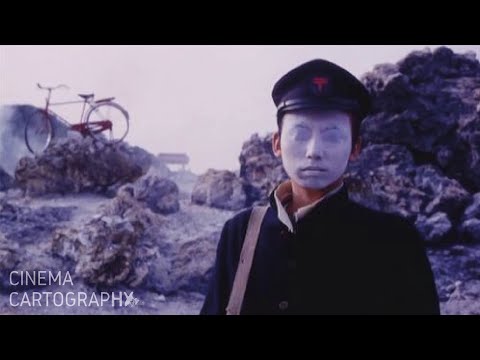
- Shuji Terayama’s Pastoral: To Die in the Country blends surreal sets, costumes, and shifting realities to express personal memories that resist conventional realism.
23:45
Punishment Park and The Cremator Expose Systems of Control
- Peter Watkins’s Punishment Park uses a fake-documentary style to imagine accused dissidents forced to evade law enforcement in a rigged alternative to prison.
- The film’s plain, observational presentation intensifies its critique of state power; major studios denied it distribution, and it later reads as a precursor to found-footage cinema.
- Juraj Herz’s Czech New Wave film The Cremator follows Karel Kopfrkingl, a crematorium worker who becomes complicit in mass murder amid the radicalization of World War II Europe.
- Stanislav Milota’s wide-lens black-and-white cinematography and unsettling camera movement make Kopfrkingl’s descent feel both intimate and grotesque.
30:28
Rediscovering O Pagador de Promessas and Other Overlooked Landmarks
- Anselmo Duarte’s O Pagador de Promessas won the 1962 Palme d’Or, but its reputation faded despite its poetic treatment of faith, sacrifice, and a landowner’s promise to carry a cross.
- Its magical-realist approach is compared with Robert Bresson’s Au hasard Balthazar, while its mix of realism and allegory helped make it a landmark of Brazilian cinema.
- The closing examples include Antoine d’Agata’s White Noise, Jia Zhangke’s Platform, and Kon Ichikawa’s The Burmese Harp, whose story gained wider recognition after a color remake roughly 30 years later.
- The closing appeal is to keep rediscovering films affected by censorship, belated recognition, or neglect; a MUBI sponsorship follows the conclusion.
Summary, takeaways, and chapters were generated by AI from the video's transcript and may contain errors. The video belongs to its creator, The House of Tabula.