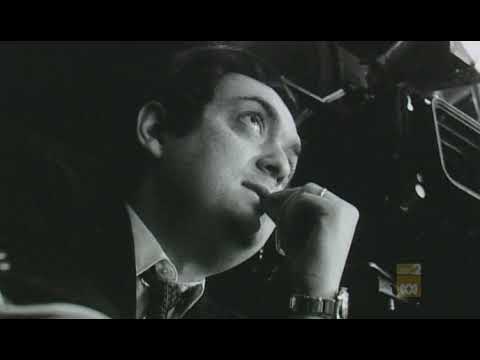
Stanley Kubrick's Boxes - Documentary on the filmmaker's brilliant and obsessive nature (2008)
 Watch on YouTube →
Overview
Jon Ronson explores Stanley Kubrick’s archive of more than a thousand boxes to show how painstaking research, exacting control, and relentless curiosity shaped his films—and contributed to the long gaps between them. Photographic surveys for Eyes Wide Shut, extensive searches for stories, abandoned work on Wartime Lies, and precise instructions about everything from advertising to box lids reveal Kubrick as private rather than simply reclusive, with a working method rooted in detail.
Key takeaways
- Kubrick’s Eyes Wide Shut location research included an estimated 30,000 photographs taken across London over about a year, from doorways and cafes to shops and apartment interiors.
- The archive’s more than a thousand boxes show that Kubrick’s long gaps between releases often included extensive story searches and pre-production, not simply inactivity.
- Kubrick’s precision extended to measurable production details: he investigated a German newspaper ad that was several millimeters undersized and specified exact dimensions and card thickness for archive boxes.
- Kubrick abandoned Wartime Lies after approximately two years of Holocaust-related research; during the same period, Steven Spielberg completed and released Schindler’s List, which Kubrick saw as difficult to follow.
- Kubrick’s apparent reclusiveness was partly a preference for privacy: he could access the people, research, and creative work he needed from his home and estate.
- The family donated Kubrick’s archive to University of the Arts London so students could study the research and production materials that underpinned his filmmaking.
Chapters
0:00
Jon Ronson Gets Access to Kubrick’s Thousand-Box Archive
- In 1996, Stanley Kubrick’s assistant Tony Frewin contacted Jon Ronson to request a copy of Ronson’s Holocaust documentary.
- Kubrick died shortly after completing Eyes Wide Shut, but years later Frewin invited Ronson to the Kubrick home near St Albans.
- The house and outbuildings held more than a thousand boxes, many unopened for decades, preserving the work behind Kubrick’s films.
4:30
Eyes Wide Shut: A Year Photographing London for Kubrick
- Photographer Manuel Harlan spent about a year documenting London locations for Eyes Wide Shut, including cafes, apartment interiors, shops, and doorways.
- Harlan estimated he took roughly 30,000 photographs; one box alone documented gates for a single scene.
- Kubrick requested a continuous, level panorama of Commercial Road, which Harlan assembled from photographs taken from a 12-foot ladder.
- Research photographs of the doorway where Tom meets a prostitute informed a scene ultimately filmed on a Pinewood set.
10:20
Post-2001 Work: Memos, Fan Letters, and the Crank Files
- The archive is weighted toward the years after 2001: A Space Odyssey, when Kubrick became involved in more details of production and the intervals between films grew.
- A 1968 memo ordered that the household never have fewer than three melons; another requested London barometric readings for a specific night.
- Kubrick filed fan letters by location and labeled them positive, negative, or “crank,” partly to keep records of people who might pose a risk.
- One crank letter came from television writer Vincent, whose six-hour Adolf Hitler drama had been cut to a 110-minute broadcast and whose ambitions had been badly shaken.
18:45
Kubrick’s Precision in Advertising, Daily Life, and Family Matters
- Kubrick noticed that a German newspaper advertisement was several millimeters smaller than ordered; checking the printing plate confirmed shrinkage.
- His exacting habits extended beyond filmmaking: he disliked holidays, and staff designed breakaway cat collars to reduce the risk of cats harming birds or getting caught.
- Kubrick’s daughter described a different side of him at home, saying she did not experience him simply as the intimidating perfectionist colleagues might have encountered.
- The meticulous attention behind everyday memos was also part of the method that produced the precision of his films.
24:45
Searching for Stories—and Abandoning Wartime Lies
- After Barry Lyndon, Kubrick’s team spent years searching for the next film, using readers in America to review thousands of novels through the discreet company Imperion Films.
- Tony Frewin discovered that one reader had rejected the screenplay for The Killing Fields, later a major film, as boring and overwritten.
- Kubrick’s extensive research for Wartime Lies, an adaptation concerning the Holocaust, filled boxes with material on Poland and concentration camps.
- After roughly two years of preparation, Kubrick abandoned the project; Schindler’s List had been researched, shot, edited, and released during that period, and Kubrick considered it a difficult film to follow.
30:10
Perfect-Fit Archive Boxes and Kubrick’s Stationery Habit
- Kubrick specified the dimensions and card thickness for custom archive boxes, insisting that each lid be “not too tight, not too loose”—just perfect.
- A supplier’s memo described Kubrick as a “fussy customer,” a characterization he found amusing.
- Kubrick collected notebooks, folders, pads, and hundreds of ink bottles from Ryman’s stationery shop, joking about opening a stationery nostalgia museum.
- He paid cash and avoided credit cards to reduce unwanted recognition and questions about his films.
34:00
Full Metal Jacket Footage and the Press’s “Eccentric” Kubrick
- Boxes contained notebooks with stray comic notes and 18 hours of Full Metal Jacket set footage filmed by Kubrick’s daughter Vivien.
- The footage captures Kubrick directing crowd placement and coaching the timing and gestures of the “This is my rifle” sequence.
- Press stories around Full Metal Jacket portrayed Kubrick as irrational, citing rumors about his meals, driving speed, and refusal to fly.
- People close to Kubrick distinguished privacy from secrecy: he stayed home because the work and the world he needed were already available to him.
41:22
The Archive Leaves Home for University of the Arts London
- After nine years of quiet at the estate, archivist Bernd Eichhorn and Ronson watched the boxes depart in 2007.
- Christiane Kubrick described sorting the archive as melancholy: old, yellowing notebooks made the loss of their author feel newly immediate.
- The family donated the collection to University of the Arts London rather than discard it, ensuring students could study Kubrick’s production research.
- The archive was intended for a climate-controlled facility in Elephant and Castle, where film students could examine the materials.
44:47
Kubrick’s Final Message: Precision as the Method of Genius
- One of Ronson’s last discoveries was a tape of Kubrick’s acceptance speech for the Directors Guild of America’s D. W. Griffith Award, recorded shortly before his death.
- Kubrick compared directing a film to writing War and Peace in a bumper car, but said getting it right brought extraordinary joy.
- Ronson concludes that Kubrick’s precision and attention to detail were the method that enabled his filmmaking achievement.
- The boxes preserve the research, decisions, and working rhythms behind that method rather than a single object that fully explains Kubrick.
Summary, takeaways, and chapters were generated by AI from the video's transcript and may contain errors. The video belongs to its creator, Muonium.