Running to the Limits
 Watch on YouTube →
Overview
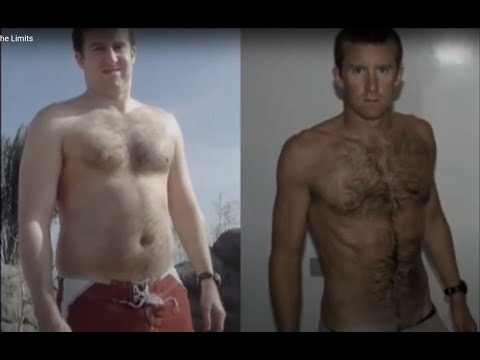
Filmmaker Alex Vero begins as a 16-stone asthmatic smoker who can run for only five minutes and spends two years testing whether disciplined training can make him an international marathon runner. His failed attempt to qualify for the 2008 London Marathon, alongside Ethiopian runners’ contrasting barriers and British runner Ben’s progress, explores how talent, training, motivation, injury, opportunity, and support shape distance-running success.
Key takeaways
- Vero’s progress from being unable to run five minutes to a 1:13 half marathon shows how sustained training and major weight loss can transform performance, but not guarantee an elite marathon result.
- A 2:45 marathon target proved too ambitious in extreme heat: Vero reached 24 miles on schedule, then took 28 minutes to cover the last 2.2 miles and lost the investment tied to meeting the time.
- An Achilles tear after 108 weeks of preparation prevented Vero from starting the London Marathon, illustrating how high training volume and small biomechanical changes can derail a long-term goal.
- The Ethiopian runner’s Bristol result reflected circumstances as well as ability: family hardship and extra 14-hour hotel shifts disrupted his training before his first major race abroad.
- Ron Hill’s account of seeing his 1961 marathon victory reported in the Guardian contrasts with later runners’ lack of recognition and points to public status as one factor in attracting athletes to the sport.
- Vero’s final comparison is that neither talent nor training works alone: Ben’s combination of both brought success, while motivation helped runners persist through physical and personal obstacles.
Chapters
0:00
Alex Vero Takes on Britain’s Declining Marathon Scene
- Vero starts at 16 stone, smoking, drinking heavily, and unable to run longer than five minutes.
- He sets a goal of running the 2008 London Marathon in under 2:20, a time that could put him in contention for Olympic qualification.
- The project investigates why British male marathon running has declined while East African athletes have come to dominate.
3:00
Training Begins: From Five Minutes of Running to a 400-Metre Session
- On New Year’s Day 2006, Vero begins changing his lifestyle and leaves drinking behind to train seriously.
- Coaches warn that elite-level progress would require around 20 hours of weekly training and that natural ability may limit his potential.
- Within six months, he loses more than two stone and completes repeated 400-metre efforts, including one in 72 seconds.
6:54
A 2:45 Marathon Target Ends in Heat Exhaustion
- Physiological testing suggests a likely marathon range of 2:30–2:45, with improvement expected to slow as performance rises.
- After raising £440,000 in investment, Vero must run under 2:45 at the Palmer Marathon to secure funding for full-time training.
- He reaches 24 miles ahead of schedule, but 30°C heat brings on heat illness; the final 2.2 miles take 28 minutes, missing the target and costing the investment.
10:30
Ron Hill on Marathon Running’s Lost Status in Britain
- Ron Hill, a 1960s Commonwealth Games marathon gold medalist, argues that runners receive little recognition when race results barely appear in newspapers.
- Hill recalls that seeing his name in the Guardian after winning in 1961 made the exhausting race feel worthwhile.
- Vero describes the sport’s demands as consuming his sleep, eating, and social life, while online criticism of the project becomes an unexpected motivation to continue.
13:45
Four Stone Lost, a 1:13 Half Marathon, and an Achilles Tear
- After a year of training, Vero has lost four stone and is running roughly 100 miles per week, despite spending two months recovering from a hip injury.
- He runs the Amsterdam Half Marathon in 1:13, prompting his coach to revise his projected marathon target from 2:40 to below 2:30.
- An MRI reveals a small tear in his Achilles tendon; a doctor advises that running a marathon six weeks later is unrealistic.
- The injury rules Vero out of the London Marathon after 108 weeks of preparation, although he says the experience has improved his life and respect for elite runners.
18:45
Ethiopia: A Visa Opens a Chance to Race in Britain
- Vero returns to Ethiopia with British runner Ben to experience the crowded training environment and pursue a UK visa for an Ethiopian training partner.
- The Ethiopian runners face sharply different circumstances from Vero: one works 14-hour hotel shifts, while another is described as sleeping on the streets.
- After six months of effort and letters of support from British MPs, the visa is approved, giving the runner a chance to compete in the UK.
- Vero visits the runner’s family in Gondar, where government development has displaced them from ancestral grazing land and left them struggling financially.
26:55
Bristol Half Marathon: Ben Beats His Ethiopian Training Partner
- The Ethiopian runner starts aggressively and briefly leads, hoping a strong result will raise his profile and help support his family.
- He drops back after the opening miles; Ben remains composed and wins, while the newcomer finishes second in his first major race abroad.
- The runner later explains that extra hotel shifts and family financial pressures disrupted his training, helping explain the gap between his ability and race performance.
- Despite that setback, he runs a minute faster than Vero’s Amsterdam Half Marathon time.
31:35
Talent, Training, and the Future of British Distance Running
- Vero concludes that training cannot replace talent, just as talent cannot replace consistent training.
- Ben combines both and is presented as a British prospect for the 2012 Olympics, while the documentary calls for greater public and governing-body support.
- Vero identifies motivation—not nationality, race, or wealth—as the shared force that keeps successful runners training through pain and setbacks.
33:15
Closing Music and End Credits
- The spoken conclusion ends at about 33:08; the remaining runtime is an extended music-and-credits sequence.
- No additional training results or narrative developments are audible in the transcript after the conclusion.
Summary, takeaways, and chapters were generated by AI from the video's transcript and may contain errors. The video belongs to its creator, Ehe Life-Cycle.