Racing with Giants: Porsche at Le Mans - narrated by Patrick Dempsey
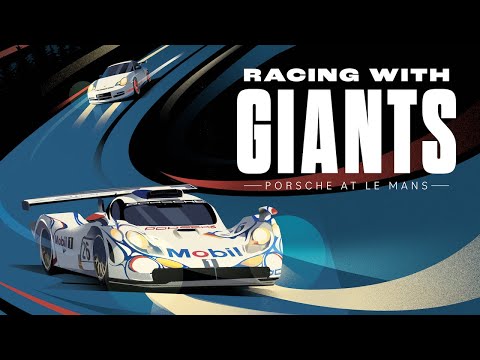 Watch on YouTube →
Overview
Le Mans demands speed, reliability, and resilience, and Porsche’s history at the race shows how competition shaped both motorsport and road cars. From the 356 SL’s 1951 class win to the 917, 956, GT1, and hybrid 919, Porsche built a record 19 overall victories by 2017 while advancing technologies and producing icons such as the 930 Turbo, 959, and GT3.
Key takeaways
- Porsche’s Le Mans story began with a 1951 356 SL class win; that small, 45-horsepower car established the company’s reputation for endurance and reliability.
- The 1970 917K delivered Porsche’s first overall victory, and Porsche turned racing lessons into road-car identity through models such as the 930 Turbo and 959.
- Porsche’s seven consecutive overall wins from 1981 to 1987 showcased the 956 and 962, while the 959 translated advanced racing-era engineering into a road-going supercar.
- The 1998 GT1 paired a carbon-fiber monocoque and sequential gearbox with Porsche’s 16th overall win, and its Mezger engine heritage later appeared in the road-going 1999 GT3.
- The 919 Hybrid won Le Mans in 2015, 2016, and 2017, ending a 17-year Porsche drought and raising the manufacturer’s overall victory record to 19.
- Le Mans rewards teams that combine pace with mechanical problem-solving: Porsche’s 1977 936 won despite running on five cylinders, and Derek Bell’s 1983 effort overcame brake problems to finish just 26 seconds short.
Chapters
0:00
Le Mans: A Century of Endurance, Risk, and Rivalry
- The 24 Hours of Le Mans began in 1923 and tests drivers and machinery through darkness, heat, storms, and mechanical failures.
- The race helped drive practical innovations including radial tires, headlights, and windshield wipers.
- Early eras belonged to the Bentley Boys, Alfa Romeo, Ferrari, and Jaguar before Porsche became the event’s most successful manufacturer.
4:19
Porsche’s 1951 Debut: The 356 SL Wins Its Class
- Three-year-old Porsche entered two cars in 1951; after one crashed in night practice, the surviving 356 SL finished first in class and 20th overall.
- The 356 SL used an 1,100 cc engine producing 45 horsepower and reached about 101 mph.
- Its result established Porsche’s racing credibility and helped make the 356 a performance car buyers recognized.
9:04
The 917 Breakthrough: Porsche’s First Overall Win in 1970
- Porsche’s 917K overcame Ferrari’s 512 and won the 1970 race in heavy rain, delivering Porsche its first overall Le Mans victory.
- The 917 combined a lightweight design with a large engine; Derek Bell recalled a calculated Mulsanne Straight speed of 246 mph.
- Jacky Ickx’s 1969 protest against the dangerous running start followed John Woolfe’s fatal 1969 crash in a Porsche 917.
12:35
The 936’s Comeback and the 935’s 1979 Overall Win
- In 1977, Jacky Ickx moved from a car that had lost its engine to the reserve 936 and drove from the back of the field.
- The winning 936 finished with only five of its six cylinders working, making the victory a defining example of Porsche’s persistence.
- Porsche’s racing program informed road cars such as the 930 Turbo; in 1979, a 935 K3 became the first 911-based car to win Le Mans overall.
18:08
956 and 962 Dominance, Plus the 959’s Technology Leap
- The 956 introduced an aluminum monocoque for Porsche’s Group C era and began a seven-year run of overall victories from 1981 through 1987.
- In 1983, Derek Bell and Jacky Ickx lost time to damage and brake problems, yet Bell broke the lap record twice late in the race; they finished 26 seconds behind.
- The 962 won in 1986 as Porsche took the top seven positions; the 959 also debuted that year, showcasing advanced aerodynamics, active suspension, and all-wheel-drive technology.
25:39
The 1998 GT1 Victory and Its Road-Car Legacy
- Porsche redesigned the GT1 for 1998 with a carbon-fiber monocoque, sequential gearbox, and improved aerodynamics to meet faster rivals.
- The GT1 won Porsche’s 16th overall victory amid competition from Toyota, Mercedes, and BMW, with rain strategy and a late Toyota tire failure shaping the finish.
- Porsche carried racing technology into road cars, including the 1999 GT3 with a Mezger engine; the 1998 911 C2S marked the end of the air-cooled 911 era.
35:39
The 919 Hybrid Ends Porsche’s 17-Year Wait
- Porsche returned to overall contention in 2015 with the technologically advanced 919 Hybrid, ending a 17-year gap since its previous overall win.
- An early safety-car interruption and technical setbacks put the team behind, but rivals’ failures and the 919’s pace helped it recover.
- The 2015 win began three consecutive victories and brought Porsche’s overall tally to 19 by 2017.
39:59
Porsche Penske’s 963 and the Next Le Mans Challenge
- Roger Penske returned to Le Mans with Porsche’s 963 hypercar, aiming to add the race to his team’s major endurance-racing achievements.
- Patrick Dempsey describes the 963 program as a high-stakes effort against manufacturers including Toyota, with the team focused on winning rather than merely competing.
- The race’s century-long purpose remains advancing automotive technology, linking the 963 to Porsche’s earlier 917, 956, 962, GT1, and 919.
44:50
Derek Bell’s Le Mans Legacy and the Race’s Lasting Pull
- Derek Bell recalls racing at Le Mans 25 times in 26 years and winning five times, while recognizing that many accomplished drivers never won.
- Bell reflects on the danger and pressure of endurance racing, and on how surviving and competing at Le Mans shaped his life.
- The closing exchange between Bell and Ickx recalls their friendship and shared racing history.
Summary, takeaways, and chapters were generated by AI from the video's transcript and may contain errors. The video belongs to its creator, Hagerty.