Morgan Housel - Behaviors that Influence our Money Decisions and Habits | Prof G Conversations
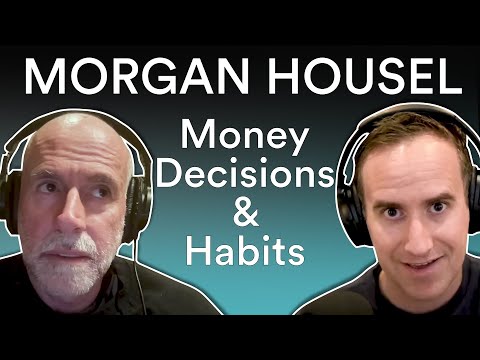 Watch on YouTube →
Overview
Morgan Housel argues that financial outcomes are shaped less by forecasting than by enduring human behaviors: greed, fear, status-seeking, and shifting expectations. Drawing on historical crises, dollar-cost averaging, housing decisions, and family life, he recommends preparing for uncertainty, defining the long-term bet behind an investment, and using money to build security and relationships rather than chase comparison or admiration.
Key takeaways
- Historical crises repeat familiar patterns of greed, fear, and uncertainty, so Housel favors preparing for market shocks over trying to predict their timing.
- Automatic, regular investing—such as putting a fixed amount into diversified investments each month—can prevent emotional reactions from driving market-timing decisions.
- Before investing, state the underlying bet clearly: Housel’s long-term index-fund strategy depends on productivity and problem-solving growing over decades.
- A home purchase should fit a household’s needs and budget; buying beyond one’s means to satisfy housing FOMO can harm the family it is meant to protect.
- Financial security can support family well-being, but Housel distinguishes that practical goal from accumulating wealth to win status or admiration.
- For children, Housel favors a reliable family backstop paired with expectations of independence, rather than either no support or unrestricted financial dependence.
Chapters
0:00
Recurring Financial Crises, Easy Money, and the Housing FOMO Trap
- Housel’s book Same as Ever focuses on collective behaviors that persist even as financial-crisis details and characters change.
- Benjamin Roth’s Great Depression diary describes patterns Housel sees recurring across 1932, 2008, and earlier crises: greed, fear, and uncertainty.
- After years of easy gains in crypto, technology stocks, venture capital, and private equity, investors often treat quickly earned money less carefully.
- With mortgage rates rising from roughly 3% to 8% and home prices holding up, Housel advises buying a home for family needs—not FOMO or the claim that renting is throwing money away.
7:15
Hidden Risk, Emotional Investing, and Dollar-Cost Averaging
- Carl Richards defines risk as what remains after you think you have considered everything; Housel cites 9/11, Lehman Brothers, and COVID-19 as shocks few anticipated.
- Scott Galloway recalls selling investments after Donald Trump’s election and during COVID-19, then missing subsequent market gains; Housel recommends mechanizing investment decisions.
- Nick Maggiulli’s book Just Keep Buying promotes investing a fixed amount regularly, such as $1,000 on the first of each month, rather than timing the market.
- Housel says regular investing can reduce the influence of fear and optimism, while acknowledging that sticking to the plan during real downturns is difficult.
12:11
Nassim Taleb’s Preparedness Principle and Naming Your Investment Bet
- Housel applies Nassim Nicholas Taleb’s advice to invest in preparedness rather than prediction: build finances that can withstand a recession whenever it arrives.
- He compares financial preparation to California earthquake readiness: earthquakes cannot be timed, but buildings and emergency crews can be made resilient.
- A forecast names a specific date for a bear market; an expectation recognizes that markets have historically fallen 20% about three times per decade.
- Housel describes his own long-term index-fund bet as confidence that productivity and problem-solving will grow over the next 50 years, benefiting shareholders.
16:00
Money as a Status Signal—and the Difference Between Security and Wealth
- Housel sees investing as a clear window into human behavior because financial stakes, emotions, and feedback are unusually immediate.
- People may pursue wealth for respect and admiration, but Housel argues that wisdom, humor, empathy, and attentive relationships are more enduring ways to earn them.
- Housel distinguishes financial security from being rich: he points to a friend earning about $50,000 who is a caring spouse and father as an example of meaningful success.
- He argues that high income does not guarantee happiness, especially when extreme work schedules undermine sleep, health, and family relationships.
24:57
Expectations, Social-Media Comparison, and Inflated Ideas of Wealth
- Housel explains that people judge wealth relative to neighbors and peers, not by an objective standard; the average American today has comforts unavailable to John D. Rockefeller.
- Social media shifts comparison from nearby households to curated celebrity and influencer lifestyles—“keeping up with the Kardashians” instead of the Joneses.
- Housel says his eight-year-old son’s reference point for wealth includes MrBeast, private islands, Gulfstream jets, and multiple Lamborghinis.
- Rising comparison standards can leave future adults dissatisfied even as their inflation-adjusted incomes and access to medical technology improve.
28:10
Family Background, Economic Mobility, and Raising Financially Resilient Kids
- Housel discusses economist Bhashkar Mazumder’s research on intergenerational income: brothers’ earnings are strongly correlated, and a person’s father’s income is a major predictor of their own.
- He notes that family resources can shape opportunity, including access to tutoring; one cited comparison finds children of billionaires more likely to score in the top 5% on the SAT.
- Housel invokes Warren Buffett’s principle of giving children enough money to do anything, but not so much that they can do nothing.
- His parenting goal is to offer a safety net rather than a hammock: provide education and backup support, but not automatic adult allowances.
- Housel credits his parents’ support during trouble—and requiring him to work for extras from age 16—with giving him the confidence to take career risks and become a writer.
Summary, takeaways, and chapters were generated by AI from the video's transcript and may contain errors. The video belongs to its creator, The Prof G Pod – Scott Galloway.