Lyme Disease: The Hidden Epidemic | SLICE SCIENCE | FULL DOC
 Watch on YouTube →
Overview
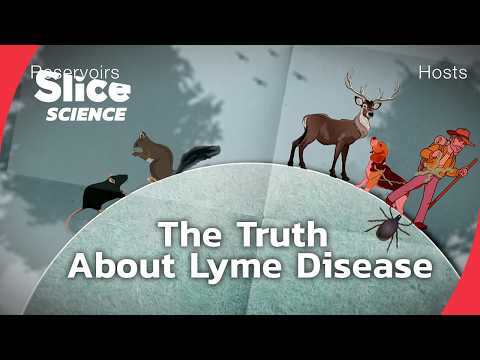
Lyme disease: The Hidden Epidemic follows tick ecology, patient stories, and research across the United States, Africa, and Europe, while highlighting how missed diagnoses and disputed testing and treatment guidance affect patients. Researchers such as Richard Ostfeld and Eva Sapi explain tick and rodent transmission and Borrelia biology, while Richard Horowitz and French patients describe approaches to persistent symptoms that conflict with official guidance on chronic Lyme disease.
Key takeaways
- Tick nymphs can be difficult to notice and are a major source of Lyme disease exposure; the documentary emphasizes that ticks occur near homes and roads as well as in forests.
- Richard Ostfeld connects forest fragmentation and reduced predator diversity with larger mouse populations and increased opportunities for infected ticks to encounter people.
- The documentary presents a sharp dispute over chronic Lyme disease: French official guidance limits antibiotic treatment, while Richard Horowitz advocates longer combined treatment for some persistent cases.
- Test accuracy and case counts are contested in the film; its cited claims about ELISA sensitivity and regional reporting should be understood as part of a broader disagreement, not settled consensus.
- Tick bites may transmit multiple pathogens, and clinicians interviewed in the documentary argue that co-infections could contribute to complex symptoms; the film also shows this explanation remains scientifically disputed.
- Simple precautions—covering skin, tucking trousers into socks, checking for ticks after outdoor activity, and removing attached ticks with a tool—can reduce exposure risk.
Chapters
0:00
How Tick Nymphs Spread Borrelia and Lyme Disease
- Richard Ostfeld collects ticks in New York, where nymphs near woods, roads, and homes cause many Lyme disease cases.
- Ticks attach with cutting mouthparts and a barbed feeding structure, and can feed for several days; only infected ticks transmit Borrelia.
- A circular rash may occur after infection, but the documentary says it is not always recognized; it describes early antibiotics as effective when given soon after a bite.
- Untreated infection can be followed by fatigue, pain, and other symptoms, which the documentary says may appear or persist over time.
6:20
Judith Albertat, Richard Horowitz, and the Diagnostic Maze
- Pilot Judith Albertat describes back and joint pain, vision and speech problems, and leaving her Air France job after her health declined.
- Albertat reports 37 medical visits in 10 months in 2008–2009 without a diagnosis, including being told to seek psychiatric care.
- Richard Horowitz describes using a 38-point symptom questionnaire to assess patterns including migrating pain, fatigue, sensory sensitivity, and memory problems.
- Patients Aliana and William recount severe fatigue and cognitive or muscle symptoms, with William saying it took 16 years to find a doctor who tested him for Lyme disease.
11:49
Lyme’s Discovery and Eva Sapi’s Research on Borrelia
- The documentary traces the name Lyme disease to an arthritis outbreak among children in Lyme, Connecticut, in 1972.
- Willy Burgdorfer identified the link between ticks and Borrelia transmission in 1982.
- At the University of New Haven, Eva Sapi studies Borrelia and describes spiral, round-body, and biofilm forms as subjects of research.
- The film presents claims that Borrelia can change form and evade immune responses, while noting researchers still debate how to eliminate it.
16:18
Senegal Fieldwork: Rodents, Ticks, and Household Exposure
- In Senegal, researchers report finding borreliosis in multiple countries in northern and western Africa, where it can be mistaken for malaria.
- Field teams check children, collect symptom questionnaires, and take biological samples to investigate suspected infections.
- Rodents act as Borrelia reservoirs: a mouse may infect many feeding ticks, which can later bite people.
- Researchers find a rodent nest beside a bed after a child becomes ill; they report that 30–40% of ticks in that area carry Borrelia.
24:38
Forest Fragmentation and Europe’s Uneven Lyme Statistics
- Richard Ostfeld links fragmented forests and homes beside woodland patches with increased contact among people, mice, and ticks.
- Predators including foxes, owls, raccoons, and skunks can reduce mouse numbers, connecting biodiversity with lower human exposure risk.
- The documentary reports German estimates of 1–2 million infections and annual increases of 10–15%, while contrasting these figures with France’s lower official counts.
- French physicians challenge the classification of Lyme disease as rare and question whether regional testing rules and test sensitivity miss infections.
30:58
Testing, Chronic Lyme, and Co-Infection Disputes
- The film cites critics who say the ELISA test has roughly 55% sensitivity and that test results can vary by region; these claims are presented amid scientific disagreement.
- French official guidance described in the documentary recommends three weeks of antibiotics, with a possible three-week extension, and does not recognize chronic Lyme disease as an ongoing infection.
- Richard Horowitz argues that some patients need longer, combined antibiotic treatment, comparing the approach to treatment for tuberculosis; this conflicts with official guidance.
- Horowitz and other clinicians point to possible tick-borne co-infections and describe a treatment framework involving infection, inflammation, and immune dysfunction.
33:39
Patient Recovery and the Limits of Long-Term Treatment
- Judith Albertat says treatment that included antibiotics helped her regain energy and return to flying in January 2011.
- Teacher Joanna describes headaches, joint pain, difficulty walking, and short-term memory problems after a tick bite and rash.
- Joanna uses daily medicine placement and sticky notes to compensate for concentration and memory difficulties.
- She reports fluctuating improvement during seven months of treatment, illustrating the uncertain and variable courses described by patients.
36:47
Research Funding, Patient Advocacy, and French Care Gaps
- The documentary lists research directions including improved diagnostics, vaccines, genetics, stem cells, and plant-based treatments.
- A French physician argues that limited funding and low expected returns discourage pharmaceutical investment in Lyme research and inexpensive generic antibiotics.
- Judith Albertat co-founded Lyme Without Borders; she says the group handled 18,000 emails and 18,000 calls in 18 months and connects patients with clinicians and legal support.
- Patients and advocates seek recognition of persistent disability and access to care, while doctors using nonstandard protocols face scrutiny from medical authorities.
43:06
Patient Protests and the Fight for Public Tick Warnings
- The film describes international Lyme awareness demonstrations in 2013, from Vancouver and Warsaw to Melbourne and Stockholm.
- Members of a French borreliosis network describe neurological symptoms and organizing in limited bursts because illness can prevent sustained work.
- Activist Geneviève calls for tick warnings on trails, in pharmacies, and in tourist areas, saying officials worry warnings could deter visitors.
- Joanna helped install a warning sign in the Forest of Sénart near Paris; she says earlier public information might have shortened her diagnostic delay.
48:54
Tick-Bite Prevention and the Call for Clearer Guidance
- Recommended precautions include covering skin, tucking trousers into socks, avoiding tall grass, using repellents, and checking for ticks after hikes.
- The documentary advises removing an attached tick with tweezers or a tick-removal tool rather than fingers.
- Its closing questions concern the accuracy of testing, recognition of chronic illness, long-term treatment policy, and inadequate research funding.
- The film concludes that stronger prevention, clinician education, research, and recognition of patient needs are necessary as tick exposure spreads.
Summary, takeaways, and chapters were generated by AI from the video's transcript and may contain errors. The video belongs to its creator, SLICE Science.