Jan Gehl Interview: How to Build a Good City
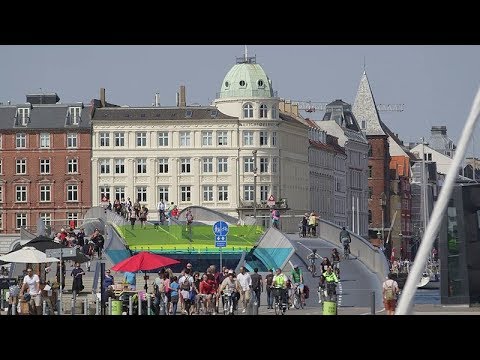 Watch on YouTube →
Overview
Jan Gehl argues that successful architecture and city planning must be judged by how urban form supports everyday human life, not by appearance alone. Drawing on more than 50 years of research and Copenhagen’s transformation, he explains how human-scale public spaces, walking, cycling, and evidence-based design can improve quality of life and make cities more sustainable.
Key takeaways
- Judge architecture by the interaction between urban form and human life: building placement, entrances, ground floors, and street access directly shape how people use buildings and neighborhoods.
- Gehl’s 12 public-space quality criteria reflect shared human needs and can be tested in cities worldwide; Siena’s Campo is an example of a place that supports comfort, sensory experience, and lingering.
- Human-scale design fits the dimensions and pace of walking: Venice’s streets average about 3 metres wide, while traditional squares generally remain within roughly 100 metres across.
- Copenhagen used decades of before-and-after public-life research to guide policy, and its 2009 goal of becoming the world’s best city for people extended pedestrian improvements beyond the center.
- Designing streets for children and older adults is a practical test of inclusivity: continuous sidewalks, safe crossings, and protected cycling can give children independent mobility and help people stay mobile as they age.
- Compact cities need not rely on towers or car dependence; Gehl presents Paris’s mid-rise blocks and public spaces as a better model than Dubai’s towers, alongside walking, cycling, and stronger public transport.
Chapters
0:00
Jan Gehl’s 1960s Research Challenge to Modernist Planning
- Gehl began studying the relationship between urban life and physical form in the mid-1960s, after a research trip to Italy with his wife, a psychologist.
- Architecture education emphasized models, aerial views, and making room for cars, while giving little attention to how people used the places being designed.
- Gehl and his wife identified a major gap between social-science research and architecture: the effects of buildings and planning on lifestyles and quality of life were largely unstudied.
- Modernism’s ideal of a wholly new “modern man” discarded lessons accumulated through generations of city building.
5:00
Why Architecture Must Connect Urban Form with Human Life
- An architecture critic’s distinction between sculpture and architecture helped Gehl frame his work: architecture is the interaction between form and life.
- Building placement, distances, entrances, open ground floors, and pedestrian access shape what happens inside buildings and how districts function.
- Gehl criticized design competitions focused on unusual shapes—the “perfume bottle” approach—when those forms add little to the surrounding city.
- Research shows that urban form changes patterns of life; Gehl cites Copenhagen, Melbourne, Perth, New York, and Moscow as places that have reclaimed space from motor traffic.
11:30
Universal Public-Space Qualities and Gehl’s 12 Criteria
- Gehl argues that people share fundamental biological needs as walking humans, even though climate, culture, and living standards differ across cities.
- His 12 quality criteria can be applied internationally: Siena’s Campo performs well against them, while exposed, uncomfortable spaces with nowhere to sit drive people away.
- Successful public spaces combine practical comfort with attention to architecture, materials, texture, trees, water, and sensory experience.
- The criteria reflect a common human capacity to feel welcome in a place, whether in Greenland, New Zealand, Japan, or Canada.
15:30
Human Scale: Why Venice’s Streets and Squares Work
- Venice demonstrates human-scale design: its streets average about 3 metres wide, enough for roughly 85 pedestrians per minute, and its details are experienced at walking speed.
- Gehl describes streets as spaces for the feet and squares as spaces for the eyes; traditional squares generally stay within about 100 metres, the distance people can readily take in.
- Cities designed around fast-moving cars tend toward oversized streets, buildings, and signs that hide people and details from view.
- Walking- and bicycle-friendly planning responds to the health risks of sedentary routines; Gehl points to World Health Organization guidance promoting active urban mobility.
21:00
How Copenhagen Turned Urban Research into City Policy
- For decades, the Copenhagen School of Architecture used the city as a living laboratory, comparing records of public life before and after urban changes.
- Researchers documented that improvements to conditions for people brought more people and a wider variety of activities into public spaces.
- Close communication among the architecture school, Copenhagen planners, and politicians helped research influence policy more directly than Gehl had seen in larger, more complex systems such as Berkeley’s.
- Gehl’s example of seeing children throughout Copenhagen illustrates a practical indicator of city quality: children and older people using public spaces.
25:30
Copenhagen’s 2009 People-First Strategy in Everyday Streets
- In 2009, Copenhagen’s City Council set the goal of making the city the world’s best for people, extending improvements beyond the tourist-oriented center.
- At crossings, continuous sidewalks let pedestrians and wheelchair users keep moving while vehicles entering from smaller streets cross their path.
- A sidewalk-continuity policy helped Gehl’s seven-year-old granddaughter walk to school without stepping off the sidewalk at four street crossings.
- Copenhagen narrowed many streets to two traffic lanes and added medians, trees, bicycle lanes, and sidewalks, improving safety and crossing conditions while retaining similar car capacity.
31:00
Walking, Cycling, and Compact Cities Beyond Car Dependence
- After the 1970s oil crisis, Copenhagen promoted cycling; Gehl’s grandchildren could ride across the city independently by age ten after learning to cycle with their parents.
- Gehl recommends designing for both eight-year-olds and older adults: if they can use a city safely, it is more likely to work for everyone.
- He calls for compact, sustainable cities with better public transport and more walking and cycling, arguing that car-oriented mobility produces congestion, pollution, and climate problems.
- Gehl favors Paris’s six- to seven-storey buildings and generous public spaces over tower-heavy development such as Dubai, and concludes that making urban life visible should become standard in planning and architecture.
Summary, takeaways, and chapters were generated by AI from the video's transcript and may contain errors. The video belongs to its creator, Louisiana Channel.