Inventing Improv: A Chicago Stories Special Documentary
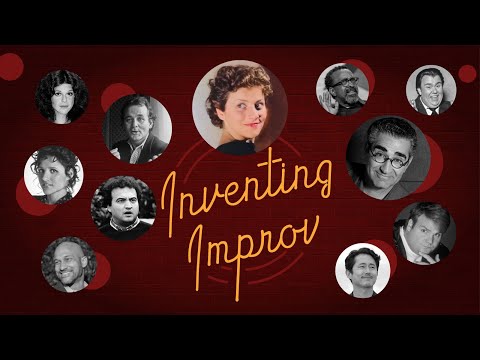 Watch on YouTube →
Overview
Viola Spolin developed improvisational theater through games that helped people listen, collaborate, and create in the moment, first working with immigrant children at Chicago’s Hull-House under recreation educator Neva Boyd. Her methods trained Paul Sills and performers in the Compass Players and The Second City, while her 1963 book Improvisation for the Theater codified more than 200 games and spread her approach into theater, television, education, healthcare, and community programs.
Key takeaways
- Viola Spolin’s improv method grew out of social work and play-based education at Hull-House, where games helped immigrant children learn through action even when they did not share a language.
- Spolin’s games train performers to focus on a shared task, their partner, and the immediate environment, making collaboration and spontaneous response more effective than planning for laughs.
- Paul Sills used Spolin’s training to prepare the Compass Players and The Second City to create scenes together; Second City’s revue developed improvised material into topical, repeatable comedy.
- Improvisation for the Theater, published in 1963, organized more than 200 games into a practical system for teaching skills including object work, movement, character, and story.
- Spolin’s legacy reaches beyond comedy: her games are used in education, corporate training, healthcare, and community programs, including work supporting empathy among incarcerated women.
Chapters
0:00
Chicago Improv’s Foundation: Viola Spolin and Hull-House
- The Second City became a major Chicago export, but its improvisational foundation came from Viola Spolin, not from a single comedian.
- Spolin developed theater games while working with immigrant children at Hull-House in the 1930s.
- Her methods influenced later improvisational theaters, including The Second City, the Groundlings, and UCB.
1:50
Spolin’s Games Train Attention and Ensemble
- A partner-clapping exercise trains performers to synchronize attention rather than plan their next move.
- In Spolin’s identity game, players communicate who someone is through behavior and environment instead of telling or guessing.
- Mirroring exercises shift focus from self-consciousness to observing another person, building ensemble and empathy.
5:00
Viola Spolin’s Immigrant Family and Early Love of Theater
- Spolin’s parents, Sonia and Morris Mills, were Russian Jewish immigrants who settled in Chicago; her father had fled czarist persecution.
- As a child, Viola watched performances backstage while accompanying her father, who worked security at the opera house.
- Known as “Spark,” she staged a show at age eight and grew up in a family that made songs, games, and homemade operas.
8:00
Neva Boyd and the Play-Based Roots of Spolin’s Method
- At 18, Spolin began working at Hull-House, a settlement house serving Chicago’s Greek, Italian, Russian, Mexican, and other immigrant communities.
- Sociologist Neva Boyd trained group workers through games, folk dancing, storytelling, and singing, studying how children negotiate rules and roles.
- Boyd’s games kept participants focused on shared rules and one another, reducing self-consciousness and keeping them present.
11:30
Hull-House Games Turn Communication Problems into Theater
- After raising sons Paul and William, Spolin returned to theater work through a communal childcare arrangement called the Educational Playroom.
- As a Works Progress Administration supervisor at Hull-House, she used experiential games to teach immigrant performers who did not all share a language.
- The game “Contact” gave shy teenage actors a physical task for a romantic scene; “Gibberish Interpreter” taught them to communicate through movement and expression.
16:00
Halsted Street and the Democratic Making of Theater
- Spolin’s Hull-House production Halsted Street used a trolley route as its structure, with each stop introducing stories from a different neighborhood group.
- The cast included people of different ages and backgrounds who conceived, wrote, and performed their own material.
- Spolin later moved to California, founded the Young Actors Company in 1948, and taught students including Alan Arkin and Paul Sand.
20:00
Paul Sills and David Shepherd Build Chicago’s Playwrights Theatre Club
- After returning to Chicago, Paul Sills offered free workshops in his mother’s games at the University of Chicago, attracting performers including Mike Nichols, Elaine May, Ed Asner, and Barbara Harris.
- David Shepherd wanted a theater for working people inspired by commedia dell’arte, with unscripted scenarios reflecting everyday life.
- With Shepherd’s financial backing, Sills helped open the Playwrights Theatre Club in a former Chinese restaurant; it launched in 1953 with Brecht’s The Caucasian Chalk Circle.
25:00
The Compass Players Make Improvisation a Public Theater Form
- After the Playwrights Theatre Club closed, Sills and Shepherd created the Compass Players, widely regarded as the first improvisational theater company in the United States.
- Spolin trained the cast to share space and jointly create scenes; the company debuted on July 5, 1955.
- Compass performances mixed short scenes based on the day’s news, structured scenario plays, audience suggestions, and improvised scenes.
33:00
The Second City Turns Improvised Ideas into Satirical Revue
- After Compass closed in 1957, Sills partnered with Bernie Sahlins and Howard Alk to open The Second City in a converted Chinese laundry on December 16, 1959.
- The name answered A. J. Liebling’s disparaging description of Chicago as “The Second City,” turning an insult into a badge of defiance.
- The revue combined songs and scenes developed through improvisation with live improvisations, using topical satire to expose conformity, consumerism, and cultural hypocrisy.
45:00
Spolin’s 1963 Book Codifies More Than 200 Theater Games
- Spolin published Improvisation for the Theater in 1963, setting out her philosophy and teaching system in a book adopted across the country.
- Its more than 200 games isolate skills such as object work, sound and movement, character, and storytelling.
- A defined point of concentration helps performers quiet self-judgment and respond intuitively to the people and circumstances around them.
53:00
Spolin’s Methods Spread Beyond Comedy and Theater
- Second City performers carried Spolin’s approach into film and television, while the company’s frequent performances gave actors extensive ensemble experience.
- Her games are now used in corporate training, hospitals, and programs for neurodiverse adults and incarcerated women; one program in Cook County Jail supports empathy and social-emotional skills.
- Spolin taught and wrote until shortly before her death in 1994, leaving a method that treats creativity and shared theatrical ability as accessible to everyone.
Summary, takeaways, and chapters were generated by AI from the video's transcript and may contain errors. The video belongs to its creator, WTTW.