How the Allies Cracked the Enigma Code | Bletchley Park with Dan Snow
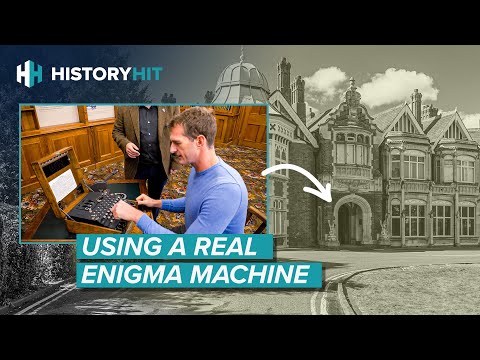 Watch on YouTube →
Overview
Bletchley Park grew from a countryside codebreaking headquarters purchased by Admiral Hugh Sinclair in 1938 into a 10,000-person intelligence operation that processed thousands of messages a day. Alan Turing, Dilly Knox, Gordon Welchman, and their colleagues built on Polish Cipher Bureau breakthroughs to mechanize Enigma attacks with the Bombe, while a human-led system of interception, decryption, analysis, and distribution turned signals intelligence into actionable wartime information.
Key takeaways
- The Polish Cipher Bureau’s 1939 disclosure gave British codebreakers Enigma techniques they had not independently developed, providing an essential foundation for later work at Bletchley Park.
- Bletchley’s breakthrough was organizational as well as mechanical: specialists converted codebreaking methods into standardized workflows that a large, continuously staffed operation could execute.
- The Bombe scaled Turing and Welchman’s approach into industrial production: about 200 machines were built by the end of the war and operated by roughly 1,600 Wrens at five locations.
- Hut 6 and Hut 3 formed a practical intelligence pipeline, moving from German Army and Air Force Enigma decryption to translated, contextualized reports for field commanders.
- By D-Day, Bletchley processed about 3,000 messages per day, and some intelligence could be turned around in approximately three hours.
- Enigma’s enormous theoretical keyspace did not make it invulnerable: predictable operator choices, including familiar names and words used as supposedly random keys, exposed exploitable patterns.
Chapters
0:00
Why Admiral Sinclair Bought Bletchley Park in 1938
- British planners feared a bomber war and sought rural sites where government work could continue outside London.
- Admiral Hugh Sinclair bought the 52-acre estate for £6,000 in spring 1938, before developer Forner could replace it with housing.
- The original estate comprised the mansion, stable yard, and landscaped grounds; purpose-built huts followed as staff numbers grew.
3:00
The Mansion’s Crowded Start and Denniston’s Early Team
- About 180 people initially crowded into the mansion, using borrowed desks and even sorting message traffic on the carpet.
- Alan Turing was among Alastair Denniston’s recruited “professor type” personnel, prepared to begin work when war broke out.
- Early work included German naval traffic analysis; even identifying who communicated with whom could yield useful intelligence before messages were fully decrypted.
- The initial collegiate routine of long lunches and short workdays gave way to round-the-clock shifts as the operation expanded.
7:10
Polish Enigma Breakthroughs and the First U.S. Intelligence Visit
- In 1939, Denniston joined a British-French delegation that received the Polish Cipher Bureau’s Enigma methods and findings.
- The Polish work gave Britain a crucial head start on the German military machine, which differed from the unsteckered Enigma previously studied in Britain.
- Four U.S. Army and Navy officers arrived secretly on 8 February 1941, before Pearl Harbor, and met Bletchley personnel in Denniston’s office.
- The estate was struck by German bombs once by accident in February 1941; a reserve site at Wavendon had been designated in case Bletchley became unusable.
11:40
Morale, Military Duties, and the Social Life of Bletchley
- After telecommunications moved to a hardened building in 1943, the mansion ballroom hosted the Recreation Club’s dances, concerts, sports, and drama.
- By 1944–45, roughly 60% of staff wore military uniform, while civilian and service personnel navigated different pay, shifts, and mess arrangements.
- Nearly all staff lived off-site or in nearby camps and houses; the workforce eventually reached about 10,000 people.
- Young staff built a campus-like social life, from midnight rowing to dances with U.S. servicemen, alongside Home Guard drills and invasion preparations.
20:20
Cottage 3, Alan Turing, and Bletchley’s Industrial Method
- Cottage 3 housed Enigma research by Dilly Knox, Alan Turing, and Gordon Welchman, who worked on methods to mechanize codebreaking.
- Bletchley transformed specialist techniques into repeatable, multi-stage workflows that thousands of staff could perform as part of a larger process.
- The site functioned as a human-powered information-processing system: messages were collected, sorted, decrypted, analyzed, and distributed.
- Turing and Welchman’s Bombe concept was manufactured by the British Tabulating Machine Company; about 200 machines were built by the war’s end and operated by roughly 1,600 Wrens across five sites.
27:10
Hut 6 to Hut 3: Turning Enigma Decrypts into Field Intelligence
- Hut 6 broke German Army and Air Force Enigma traffic; Hut 3 interpreted, translated, and prepared the resulting intelligence for commanders.
- Decrypted text arrived in five-letter groups and often contained abbreviations and garbling, so watch officers assigned messages to analysts who could make them intelligible.
- In 1941, intelligence could reach Cairo the same day for some ciphers, though processing often took a day or two; by D-Day in 1944, turnaround could fall to about three hours.
- Daily volume rose from hundreds of messages in 1941 to approximately 3,000 by D-Day, with wording altered before transmission to avoid revealing that German traffic had been read.
32:20
How Enigma’s Rotors Worked—and How Operators Helped Break It
- Pressing an Enigma key lit a different letter, while rotating rotors changed the substitution after each keystroke; both sender and receiver needed matching settings.
- The machine used three of five available rotors, adjustable ring settings, and a plugboard, creating about 159 million million million possible configurations.
- Rather than test every setting—which at one setting per second would take roughly five trillion years—codebreakers exploited operational patterns and procedural mistakes.
- Operators were poor at choosing random message keys and often selected names or familiar words, a human weakness that made Enigma traffic easier to attack.
- Bletchley’s signals intelligence did not guarantee Allied victory, but it substantially improved the Allies’ position and helped shorten the war.
Summary, takeaways, and chapters were generated by AI from the video's transcript and may contain errors. The video belongs to its creator, History Hit.