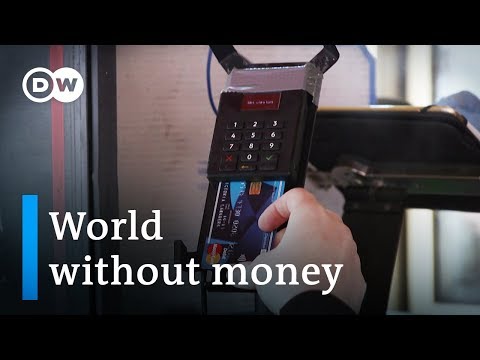
How cash is becoming a thing of the past | DW Documentary (Banking documentary)
 Watch on YouTube →
Overview
The shift from cash to cards and mobile payments makes transactions more convenient, but it also transfers influence to banks, payment companies and governments while leaving some people without practical alternatives. Through examples from rural Germany, cash-light Sweden, India’s 2016 demonetization and PayPal’s data practices, the documentary weighs efficiency and crime prevention against privacy, financial inclusion, resilience and the public’s ability to pay without intermediaries.
Key takeaways
- Sweden’s jointly launched Swish service and widespread card acceptance show how quickly digital payments can become the default, reducing practical choice even without a formal ban on cash.
- Cash handling imposes real costs on banks and small businesses: a Heidenheim bank spends about €100,000 annually on two cash-processing employees, while a Swedish gas-station owner faces costly trips to deposit cash and obtain coins.
- Digital payments leave records that cash does not; combining transaction histories with location or search data can produce detailed personal profiles and encourage people to change their behavior.
- A cashless system makes consumers more dependent on commercial-bank balances and electronic networks, which can exclude people without access and fail during outages or cyberattacks.
- India’s 2016 demonetization invalidated around 85% of the country’s banknotes overnight, illustrating how rapidly cash policy changes can disrupt people who lack bank accounts.
- Central-bank digital money such as the Riksbank’s proposed e-krona could offer an alternative to private-bank balances, but it would not by itself settle questions about privacy, cash access or system resilience.
Chapters
0:00
Rural Germany’s Bank Closures Put Cash Access at Risk
- Bank employee Susanna takes a mobile bank van to villages in southwest Germany where branches and ATMs have closed.
- The van provides over-the-counter services, an ATM and printed bank statements for people who still need physical money.
- In a nearby village without the van, the local inn uses a card reader to let customers withdraw up to €200 in cash.
4:19
Sweden’s Swish Payments Make Cash Unnecessary for Many
- In Stockholm, people use cards or phones for transit, parking, public toilets and purchases at a flea market.
- Swish, a mobile payment service launched jointly by Swedish banks, lets users send money using a recipient’s phone number.
- Some Swedes welcome the convenience, while others say that dwindling cash acceptance leaves them unable to choose how to pay.
9:41
Cashless Businesses Save Handling Costs—but Expand Payment Tracking
- Gas-station owner Lynn says handling cash costs her more than card payments; obtaining coins can cost about 2,000 Swedish kronor, and depositing cash requires a long drive and fees.
- Amazon Go stores use cameras to track selected items and charge customers through the app when they leave.
- A Visa campaign offered 50 restaurants $10,000 each to stop accepting cash; restaurant owner Michael Ryan says going cashless reduced theft and simplified opening procedures.
- Former financial broker and writer Brett Scott argues for keeping cash alongside digital payments, comparing the choice to having both bicycles and cars.
14:27
German Students Question Payment Privacy as Banks Count Cash Costs
- Students at the University of Siegen worry that digital purchases expose personal information, even when European data-protection laws apply.
- A university canteen’s Blue Code app speeds up payments, but one student says it is harder to notice the price deducted from a bank account.
- Susanna’s customers include older people who struggle with ATMs and online banking; she says many still want cash for everyday shopping.
- Heidenheim bank staff process more than 120,000 rolls of coins a year, while two full-time basement employees alone cost the bank about €100,000 annually.
20:02
Cash Restrictions, Kenneth Rogoff and India’s 2016 Demonetization
- The documentary says the European Union has restricted some cash payments and discussed removing large euro notes, while the Bundesbank warns that digital payments also carry costs.
- Visa, Mastercard, PayPal and other providers collect transaction fees; Germany alone records more than 20 billion card and online-payment transactions annually.
- Economist Kenneth Rogoff argues that large banknotes facilitate tax evasion and crime, and favors coins and small bills for daily purchases with larger payments made electronically.
- India’s 2016 withdrawal of its largest banknotes made roughly 85% of banknotes unusable at once, causing bank queues and hardship for people without accounts.
- The Better Than Cash Alliance promotes digital payments as a route to economic inclusion, but its members include Visa, Mastercard and major retailers.
27:28
Private Bank Money and Payment Apps Turn Transactions into Data
- Brett Scott distinguishes central-bank-backed cash from digital balances created by commercial banks, arguing that a cashless system would make people more dependent on private bank money.
- Journalist Norbert Häring questions whether users meaningfully consent to data collection when payment providers require acceptance of lengthy terms.
- PayPal says it shares data as necessary for transactions, while privacy advocates warn that permissions can also cover advertising and other uses.
- PayPal’s listed third parties span more than 40 pages and include data and technology firms such as Google, Acxiom, Facebook and Oracle.
- Combining payment records with location and search data could create detailed profiles and make people alter their behavior because they feel watched.
34:49
China’s Surveillance Concerns and Sweden’s Central-Bank E-Krona Debate
- The documentary describes China’s planned nationwide camera and facial-recognition network for 2020 and says companies including Alibaba and Tencent analyze shopping behavior.
- It raises concerns that linking digital behavior to state systems could affect credit ratings, housing access and personal freedom.
- Swedish central-bank officials warn that cash acts as a fallback if electronic payment systems fail, preserving access to essentials such as food and fuel.
- The Riksbank was investigating an e-krona, a possible central-bank digital currency, while the documentary also considers whether minimum cash access should be protected by law.
40:13
Why Cash Still Matters: Inclusion, Cybersecurity and System Resilience
- Brett Scott identifies four risks of a fully cashless society: financial surveillance, exclusion of people without digital access, greater cybersecurity exposure and weaker payment-system resilience.
- Unlike digital networks, physical cash has no central point of failure and cannot be switched off by disabling an account or service.
- A digital-only system could let institutions block individuals from making purchases, creating a tool for political repression.
- Susanna hopes cash remains available for daily shopping, even as she acknowledges that it could eventually disappear.
Summary, takeaways, and chapters were generated by AI from the video's transcript and may contain errors. The video belongs to its creator, DW Documentary.