"Christian Dior, Designer of Dreams" at the Musée des Arts Décoratifs
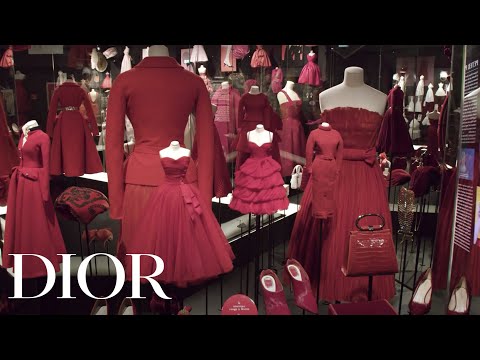 Watch on YouTube →
Overview
The Musée des Arts Décoratifs exhibition, spanning about 3,000 square meters, presents Christian Dior’s couture in dialogue with art, fashion history, and the work of successive artistic directors. Curators Olivier Gabet and Florence Müller assembled hundreds of garments and objects, while conservators, designers, and technicians used methods ranging from cold ultrasonic textile cleaning to 16-projector architectural mapping to preserve and animate the collection.
Key takeaways
- The exhibition’s scale depended on pooling collections: more than 300 objects came from Dior and international lenders, while the fashion selection was cut from roughly 1,000 candidates to about 300 dresses.
- Textile conservation balances public display with long-term preservation: cold ultrasonic micro-droplet cleaning avoids heat damage, and support stitching is designed to be reversible.
- The Bar suit embodies Dior’s New Look through internal structure and curved shaping, countering the angular, masculine silhouettes common during wartime.
- Museum architecture is an active design tool: 16 projectors transform the Musée des Arts Décoratifs’ nave into an evocation of Versailles’ Hall of Mirrors.
- Dior’s successive artistic directors represent distinct responses to their eras, from Saint Laurent’s Beatnik youth culture and Ferré’s architectural construction to Simons’s modernized historical references.
- Fashion exhibitions must account for garments as physical objects and visitor experiences: mannequin shaping, viewing angles, wheelchair access, legible text, and visitor fatigue all affect installation decisions.
Chapters
0:00
Photographing the Empty Museum and Planning a 3,000-Square-Meter Exhibition
- The team uses the empty museum nave on the final day to capture photographs before shifting focus to the exhibition itself.
- The exhibition combines the Musée des Arts Décoratifs’ temporary galleries into a roughly 3,000-square-meter space, described as Paris’s largest fashion exhibition at the time.
2:05
Olivier Gabet and Florence Müller Build the Exhibition Around Dior’s Museum Ties
- Olivier Gabet researches paintings, furniture, and other art objects, while Florence Müller selects dresses and fashion accessories; their distinct approaches are designed to complement each other.
- The Louvre considers loans including a ram-headed statue and a torso of Nefertiti, linking Dior designs and archival references to Egyptian art.
- Dior’s relationship with the museum dates back to his collecting and a 1955 exhibition of 18th-century Parisian cabinetmakers, which included a presentation of Dior models.
6:39
Tracing a Couture Collection from Sketches to Restored Garments
- The team considers displaying sketches, fabric selections, collection charts, and runway-order documents to show how designs develop from initial ideas into finished garments.
- Researchers examine sketches by designers including Gianfranco Ferré and Marc Bohan, while curators narrow the selection to fit limited gallery space.
- More than 300 objects are assembled from Dior’s holdings and loans from institutions including the Metropolitan Museum of Art, the de Young Museum, and the Victoria and Albert Museum.
12:00
Restoring the Bar Suit and Reconstructing Dior’s New Look Silhouettes
- Textile conservators use cold methods, including ultrasound that turns water into micro-droplets, to clean fragile historic fabrics without heat-related fiber damage.
- The Bar suit’s internal pads and basque shape reveal how Dior created the curved New Look silhouette, a sharp contrast to wartime clothing’s angular, military lines.
- Mannequins are padded from archival photographs, and heavy dresses are supported with reversible stitching and carefully placed wadding to avoid damaging the garments.
18:45
Selecting Garments, Accessories, and Color Groups for the Dior Display
- The curatorial team considers beginning with white muslin toiles before moving through color-organized displays of garments, drawings, and accessories.
- A proposed color-focused section could contain around 650 pieces, including large and small dresses, sketches, fragrances, and objects such as the 1952 Bobby bottle.
- The team tests individual garments against case dimensions and nearby colors, including pieces by Raf Simons and Marc Bohan.
22:25
From Yves Saint Laurent’s Beatniks to Ferré’s Architectural Couture
- The exhibition treats Yves Saint Laurent, Marc Bohan, Gianfranco Ferré, John Galliano, and Raf Simons as essential parts of Dior’s heritage rather than focusing only on the founder.
- Saint Laurent’s Beatnik collection brought youth culture into the house; Bohan’s “Slim Look” pursued a modern classicism that responded to women’s preferences.
- Ferré drew on his architectural training for construction and added flamboyant, often Baroque-influenced embellishment.
26:57
Using Avenue Montaigne, Projection Mapping, and Dior’s Garden as Exhibition Design
- The exhibition uses the Musée des Arts Décoratifs’ distinctive architecture to evoke Avenue Montaigne and make Dior feel at home in the museum.
- La Méduse collaborates on audiovisual design, using 16 projectors to transform the 19th-century nave into an evocation of Versailles’ Hall of Mirrors.
- A paper garden installation references Dior’s need for nature and his habit of sketching designs in his garden before taking them to Paris ateliers.
31:05
Positioning Mannequins, Artwork, and Labels for Every Visitor’s View
- Installers adjust mannequins from multiple angles because exhibition visitors move around garments, unlike seated audiences at a fashion show.
- Text and image placement must balance visibility for standing visitors with wheelchair access and readability during a visit lasting one to two hours.
- Teams fine-tune poses, spacing, and display heights on site because a garment’s actual volume and balance are difficult to judge from a floor plan.
35:55
Connecting Dior Couture to Art History, Galliano, and the 18th Century
- Loans are sought from the Louvre, Musée d’Orsay, Jeu de Paume, Musée Picasso, Centre Pompidou, and Versailles to place fashion alongside art across eras.
- The curatorial argument treats haute couture as worthy of museum display in its own right, not merely as an illustration of art’s influence on fashion.
- John Galliano’s Egyptian-inspired work demonstrates elaborate technical collaboration; one hat took three weeks and involved patternmaking in France, resin cutting in Belgium, and plating in England.
- The exhibition reduces an initial fashion selection of roughly 1,000 pieces to about 300 dresses, while exploring 18th-century court dress and Raf Simons’s non-literal reinterpretation of historical silhouettes.
41:21
Raf Simons and Maria Grazia Chiuri Reframe Couture for Contemporary Life
- Raf Simons reworks 18th-century references such as the habit à la française into contemporary combinations, including a frock coat with a turtleneck and black trousers.
- Simons’s historical references are presented as analytical transformations rather than literal costume, showing how couture can be historically informed and modern.
- Maria Grazia Chiuri describes couture as craftsmanship and fantasy, while arguing that Dior’s New Look heritage must adapt to contemporary lifestyles and support individual self-expression.
46:45
Opening Reactions, Atelier Craft, and the Garment’s Social Meaning
- Visitors and guests respond to the exhibition’s range of eras, silhouettes, fabrics, and designers; one guest recognizes a dress last seen at the Oscars.
- Atelier staff explain that a design begins as a muslin toile, which is revised over several weeks before becoming a finished garment.
- The exhibition is likened to a film set: teams sequence rooms with changing tones and dramatic intensity, building toward a final act.
- The curatorial perspective considers not only how a Dior garment is made and worn, but also what it meant in its historical and social context.
Summary, takeaways, and chapters were generated by AI from the video's transcript and may contain errors. The video belongs to its creator, Christian Dior.