Artemis I | The Documentary | NASA+
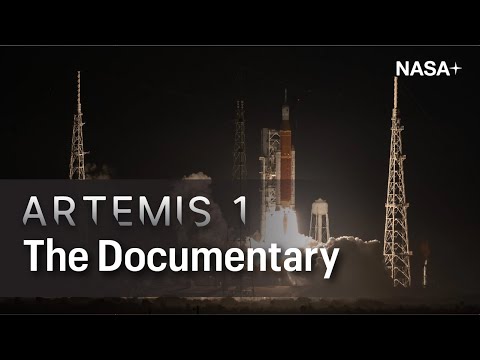 Watch on YouTube →
Overview
Artemis I tested NASA’s Space Launch System (SLS) and Orion spacecraft on an uncrewed lunar mission, validating the hardware and operations needed for future crewed Artemis flights. The documentary follows Orion’s construction, SLS integration and launch, then its 25.5-day journey (reaching about 268,000 miles from Earth) and Pacific splashdown as a foundation for returning astronauts to the Moon and eventually reaching Mars.
Key takeaways
- Artemis I tested the integrated SLS-Orion system without a crew, allowing NASA to validate the rocket, spacecraft, launch operations, and recovery process before crewed flights.
- SLS generates 8.8 million pounds of thrust; its twin solid-rocket boosters use 10 total motor segments, while the core stage is 212 feet tall and powered by four RS-25 engines.
- Orion’s service module, built with the European Space Agency, powers the spacecraft, while the ICPS’s single RL10 engine provides more than 20,000 pounds of thrust for the journey beyond the Moon.
- Orion reached about 268,000 miles from Earth, surpassing Apollo 13’s distance record for a human-rated spacecraft designed to return safely.
- The capsule endured atmospheric re-entry temperatures near 5,000°F and used an 11-parachute system to splash down in the Pacific at roughly 20 miles per hour.
- NASA and Department of Defense teams recovered Orion together, demonstrating that spacecraft recovery is a planned part of the mission architecture, not an afterthought.
Chapters
0:00
Building Orion for Artemis I at Kennedy and Michoud
- Artemis aims to return people to the Moon, including the first woman and first person of color to walk on its surface, and build toward future Mars exploration.
- Lockheed Martin technicians began assembling Orion’s aluminum crew-module structure at NASA’s Michoud Assembly Facility in New Orleans before moving it to Kennedy Space Center.
- The crew module received a heat shield, forward-bay cover, wiring harnesses, avionics, and other systems; pressurization and weld inspections checked structural integrity.
- The European Space Agency built Orion’s service module, which supplies power for the spacecraft’s lunar journey.
7:01
Stacking SLS Boosters, Core Stage, and Orion
- Northrop Grumman manufactured SLS solid-rocket-booster segments in Utah; teams stacked 10 motor segments on the mobile launcher, fastening each joint with about 177 pins.
- SLS produces 8.8 million pounds of thrust, while its 212-foot core stage weighs about 188,000 pounds and contains four RS-25 engines.
- The core stage completed an eight-part Green Run test series, including an eight-minute firing of its RS-25 engines with more than 700,000 gallons of propellant.
- Teams installed the Interim Cryogenic Propulsion Stage (ICPS), which uses one RL10 engine to provide more than 20,000 pounds of thrust, then integrated Orion and its launch-abort system.
15:17
Orion’s Rollout and the SLS Wet Dress Rehearsal
- After stacking was complete, the SLS rocket and Orion rolled nearly four miles from the Vehicle Assembly Building to Launch Complex 39B on a 6.6-million-pound crawler-transporter.
- The launch-abort system had been tested in the 2019 Ascent Abort-2 flight test, which triggered an abort sequence at roughly six miles altitude and separated the capsule for an Atlantic splashdown.
- The wet dress rehearsal simulated launch operations without liftoff, including loading more than 730,000 gallons of super-cooled propellant during a nearly two-day countdown.
- Hundreds of engineers monitored launch criteria across Kennedy Space Center, Johnson Space Center in Houston, and other NASA and contractor teams.
20:29
Artemis I Launches from Kennedy Space Center
- Launch teams spent the two days before liftoff powering up rocket systems and configuring Launch Complex 39B for SLS’s 8.8 million pounds of thrust.
- On launch day, the launch director gave the go to resume the countdown, and SLS lifted Orion from Kennedy Space Center on its uncrewed voyage to the Moon.
- The mission tested the rocket and capsule before later Artemis flights send astronauts to the lunar surface.
- After launch, mission control in Houston took over monitoring Orion and analyzing incoming flight data.
27:01
Orion’s Lunar Flight, Distance Record, and Pacific Return
- During its multiweek mission, Orion traveled around the Moon in a distant retrograde orbit and reached about 268,000 miles from Earth.
- That distance exceeded the record set by Apollo 13 for a human-rated spacecraft designed to return to Earth.
- After 25.5 days in space, Orion re-entered Earth’s atmosphere, where temperatures around the capsule reached approximately 5,000°F.
- Eleven parachutes slowed the capsule for a Pacific Ocean splashdown off California, reducing its speed to roughly 20 miles per hour.
30:34
Orion Recovery and the Next Artemis Missions
- NASA and Department of Defense recovery teams secured Orion in the Pacific and towed it into a Navy ship’s well deck.
- The capsule was transported to Naval Base San Diego, offloaded, and prepared for its return to Kennedy Space Center.
- Mission teams said Orion exceeded expectations and used the flight’s results to prepare for the next mission with astronauts aboard.
- Artemis I was presented as the first step in a series of missions intended to return humans to the Moon and support exploration beyond it.
Summary, takeaways, and chapters were generated by AI from the video's transcript and may contain errors. The video belongs to its creator, NASA Science.