A Season Begins: Life Returns to the Garden | Full Documentary
 Watch on YouTube →
Overview
Across winter’s end to summer, gardens emerge as human-designed habitats where plants, insects, birds, and mammals depend on one another for food, shelter, pollination, and reproduction. Examples include great tits collecting nearly 10,000 caterpillars for their chicks, mason bees building nests from shells and plant material, and kestrels hunting voles; the account also shows how flooding can disrupt these relationships and destroy a brood.
Key takeaways
- A garden can function as a connected wildlife habitat: flowers feed pollinators, caterpillars feed nesting birds, and prey such as voles sustain kestrels.
- Human structures can replace scarce natural nesting sites: great tits use a letterbox, and kestrels nest in boxes beneath roofs.
- Garden wildlife also provides practical benefits: great tits collect nearly 10,000 caterpillars while raising a brood, offering natural pest control.
- Small design features create specialized habitats: woodpiles shelter hedgehogs and weasels, dry-stone walls support sand lizards, and compost heaps sustain decomposers.
- Wildlife relationships can be both cooperative and costly: ants protect peony buds in exchange for nectar, while slugs and snails can strip vegetable plants and fruit.
- Prolonged rain and flooding can interrupt feeding and cause nest failure, as shown by a great tit pair that lost its entire letterbox brood.
Chapters
0:00
Winter Ends: Weasels, Squirrels, and Hedgehogs Return
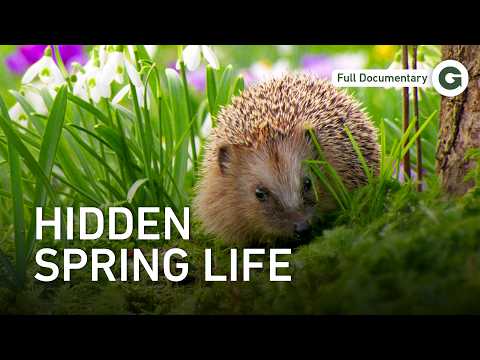
- As snow melts, witch hazel, crocuses, and snowdrops mark the start of spring in gardens shaped by more than 5,000 years of cultivation.
- A weasel follows a mouse through narrow gaps in a woodpile, showing how garden structures provide both shelter and hunting grounds.
- Red squirrels retrieve acorns and nuts cached in more than 100 locations, while hedgehogs emerge from winter hibernation seeking food.
5:00
Spring Pollinators and the Rush to Claim Nest Sites
- Honeybees visit early flowers for nectar and pollen, pollinating plants in return for resources for their hive.
- Nuthatches defend nesting territory from persistent sparrows as garden birds inspect cavities and collect moss and other nesting material.
- People’s homes offer substitute nest sites: great tits occupy a letterbox, while kestrels use a nest box beneath a roof.
- After dark, slugs and snails emerge, and plants unfurl their flowers overnight as the garden fills with spring color.
10:00
Garden Flowers Feed Birds and Growing Chicks
- A blackbird watches digging for exposed earthworms, then feeds them to newly hatched chicks.
- The death’s-head hawkmoth lays eggs on tomato seedlings, giving its caterpillars a food source when they hatch.
- Cherry blossom supplies an early surge of insects, and great tits nesting in a letterbox gather nearly 10,000 caterpillars over three weeks.
- Gardens form connected wildlife corridors through urban areas and, collectively, provide habitat comparable to nature reserves.
15:00
Kestrel Chicks and Mason Bees Build Unusual Nests
- After four weeks of incubation, kestrel eggs hatch; the female broods the vulnerable chicks while the male hunts.
- A mason bee uses an empty snail shell for its nest, laying eggs inside and sealing the entrance with small stones.
- The bee gathers more than 100 small sticks to conceal its nest beneath a woodpile.
- Another small bee cuts petal pieces and lines a cavity in a rock, selecting colorful flowers such as golden flax.
20:00
Bee-Fly Deception, Sand Lizards, and Changing Habitats
- A bee-fly hovers over ground-nesting wild bees and flicks an egg into an unattended nest; its larva later consumes the host grub.
- Dry-stone walls provide plants with footholds and give sand lizards shelter in cracks and crevices.
- Male sand lizards turn bright green during breeding season, compete for territory, and mate before females lay eggs under rocks or in burrows.
- Garden habitats can support species displaced by development, while cockchafers—once nearly eradicated as pests—are slowly returning.
25:00
Hungry Nestlings, Lawn Flowers, and the Vegetable-Plot Invasion
- Great tit parents deliver food to their growing chicks up to 30 times an hour.
- Daisies and dandelions brighten lawns but are often treated as weeds; dandelion seeds travel between gardens on parachute-like structures.
- Slugs and snails converge on vegetable patches, and a single snail can consume about 200 square centimeters of lettuce in one night.
- The same creatures that damage crops also participate in the garden’s food web and nutrient cycle.
30:00
Compost Recycles Waste and Supports Hidden Predators
- Kitchen scraps on a compost heap attract rose chafer beetles, whose larvae hatch among available food.
- Centipedes, millipedes, woodlice, and earthworms help break down waste alongside bacteria and fungi.
- A single compost heap contains billions of microorganisms, which transform rotting plant matter into useful garden compost.
- Fruit flies feed on fermenting material and in turn attract predators, extending the garden’s food chain into the compost pile.
35:00
Hawkmoth Caterpillars, Nest Boxes, and Summer Fruit
- Elephant hawkmoth caterpillars eat fuchsia leaves and flowers; prominent eyespots on their backs help deter predators.
- When fully grown, a caterpillar must leave the plant and reach the ground to pupate underground.
- Starlings feed their brood amid abundant insects, while the shortage of natural tree cavities makes nest boxes and other built spaces increasingly important.
- Long-horned beetles feed on ripe or damaged cherries, and field voles secretly tunnel beneath vegetable plots to nibble roots and shoots.
40:00
Kestrels Hunt Voles as Plants Recruit Animal Partners
- Field voles can produce young up to seven times a year, making them a vital food source for predators.
- Kestrels may kill more than 1,000 voles and mice to raise one brood; their chicks gradually learn to feed themselves.
- Strawberries attract slugs and snails, which consume fruit and seeds, potentially helping plants disperse seeds through animals.
- Peony buds offer nectar droplets to ants, which defend the buds from insect intruders until the flower opens.
45:00
Flooding Threatens Broods as the Garden Cycle Continues
- Strong wind and prolonged rain can prevent parent birds from finding enough food for their chicks.
- After flooding, a great tit pair nesting in a letterbox loses its entire brood; some garden birds can attempt another brood later in summer.
- The documentary links increasingly wet European summers and repeated flooding with added risks for insects, small mammals, and nesting birds.
- Rain disperses seeds, and the seasonal cycle continues in gardens where cultivated plants and wild creatures share the same space.
Summary, takeaways, and chapters were generated by AI from the video's transcript and may contain errors. The video belongs to its creator, Get.nature.