Why Global Supply Chains May Never Be the Same | WSJ Documentary
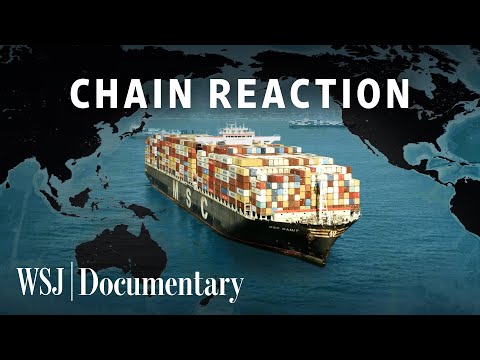 Watch on YouTube →
Overview
The pandemic exposed how a 14,000-mile supply chain built for low costs and rapid delivery can seize up when demand surges and bottlenecks hit ports, trucking, warehouses, and delivery networks. The account traces the human and operational costs of that system—from port congestion and truck-driver retention problems to warehouse automation and Amazon’s subcontracted delivery model—and explains why inflation and reshoring efforts may not eliminate its vulnerabilities.
Key takeaways
- The Port of Los Angeles and Port of Long Beach handle about 40% of U.S. imports, so congestion there can affect the national economy rather than just local deliveries.
- The trucking workforce problem is largely about retention: drivers face mileage-based pay, long unpaid waits, restricted driving hours, and difficulty finding safe overnight parking.
- Automation can substantially raise warehouse throughput—one operation doubled picking from 70 to 140 units per hour—but faster, repetitive work can contribute to burnout and turnover.
- Amazon’s rapid parcel growth, from 13% to 21% of U.S. volume between 2019 and 2020, relies partly on Flex drivers and subcontracted delivery companies that absorb vehicle costs or employ drivers.
- Reshoring can reduce exposure to long international routes, but moving production from low-cost countries to high-cost U.S. locations is economically challenging; semiconductor investments illustrate the scale required.
- The convenience of next-day delivery depends on inexpensive transport and labor at every stage, making low consumer prices vulnerable to disruptions that create shortages and inflation.
Chapters
0:00
Pandemic Demand Overwhelms the Promise of One-Click Delivery
- Businesses expected a COVID recession to reduce demand, but consumers instead bought at record levels and supply chains struggled to keep up.
- Before the pandemic, e-commerce made rapid delivery feel effortless, masking a complex journey that can span 14,000 miles and take months.
- Shortages and higher prices showed how unrealistic it is to assume every product will always arrive quickly.
3:10
A USB Charger’s 20-to-30-Day Voyage Across the Pacific
- Low-cost products such as USB chargers depend on efficient production and low labor costs; Vietnam is one manufacturing location used for that reason.
- After assembly, cargo typically travels by barge to an ocean-facing port, then by container ship across the Pacific in about 20 to 30 days.
- Ships can carry up to 10,000 containers with crews as small as 20, concentrating responsibility on a few sailors.
- Ever Given’s grounding in the Suez Canal demonstrated how a single blocked route can hold up billions of dollars in goods.
7:30
Los Angeles and Long Beach Ports Become a Supply-Chain Chokepoint
- The Port of Los Angeles and neighboring Port of Long Beach handle about 40% of U.S. imports and nearly 30% of U.S. exports.
- The ports averaged 900,000 container units for 14 consecutive months, a volume that previously would have marked an exceptional peak month.
- Processing a ship that normally took three to five days stretched to as long as two weeks, while containers filled available yard space.
- Extending port gates to 24/7 operation required coordination with terminal operators, truckers, and distribution centers—not just the port.
13:30
Why Trucking’s Driver Shortage Is Really a Retention Problem
- Trucks move about 70% of U.S. freight by value, but the American Trucking Associations projected a shortfall of 160,000 drivers by 2028.
- Research on the industry describes the persistent shortage as a retention problem: long hours, unpaid waiting, and per-mile pay make the work difficult to sustain.
- After trucking deregulation in 1980, union representation, wages, and working conditions declined from the standards associated with earlier Teamsters-era jobs.
- Federal hours-of-service rules limit driving time; waiting to load or find parking can consume hours without generating mileage-based pay.
24:30
E-Commerce Moves the Supply Chain from Stores to Fulfillment Centers
- The shift from big-box retail to online orders increases dependence on transportation because each order must be picked, packed, and shipped individually.
- A fulfillment center receives and verifies inventory, stores it, then picks and packages each order for a carrier.
- When incoming freight exceeds outgoing orders, warehouses run out of space—the surge was compared to a bulge moving through a supply-chain “snake.”
- Amazon’s two-day delivery promise escalated to one-day, same-day, and even three-hour delivery, prompting competitors to expand automation.
30:00
Warehouse Robots Raise Output—and Intensify Work
- Robots and sortation technology can reduce walking and heavy lifting; one facility increased picking from about 70 to 140 units per hour.
- Managers control robot pace, which can also increase the speed and repetition demanded of workers.
- A Wall Street Journal analysis found turnover at many Amazon warehouses exceeded 100%, with faster work contributing to burnout concerns.
- Workers described 12-hour shifts, physical strain, and the need to adjust sleep, hydration, and meals to keep up.
37:30
UPS Drivers Show the Benefits and Demands of Traditional Last-Mile Work
- Last-mile delivery requires drivers to lift and carry packages repeatedly; workers may perform the same safe-delivery motions hundreds of times a day.
- A UPS driver described a 12-year route built around consistent customer preferences and careful planning for each stop.
- The driver reported nearly $40 per hour, strong health insurance, and time-and-a-half after eight hours.
- That established employment model costs more than the lower-cost delivery systems e-commerce companies are trying to build.
43:00
Amazon Flex and DSPs Shift Delivery Costs to Contractors
- Amazon Flex drivers use personal vehicles and cover expenses such as fuel, maintenance, and wear; a typical three-hour block started around $54, with peak surges sometimes paying more.
- Amazon’s Delivery Service Partner model lets local businesses operate branded vans and hire drivers while Amazon plans routes and organizes packages.
- A former DSP driver described shifts with as many as 200 stops and 300 packages, alongside an expectation of roughly 20 stops per hour.
- Subcontracting can distance Amazon from responsibility for driver conditions and accidents, while workers report limited career advancement and high turnover.
49:40
Supply Disruptions Feed Shortages, Higher Prices, and Inflation
- Amazon’s share of U.S. parcels grew from 13% in 2019 to 21% in 2020, exceeding FedEx’s share by the period described.
- Supply constraints can cause intermittent product shortages and price increases that interest-rate changes alone may not quickly resolve.
- The system’s low consumer prices relied on inexpensive transportation, labor, and efficiency across every link.
- The pandemic revealed that assumptions about stable global trade and uninterrupted transport leave supply chains vulnerable to disruption.
52:30
Reshoring Semiconductor Production Faces High-Cost Challenges
- Moving manufacturing offshore was driven partly by the substantial labor-cost gap between high-cost and low-cost countries, making reshoring economically difficult.
- Samsung announced a $17 billion semiconductor factory in Taylor, Texas, while Intel pledged $20 billion for an Ohio facility.
- These investments show companies responding to supply-chain risk, but domestic production cannot be expanded quickly or cheaply across every industry.
- The central question is whether businesses can adapt fast enough if demand patterns shift or another major disruption occurs.
Summary, takeaways, and chapters were generated by AI from the video's transcript and may contain errors. The video belongs to its creator, The Wall Street Journal.