Why Everyone is Leaving New Zealand
 Watch on YouTube →
Overview
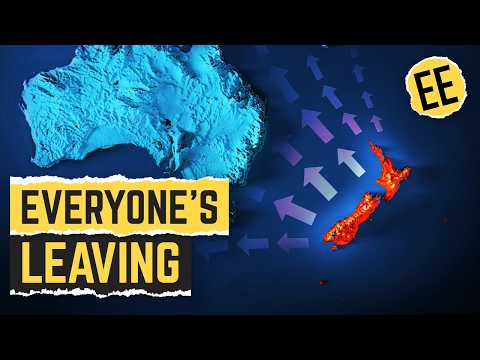
Economics Explained details the significant emigration from New Zealand, driven by a lack of opportunity and high cost of living, particularly unaffordable housing. Despite its high standard of living, New Zealand's remote location and small population make it difficult to build globally competitive industries, pushing skilled workers, especially young professionals, to seek better career prospects in Australia. This "braindrain" is exacerbated by close ties with Australia, allowing for easy migration and access to more plentiful educational and job opportunities.
Key takeaways
- New Zealand's economy is heavily skewed towards housing, contributing to extreme unaffordability and pushing young professionals to seek opportunities elsewhere.
- The close relationship and free movement agreement between New Zealand and Australia facilitate a significant 'braindrain' of skilled workers from NZ to Australia.
- Australia offers more diverse career opportunities and greater access to higher education, acting as a primary draw for emigrating New Zealanders.
- New Zealand's remoteness and small population make it challenging to develop globally competitive industries beyond agriculture and local services.
- Immigration to New Zealand, often from Asian population centers, is used to fill labor gaps but many migrants also eventually move to Australia, creating a 'revolving door' effect.
- Restricting the open relationship with Australia is politically difficult due to the large New Zealand diaspora in Australia and general public support for the flexibility.
Chapters
0:00
New Zealand's Unique Economic Landscape and Emigration Crisis
- New Zealand, despite its beauty and high standard of living, experiences one of the world's highest emigration rates per capita.
- Over 10% of New Zealand's population lives in Australia, with many departing emigrants being highly productive young workers.
- The exodus is fueled by a lack of economic opportunities, with skilled workers leaving to fill gaps created by immigration.
3:59
Economic Challenges: Remoteness, Industry Limitations, and Housing Affordability
- New Zealand's economy is constrained by its small population (similar to Sydney) and extreme remoteness, making globally competitive industries difficult to sustain.
- Industries like financial services are better served by hubs like Singapore or Sydney due to proximity and integration into global systems.
- The economy is heavily reliant on housing (selling, renting, building, financing), leading to extreme unaffordability despite government interventions like foreign buyer bans (which excluded Australians).
13:24
The Pull of Australia: Opportunity, Education, and Ease of Migration
- New Zealanders primarily seek opportunity, with Australian cities offering more diverse career paths beyond agriculture and real estate.
- Close legal and political ties with Australia (similar to the EU) allow free movement, work, and housing purchase for citizens of both nations.
- Australia offers more plentiful educational opportunities, with New Zealand students treated similarly to locals for tuition and loans, leading to a significant number of Kiwis studying there.
Summary, takeaways, and chapters were generated by AI from the video's transcript and may contain errors. The video belongs to its creator, Economics Explained.