Why Europe's GDP Growth Is Crippling Its Economy
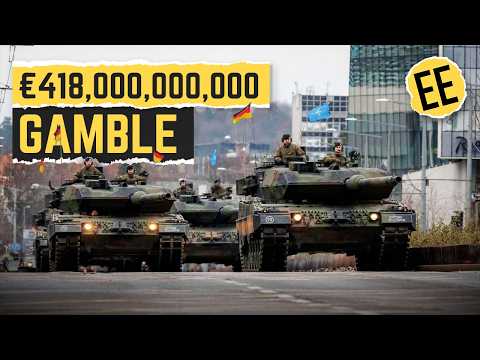 Watch on YouTube →
Overview
Europe is significantly increasing military spending, a shift not seen since the Cold War, with defense spending projected to be 75% higher by the end of 2025 compared to 2021. While this surge could stimulate Europe's stagnant economy through military Keynesianism, the actual economic multiplier effect is estimated to be low (0.3-0.8) due to a high proportion of spending on personnel and maintenance rather than R&D or investment. Furthermore, a substantial portion of this spending leaks out of the EU, primarily to the US, limiting domestic economic benefits and raising questions about opportunity costs compared to investments in infrastructure or social programs.
Key takeaways
- European defense spending is set to increase by over 75% by the end of 2025 compared to 2021 levels.
- Military Keynesianism posits that defense spending can stimulate economies, but research suggests a low fiscal multiplier (0.3-0.8) for defense.
- Nearly 70% of European defense budgets are allocated to personnel and upkeep, with less than 5% for R&D.
- Approximately 80% of EU defense procurement spending benefits non-EU suppliers, primarily in the US, leading to significant economic leakage.
- Investing in defense diverts resources from other critical areas like infrastructure, education, and healthcare, which have compounding long-term economic benefits.
- GDP growth from military spending does not necessarily translate to improvements in quality of life metrics like health, safety, or education.
Chapters
- EU defense spending is rapidly increasing, projected to be 75% higher by the end of 2025 than in 2021.
- This surge follows decades of declining defense budgets since the end of the Cold War.
- NATO members, particularly those bordering Russia, are prioritizing defense, with Poland already at 4.5% of GDP.
- By 2035, NATO aims for members to spend 5% of GDP on defense, including infrastructure.
- Military Keynesianism suggests government spending, including on defense, stimulates the economy via the multiplier effect.
- Spending on tanks, like building schools, circulates money through wages and consumer spending.
- However, research estimates the fiscal multiplier for defense spending is low, between 0.3 and 0.8.
- This is attributed to nearly 70% of defense budgets going to personnel, operations, and maintenance, not R&D.
Summary, takeaways, and chapters were generated by AI from the video's transcript and may contain errors. The video belongs to its creator, Economics Explained.