Why Do We Need Empathy? - Jane Shaw
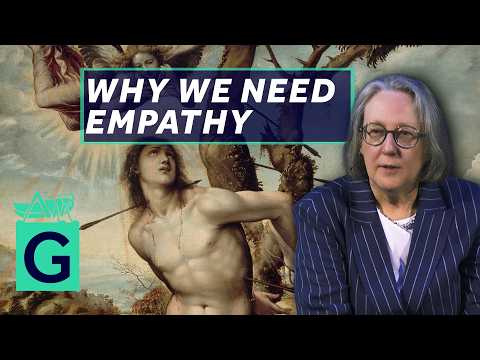 Watch on YouTube →
Overview
Jane Shaw's lecture explores the necessity and multifaceted nature of empathy, tracing its historical roots from Vernon Lee's early work on aesthetic experience to contemporary discussions on its role in democracy and personal well-being. Shaw argues that empathy, encompassing both cognitive perspective-taking and affective resonance, is crucial for understanding diverse viewpoints, fostering social cohesion, and navigating complex global challenges, particularly in an era of increasing digital distraction and potential manipulation.
Key takeaways
- Vernon Lee, an early proponent of empathy, defined it as projecting oneself into unfamiliar situations, distinct from sympathy.
- Martha Nussbaum and Adam Smith's work highlights empathy's crucial role in democratic societies and moral development.
- The arts, particularly novels and visual art, serve as powerful tools for cultivating empathy by eliciting emotional identification and perspective-taking.
- Patrick Bringley's experience with art demonstrates how empathy can bridge cultural and temporal divides, revealing shared human experiences.
- Criticisms from Paul Bloom and others suggest empathy can be biased and narrow, advocating for compassion and rational analysis as complements.
- A decline in deep reading and the rise of digital distractions pose significant challenges to developing the empathetic imagination necessary for a healthy democracy.
Chapters
0:00
Introduction and the Origins of Empathy
- Gresham College opens its academic year, focusing on arts and humanities.
- Vernon Lee (Violet Paget) introduced 'empathy' into British English, building on German 'Einfühlung'.
- Lee defined empathy as projecting oneself into unfamiliar situations or objects, distinct from sympathy.
5:50
Empathy in Aesthetics and Psychology
- Vernon Lee's research on aesthetic experience involved recording physical and mental responses to art.
- Psychologists explored mimicry and emotional contagion as central to empathy and personality development.
- Mirror neurons are discussed as a biological basis for empathy.
- Empathy is divided into cognitive (perspective-taking) and affective (shared emotional response) aspects.
14:02
Empathy's Role in Democracy and Society
- Martha Nussbaum argues democracy requires the humanities and narrative imagination to understand others.
- Global challenges necessitate cooperation, making understanding others vital.
- Adam Smith's 'Theory of Moral Sentiments' (1759) proposed sympathy as an intrinsic human quality.
20:50
The Novel as a Tool for Empathy
- The rise of the modern novel paralleled the Enlightenment, eliciting emotional identification with characters.
- Novels like Samuel Richardson's 'Clarissa' and Charles Dickens' works fostered compassion for different social classes.
- Historian Thomas Laqueur describes novels as humanitarian narratives focusing on bodily suffering.
25:05
Empathy as an Imaginative Journey
- Empathy involves imaginatively stepping into others' shoes, understanding their feelings and perspectives.
- Marilynne Robinson emphasizes imaginative love for those we don't know as foundational to community.
- Books are vital for developing narrative imagination and understanding human experience.
30:04
Empathy Through Visual Arts
- James Baldwin called artists 'disruptors' who reveal the beloved to themselves.
- Daniel Goldstein's 'Invisible Man' sculpture uses syringes to represent loss and suffering from AIDS.
- Il Sodoma's 'St. Sebastian' painting, contemplated by Vernon Lee, evokes physical reactions to suffering.
- Jacob Epstein's 'Lazarus' sculpture explores the ambiguity of returning to life and facing change.
38:26
Art, Attention, and Resonance
- Patrick Bringley's 'All the Beauty in the World' highlights the importance of patient attention to art and visitors.
- Bringley found resonance with a 16th-century dervish painting, connecting with its inscription about sorrow.
- Rebecca Solnit's concept of the 'far away nearby' describes empathy as a journey expanding our understanding.
- Zadie Smith discusses identifying with characters like Olive Kitteridge, despite differences in background.
Summary, takeaways, and chapters were generated by AI from the video's transcript and may contain errors. The video belongs to its creator, Gresham College.