Why $129,000 Is the New Poor
 Watch on YouTube →
Overview
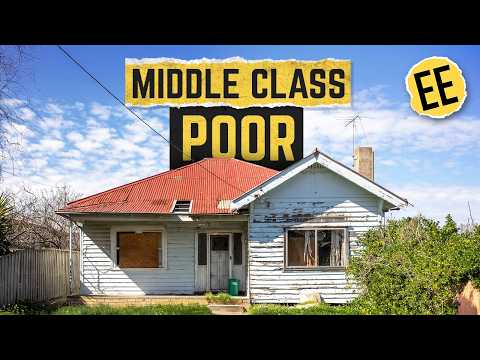
Economics Explained argues that the official US poverty line of $31,000 is outdated and no longer reflects the true cost of living, leaving households earning the median income of $83,000 feeling financially fragile. The video details how essential expenses like housing, healthcare, and childcare have outpaced inflation and wage growth, creating a 'benefits cliff' where earning slightly more can lead to a significant loss of essential support.
Key takeaways
- The official US poverty line of $31,000 for a family of four is based on a 1960s model where food was 1/3 of expenses; today, food is only 8%.
- Applying the original methodology with current spending data would place the poverty line closer to $130,000.
- Essential costs like housing (median home price is 5x annual income nationally), healthcare premiums ($27,000 for family coverage), and childcare ($10,000+ per child) consume a disproportionate amount of income.
- The 'benefits cliff' creates disincentives to earn more, as losing government assistance like food stamps or childcare subsidies can lead to a net financial loss.
- During the COVID-19 pandemic, the cessation of commuting and childcare expenses significantly boosted household savings, demonstrating the impact of these fixed costs.
- Despite rising incomes, the shrinking middle class and increased financial fragility are driven by essential costs rising faster than wages and outdated poverty benchmarks.
Chapters
0:00
The Disconnect Between Median Income and Financial Stability
- The US median household income of $83,000 is intended to represent a comfortable middle-class life, but many families find it insufficient.
- The official poverty line for a family of four is just over $31,000, a benchmark that determines eligibility for crucial assistance programs.
- Essential expenses like housing, transportation, healthcare, and childcare consume a large portion of income, leaving little room for emergencies.
8:13
The Origin and Limitations of the Poverty Line
- The US poverty threshold was established in the early 1960s by Mollie Orshansky, based on the cost of food multiplied by three.
- This method assumed food was 1/3 of expenses, a ratio that has drastically changed, with food now representing about 8% of spending.
- If Orshansky's method were applied to current spending patterns, the poverty line for a family of four would be around $130,000.
12:06
The Benefits Cliff and Widening Economic Gaps
- Raising the poverty line would significantly increase government spending on programs like Medicaid and SNAP, which is a barrier to updating the benchmark.
- The 'benefits cliff' occurs when small wage increases cause families to lose essential benefits, resulting in a net decrease in disposable income.
- During the pandemic, the temporary reduction in commuting and childcare costs led to a surge in savings, highlighting how much of the budget is fixed participation costs.
- Rising costs for housing, insurance, and healthcare continue to widen the gap between official measures of well-being and lived financial reality.
Summary, takeaways, and chapters were generated by AI from the video's transcript and may contain errors. The video belongs to its creator, Economics Explained.