Where Has Venezuela's Oil Gone?
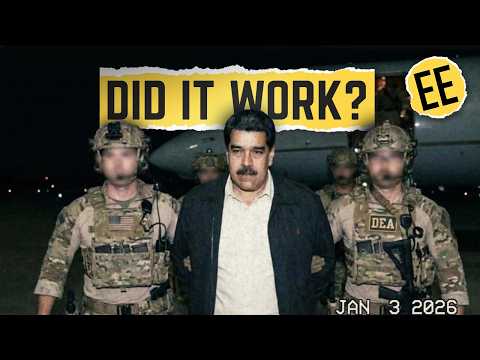 Watch on YouTube →
Overview
Following a US-led operation that ousted Nicolas Maduro, Venezuela's oil reserves, the world's largest, are being exploited to fund the country's rebuilding and repay debts. However, due to historical mismanagement, sanctions, and outstanding creditor claims, oil revenues are routed through opaque channels, initially to Qatar and later to a US Treasury account, with significant portions unaccounted for. Major oil companies are hesitant to invest the estimated $100 billion needed for infrastructure modernization due to past nationalizations and a lack of institutional confidence.
Key takeaways
- Venezuela's oil industry collapsed from 3.5 million bpd to 900,000 bpd due to sanctions, nationalization, underinvestment, and corruption.
- Oil revenues are being channeled through Qatar and a US Treasury account to avoid seizure by creditors like ConocoPhillips, who hold over $12 billion in arbitration awards.
- Major oil companies are hesitant to invest the estimated $100 billion needed for infrastructure upgrades due to past asset seizures and lack of confidence in Venezuela's stability.
- Venezuelan crude (e.g., Merey 16) is heavy and sour, trading at a significant discount to benchmarks like Brent crude.
- Exports have recovered to over 1.2 million bpd, with potential for 1.5-2 million bpd in 3-5 years if investment materializes and stability is maintained.
- US Gulf Coast refineries are specifically designed to process Venezuela's heavy, high-sulfur crude, presenting a potential long-term strategic benefit.
Chapters
0:00
Venezuela's Oil Reserves and the Post-Maduro Plan
- Venezuela holds the world's largest proven oil reserves, estimated at 303 billion barrels.
- A US operation captured Nicolas Maduro, aiming to use oil wealth for nation-building and debt repayment.
- Historical issues include infrastructure decay, underinvestment, corruption, and nationalization of foreign assets.
- Production has plummeted from 3.5 million barrels per day in the late 1990s to 900,000 barrels per day before the intervention.
6:00
Opaque Oil Exports and Legal Hurdles
- Prior to the intervention, Venezuela exported 80% of its oil to China via a 'gray market' using a shadow fleet and spoofed AIS data.
- The US plan involved unsanctioning Venezuela and facilitating legal oil sales through trading houses like Trafigura and Vitol.
- Major oil companies like ExxonMobil and ConocoPhillips are reluctant to invest due to past nationalizations and over $20 billion in outstanding claims.
- Oil revenues are routed through Qatar and later a US Treasury account to circumvent legal claims from creditors like ConocoPhillips, which has over $12 billion in awards.
Summary, takeaways, and chapters were generated by AI from the video's transcript and may contain errors. The video belongs to its creator, Economics Explained.