What is Old Norse Religion?
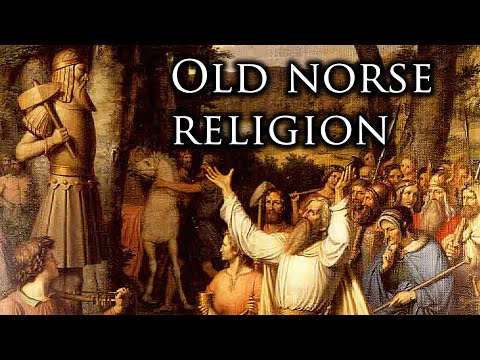 Watch on YouTube →
Overview
Old Norse religion was a diverse, polytheistic set of local traditions rather than a single creed: ritual, offerings, and maintaining relationships with gods and local spirits mattered more than uniform doctrine. The account connects its mythology—from Yggdrasil and the world’s creation to Ragnarök—with archaeological, runic, literary, and outsider sources, while explaining household customs, public blót, prominent deities, and the limits of reconstructing pre-Christian practice.
Key takeaways
- Old Norse religion is best reconstructed as varied local customs, not a unified creed: surviving myths and practices differ by place, period, and source.
- The evidence is uneven and often late: the Poetic Edda and Prose Edda were recorded in medieval Christian Iceland, while archaeology and runic inscriptions provide important independent clues.
- Religious practice emphasized exchange and social bonds: public blót combined offerings to the gods with shared feasts, while households made offerings to ancestors and landvættir.
- Norse cosmology linked creation, human life, and the world’s fate: Odin and his brothers formed the world from Ymir, and Ragnarök’s destruction is followed by a renewed earth.
- There was no single Norse afterlife doctrine; sources describe destinations including Hel, Valhalla, Freyja’s realm, and Helgafell.
- Ritual authority overlapped with civic power: goðar could lead ceremonies while serving political roles, and kings participated in public cult.
Chapters
0:00
Old Norse Religion: Scope, Polytheism, and Indo-European Connections
- The focus is the religious traditions of Scandinavia before Christianity became dominant, especially during the Viking Age, roughly the 8th–11th centuries.
- Norse communities recognized many gods and supernatural beings; the Æsir included Odin, Thor, and Baldr, while the Vanir included Freyr and Freyja.
- The gods were imagined with human-like personalities, and some divine names and traditions connect Norse religion to wider Indo-European heritage, including Greek Zeus and Norse Týr.
6:06
Archaeology, Runestones, Eddas, and the Limits of the Sources
- Archaeological evidence includes graves, statues, and cult objects; runestones provide inscriptions and sometimes images that can illuminate religious ideas and practice.
- The Poetic Edda survives largely in the 13th-century Codex Regius, while Snorri Sturluson’s Prose Edda was written in 13th-century Iceland partly as a guide to skaldic poetry.
- Skaldic poems, sagas such as the Völsunga saga, Roman accounts, Christian missionary writings, and Ibn Fadlan’s account add evidence but require critical reading.
- Most surviving evidence postdates a major linguistic and cultural shift around the 6th century, making earlier Scandinavian religion especially difficult to reconstruct.
14:13
Myths as Flexible Traditions, Not a Single Norse Creed
- Norse myths survive in differing versions across communities and periods, so the Poetic Edda cannot provide a complete or uniform account of belief.
- The tradition is better understood as an interconnected range of religious practices than as one standardized religion with fixed doctrine.
- The surviving sources support broad outlines, but interpretations of particular stories and the relationships among supernatural beings remain uncertain.
16:18
Yggdrasil, Midgard, and the Nine Worlds
- Yggdrasil, the great world tree, stands at the center of the cosmos; the Norns Urðr, Verðandi, and Skuld tend its roots and are associated with fate.
- Asgard is the gods’ realm, Midgard is the human world, and Útgarðr describes the outer regions associated with beings who oppose the gods, including the jötnar.
- The sources refer to nine worlds, including Álfheimr, Jötunheimr, and Niflheim, though their exact relationships and arrangement are not consistently described.
- Jörmungandr, the Midgard Serpent, encircles the world; its final battle with Thor is part of the events of Ragnarök.
21:20
Creation from Ymir and the Origins of Ask and Embla
- The creation account begins in Ginnungagap, where the primordial being Ymir and the cow Auðumbla appear; Auðumbla uncovers Búri by licking salty ice.
- Odin and his brothers Vili and Vé kill Ymir and fashion the world from his body, establishing a mythic source for the conflict between gods and giants.
- Accounts differ on how humans were made: one links their forms to the dwarves, while Snorri’s account says the gods shaped them from tree trunks.
- The first humans, Ask and Embla, receive life-giving qualities from gods; their names are associated with trees, echoing Yggdrasil’s place in the cosmos.
27:30
Ragnarök, Cosmic Renewal, and Religion as Practice
- Baldr’s death sets events toward Ragnarök, when Fenrir kills Odin and Thor and Jörmungandr kill one another as the world is destroyed.
- The Völuspá also describes renewal after the catastrophe: the earth rises again, and surviving gods meet to recall the old world.
- Norse religion had no universal creed or required orthodox account of these myths; practice and relationships with divine powers were more central than uniform belief.
- The Old Norse term siðr is presented as meaning custom or practice, capturing a tradition whose forms varied across time and place.
33:02
Household Rituals, Ancestors, and Multiple Afterlives
- Family life centered on the homestead, where rites accompanied birth, marriage, and death; Freyja could be invoked in connection with fertility and childbirth.
- Graves near homesteads and offerings of food or ale suggest that some families maintained relationships with deceased ancestors.
- Afterlife ideas varied: Hel was a shadowy destination, Valhalla was associated with warriors serving Odin, and other accounts name Freyja’s realm or a mountain called Helgafell.
- Household practices could include protective spells, divination using sticks, runic amulets, and miniature Thor’s hammers.
36:39
Odin, Thor, Freyr, Freyja, and Landvættir
- Odin combined roles as a god of warfare, poetry, wisdom, and runes; the Hávamál tells how he hangs on Yggdrasil to gain runic knowledge.
- Thor protected cosmic order with Mjölnir and was widely popular; archaeological finds and hammer-shaped amulets attest to his prominence.
- Freyr was associated with harvest, agriculture, and fertility, while Freyja connected fertility and love with seiðr and an afterlife realm.
- Households also respected landvættir, local spirits believed to inhabit features such as rocks, caves, streams, and bodies of water.
42:12
Blót Festivals, Animal Sacrifice, and Communal Feasts
- Blót was a central public rite in which communities made offerings to strengthen relations between people and the gods.
- Seasonal festivals included a spring gathering associated with Odin, an autumn harvest celebration associated with Freyr, and midwinter Yule.
- Animal sacrifice could involve collecting blood to sprinkle on divine images; the meat was cooked and shared, joining offerings to communal feasting.
- Claims of human sacrifice are treated cautiously because evidence is limited and some accounts come from later Christian writers.
47:17
Sacred Sites, Goðar, and the Seiðr of Völur
- Blót could occur at sacred places such as a hörgr, possibly an altar or stone structure; the nature of buildings called hof remains debated.
- A goði or gyðja could lead public rites, particularly in Iceland, while also holding political or other social roles rather than serving as a full-time priest.
- Kings had authority in public cult, and the account of the Christian King Hákon the Good participating reluctantly in a blót illustrates the overlap of religion and politics.
- Völur, female practitioners associated with seiðr, sought insight into hidden realities and future events; the Völuspá presents a völva recounting cosmic history.
51:32
Christianization, Surviving Customs, and Modern Norse Paganism
- Christianity became dominant in Scandinavia during the centuries after the first millennium, while some older customs persisted or were adapted within Christian culture.
- Modern movements use names including Ásatrú and Norse paganism; contemporary practitioners may hold blót and offer food or drink instead of performing animal sacrifice.
- The closing perspective emphasizes that Norse religion shaped family life, politics, public feasts, and ideas about humanity’s place between the gods and other cosmic forces.
Summary, takeaways, and chapters were generated by AI from the video's transcript and may contain errors. The video belongs to its creator, Let's Talk Religion.