What is Happiness? - Purposes of College Education, Lecture 2
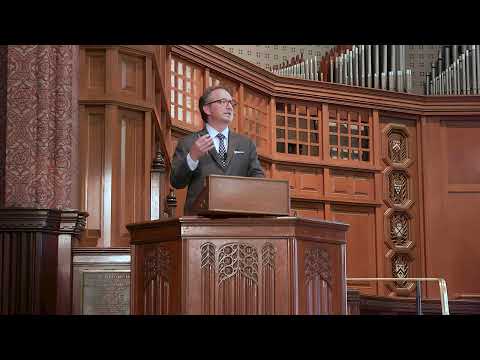 Watch on YouTube →
Overview
This lecture explores the concept of character and its relationship to happiness, drawing on ancient Greek philosophy (Heraclitus, Aristotle, Plato) and Eastern thought (Confucius). The discussion contrasts modern notions of character, like Angela Duckworth's 'grit,' with classical ideas of virtue and flourishing. Max Weber's distinction between facts and values in academia is examined, highlighting the university's role in prompting students to consider the ultimate meaning of their conduct, rather than providing definitive answers.
Key takeaways
- Heraclitus's ancient Greek concept 'a man's character is his fate' (ethos is anthropou daimon) suggests a deep connection between one's inner disposition and life's trajectory.
- Max Weber distinguished between 'positive' (descriptive, 'is') and 'normative' (prescriptive, 'ought') claims, arguing that science cannot answer 'how should we live?' questions.
- Aristotle identified happiness (eudaimonia) not merely as pleasure or honor, but as flourishing achieved through virtue and, ultimately, the contemplative life.
- Aristotle's ethical framework posits virtues as a mean between excess and deficiency (e.g., courage is between cowardice and rashness).
- The concept of liberal arts, as articulated by Aristotle and Confucius, emphasizes learning for its own sake, rather than solely for practical or vocational purposes.
- The poem 'Invictus' embodies the idea of character as resilience and self-determination, encapsulated in the lines 'I am the master of my fate, I am the captain of my soul'.
Chapters
0:00
Introduction: Character, Happiness, and the Purpose of Education
- Introduces the lecture's focus on happiness, virtue, justice, and character.
- Mentions Heraclitus's saying 'a man's character is his fate' (ethos is anthropou daimon).
- Outlines the course's theme: 'How should we live?' and introduces Max Weber's observations on university education.
0:44
The Concept of Character and its Modern Controversies
- Discusses the controversial nature of character education in universities.
- Contrasts conservative critiques (lack of character building) with progressive critiques (unintentionally passing on authoritarian values).
- Explains the Greek word 'ethos' for character, culture, or atmosphere.
5:51
Angela Duckworth's 'Grit' vs. Classical Notions of Character
- Introduces Angela Duckworth's theory of 'grit' as the ability to persevere.
- Critiques 'grit' as a potentially middle-class, 21st-century capitalist notion focused on self-regulation.
- Suggests Aristotle and Confucius offer different elements of character beyond grit.
8:10
Max Weber: Science, Vocation, and the Fact-Value Distinction
- Introduces Max Weber, founder of modern sociology, and his lectures 'Science as a Vocation' and 'Politics as a Vocation'.
- Explains Weber's paraphrase of Tolstoy: 'Science is meaningless because it has no answer to the only questions that matter to us: What should we do? How should we live?'
- Distinguishes between 'positive' (descriptive, 'is') and 'normative' (prescriptive, 'ought') claims in social science.
14:30
The University's Role: Facts vs. Values and Ultimate Meaning
- Argues that science cannot answer normative questions about how one should live.
- Weber's view: university professors should help individuals 'give himself or herself an account of the ultimate meaning of his own conduct'.
- Contrasts academic focus on 'is' with the search for 'ultimate meaning'.
18:30
Aristotle on Happiness: Pleasure, Honor, Virtue, and Contemplation
- Aristotle's Nicomachean Ethics defines happiness (eudaimonia) as 'living well and fairing well'.
- Discusses common identifications of happiness with pleasure, wealth, or honor.
- Prioritizes virtue and the contemplative life over pleasure and wealth as the highest goods.
29:00
Aristotle's Virtues: The Mean Between Excess and Deficiency
- Explains Aristotle's concept of virtue as a mean between extremes (e.g., courage between cowardice and rashness).
- Lists virtues like temperance, liberality, magnificence, pride, good temper, friendship, truthfulness, and ready wit.
- Highlights that many virtues are time-bound to 4th-century BC Athenian culture.
34:30
Confucius's Virtues and the Liberal Arts Tradition
- Introduces Confucius's virtues: humaneness (ren), righteousness (yi), ritual propriety (li), wisdom (zhi), and trustworthiness (xin).
- Compares Confucius's virtues with Aristotle's, noting shared concepts and differences (e.g., propriety vs. magnificence).
- Discusses the concept of liberal arts, emphasizing learning for its own sake, not just for wage-earning.
42:15
Character as Resilience: Invictus and Self-Determination
- Reflects on character as the ability to withstand the 'buffeting of circumstance'.
- Quotes William Ernest Henley's poem 'Invictus' ('I am the master of my fate, I am the captain of my soul').
- Connects the poem to Nelson Mandela's resilience during his 27 years of imprisonment.
Summary, takeaways, and chapters were generated by AI from the video's transcript and may contain errors. The video belongs to its creator, YaleCourses.