Unfortunately, AI Might Be Turning Us Into Peasants
 Watch on YouTube →
Overview
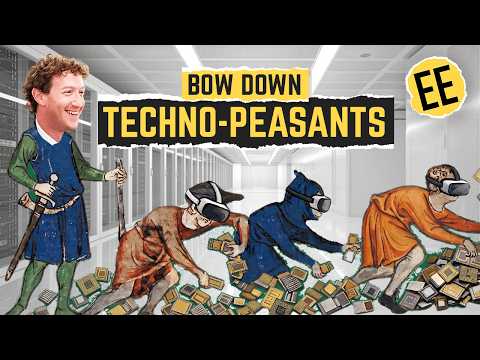
Economics Explained explores the concept of techno-feudalism, arguing that large tech platforms are increasingly acting like feudal lords by extracting rents and controlling the means of digital production, mirroring historical feudalism's land-based hierarchy. This shift, accelerated by AI, concentrates power and wealth in the hands of a few "technobility," reducing labor's bargaining power and transforming ownership into access, a dynamic exemplified by platforms like YouTube, Apple, and Amazon taking significant cuts from creators and sellers.
Key takeaways
- Techno-feudalism describes a system where tech platforms own digital production means, extract rents, and reduce labor's power, akin to historical feudalism.
- Platforms like YouTube, Apple, and Amazon take substantial cuts (e.g., 30-45%) from creators and sellers, enabled by network effects and moats.
- AI is poised to accelerate this by replacing human labor, further diminishing worker bargaining power and increasing platform owner control.
- The shift from ownership to access (subscriptions, streaming) concentrates wealth with platforms, unlike traditional ownership models.
- While distinct from legal bondage, the limited viable alternatives on dominant platforms reduce meaningful user choice.
- Fostering competition through regulation (e.g., Digital Markets Act) and clarifying data ownership are key to mitigating techno-feudal dynamics.
Chapters
0:00
Defining Techno-Feudalism and its Historical Precedent
- Techno-feudalism describes powerful tech companies owning wealth generation tools, forcing others to rent them for subsistence.
- Traditional feudalism was land-based, with lords owning land and serfs working it for protection and a share of produce.
- Feudalism's economic limitations included lack of social mobility, limited innovation, and a Malthusian ceiling on growth.
- The Black Death shifted power to labor, making it scarce and valuable, thus breaking feudalism's rigid structure.
13:55
The Digital Shift: Capital as the New Bottleneck
- In the digital age, capital (network infrastructure, algorithms, user bases) replaces land as the primary bottleneck.
- Platforms like YouTube, Apple, and Amazon take significant cuts (e.g., 45% for YouTube ad revenue, 30% for app stores).
- Network effects create moats, making it hard for competitors to emerge and allowing commission rates to rise.
- The gig economy, exemplified by Uber, shifts capital costs and risks to workers while platforms take a cut for digital connection.
20:36
AI's Role in Accelerating Techno-Feudal Dynamics
- AI is a major accelerant, potentially replacing human labor and dramatically reducing labor's bargaining power.
- The shift from ownership to access (subscribing to software, streaming music) means wealth accumulation flows to platform owners.
- Platform owners face incentives to crush competition and "inch-flation" (raising prices for the same service) rather than innovate for consumer benefit.
- Companies like Google, Amazon, and Microsoft plan massive AI infrastructure investments ($725 billion in 2026), creating value but also potentially reducing labor's worth.
Summary, takeaways, and chapters were generated by AI from the video's transcript and may contain errors. The video belongs to its creator, Economics Explained.