The Replication Crisis | Understanding Medical Research
 Watch on YouTube →
Overview
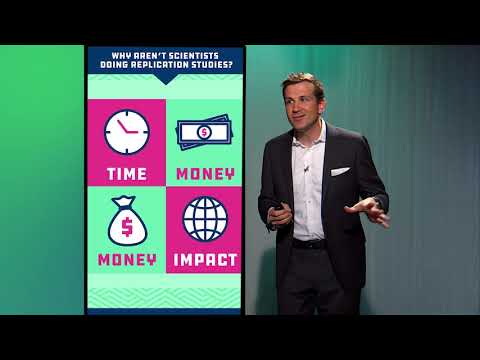
The replication crisis in medical research highlights the unreliability of single studies, particularly positive findings, which often receive undue attention. This lecture defines the replication crisis, distinguishes between positive and true studies, and introduces medical reversal. It explains why replication is crucial, the challenges in conducting it (time, money, impact, funding criteria), and the FDA's requirement for two independent trials to confirm drug efficacy, contrasting with NIH's focus on innovation.
Key takeaways
- A positive study result does not confirm a hypothesis; it only indicates that the study's data is consistent with it, and luck or bias can play a role.
- False positive studies, which incorrectly suggest an intervention is effective, are more detrimental to public health and scientific progress than false negatives.
- Replication is a critical mechanism for scientific self-correction, but it is disincentivized by the current academic system's focus on novelty and impact over verification.
- Funding bodies like the NIH prioritize innovation, making it difficult to secure grants for replication studies, despite their importance for validating research.
- The FDA's requirement for two independent trials before marketing approval acknowledges the unreliability of single studies and the importance of reproducible results.
- Medical reversals, where new evidence overturns established practices, demonstrate the ongoing need to critically re-evaluate existing knowledge through rigorous research.
Chapters
0:00
Defining the Replication Crisis and Study Types
- The replication crisis questions the reliability of scientific findings, especially in medicine.
- Distinguishes between positive studies (data supports hypothesis) and true studies (hypothesis is actually correct).
- Explains four study types: positive/negative for true/false hypotheses, with a focus on false positives.
- Demonstrates how a single positive result can be misleading, like guessing a number correctly by chance.
5:41
The Impact of Positive vs. Negative Studies and the Need for Replication
- Positive studies generate significant media attention and headlines, while negative studies are often ignored.
- False positive studies (claiming a drug works when it doesn't) are more harmful than false negatives (missing a working drug).
- Replication is essential to verify results, as a single lucky guess or flawed study can lead to widespread misinformation.
- A 2005 JAMA study found that out of 49 highly cited research studies, 7 were contraindicated, 7 had weaker effects, 20 replicated successfully, and 11 had no follow-up.
11:43
Barriers to Replication and Medical Reversal
- Replication is hindered by time, cost, lack of scientific impact/recognition, and funding agency criteria that prioritize innovation over verification.
- The FDA requires two independent controlled clinical trials for drug approval, acknowledging that one study can be lucky.
- Medical reversal occurs when a better-designed study contradicts current medical practice, with 40% of studies assessed by Vinay Prasad and Adam Cifu reversing standard care.
- Examples of medical reversal include intensive glucose lowering in type 2 diabetes and the use of allergen impermeable bed covers for asthma.
Summary, takeaways, and chapters were generated by AI from the video's transcript and may contain errors. The video belongs to its creator, YaleCourses.