The problem with de-extinction | with Sadiah Qureshi
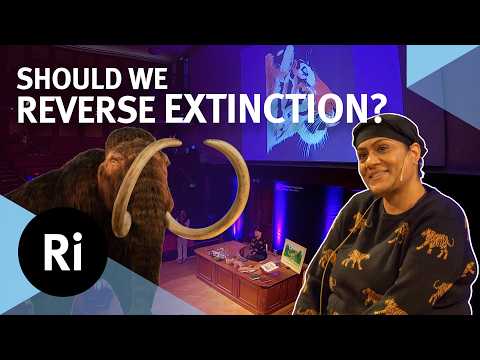 Watch on YouTube →
Overview
Sadiah Qureshi traces the historical and philosophical evolution of extinction, from early theological views of stable species to the scientific acceptance of deep time and human antiquity. She highlights key figures like Georges Cuvier and Thomas Henry Huxley, and pivotal discoveries like the Neanderthal fossils, demonstrating how the understanding of extinction shifted from a prehistoric phenomenon to a present-day concern. Qureshi then explores the emerging field of de-extinction, driven by advancements in cryopreservation and genetic engineering, and critically examines its ethical, economic, and ecological implications, questioning whether it represents true revival or a way to delay addressing the root causes of biodiversity loss.
Key takeaways
- The historical understanding of extinction evolved from a theological concept of divine stability to a scientific acceptance of deep time, influenced by figures like Georges Cuvier and discoveries of fossils like Neanderthals.
- The development of cryopreservation and genetic engineering has led to the emergence of 'de-extinction' technologies, exemplified by the cloning of the Pyrenean ibex and projects aiming to revive mammoths and passenger pigeons.
- Critics of de-extinction argue it could divert crucial resources from conserving currently endangered species and their habitats, potentially diminishing the urgency of preventing ongoing extinctions.
- De-extinction challenges the finality of extinction, potentially reframing it as a temporary inconvenience rather than an irreparable loss, which could weaken the motivation for current conservation efforts.
- The debate over de-extinction highlights a fundamental question: whether to focus on reviving lost species or on fostering better relationships with living beings, recognizing their intrinsic rights and needs.
- Ultimately, Sadiah Qureshi suggests that true progress lies not in technological fixes like de-extinction, but in transforming human relationships with nature towards care, accountability, and reciprocity, thereby reducing the likelihood of future extinctions.
Chapters
- Up to the late 18th century, species were viewed as stable, unchanging creations of God.
- The idea of species vanishing was considered implausible, even ungodly.
- When species were lost, it was often attributed to human exploitation (extirpation, eradication) rather than inherent natural processes.
- Georges Cuvier's comparative anatomical research on mammoth and elephant fossils in the late 18th/early 19th centuries established the concept of extinct species.
- Kuvier's work convinced geologists that Earth once hosted ancient populations of now-lost creatures like mammoths.
- This research laid groundwork for understanding Earth's deep history and the existence of prehistoric life.
- The 1856 discovery of Neanderthal remains near Dusseldorf challenged prevailing views on human antiquity.
- Thomas Henry Huxley's 1863 essay 'Man's Place in Nature' compared Neanderthals to modern colonized peoples, suggesting a link to 'stone age' hunters.
- This 'collapsing of time' created a prejudiced stereotype of certain peoples as less civilized, reflecting 19th-century debates on human evolution.
- By the mid-19th century, animal and human extinctions were established, leading to concern for present-day species.
- The Great Auk (Pinguinus impennis) was driven to extinction by commercial exploitation for its skins and eggs, with the last pair killed in 1844.
- The Passenger Pigeon (Ectopistes migratorius), once numbering billions, faced rapid decline due to commercial hunting, with the last known individual, Martha, dying in 1914.
- Alfred Newton viewed extinction as a progressive process of loss triggered by human destructiveness, a significant shift from prehistoric understanding.
- This perspective led Newton to advocate for wildlife protection, contributing to the first British legislation for seabirds in 1869.
- He became involved with the Royal Society for the Protection of Birds, highlighting the nascent conservation movement.
- North American bison populations plummeted from 60 million to 456 by the 1890s, partly due to deliberate extermination for colonization and museum collection.
- Yellowstone National Park became the last sanctuary, leading to dedicated reservations and a slow population recovery.
- The bison's near-extinction and subsequent recovery, driven by figures like William Temple Hornaday, marked an early success in species intervention.
- Advancements in cryopreservation (freezing biological tissue with glycerol) and IVF have enabled the creation of 'frozen arks' or genomic libraries.
- The 1949 discovery of freezing biological tissues without damage by Pulver, Smith, and Parks was crucial.
- John Brinkley's work with frozen bull semen (leading to Frosty in 1953) and Kurt Benirschke's 'frozen zoo' (10,000+ samples) exemplify this technology.
- The Pyrenean ibex (Capra pyrenaica pyrenaica), declared extinct in 2000 after the death of the last individual, Celia, was briefly cloned.
- Scientists used Celia's frozen ear tissue to create 208 embryos, resulting in one clone born via C-section, which died within minutes due to lung defects.
- This experiment raises questions about whether a species is truly extinct if genetic material exists, and if a non-viable clone constitutes de-extinction.
Summary, takeaways, and chapters were generated by AI from the video's transcript and may contain errors. The video belongs to its creator, The Royal Institution.