The Cell and Protein Synthesis, BIO105 Introductory Biology, David Champlin, USM
 Watch on YouTube →
Overview
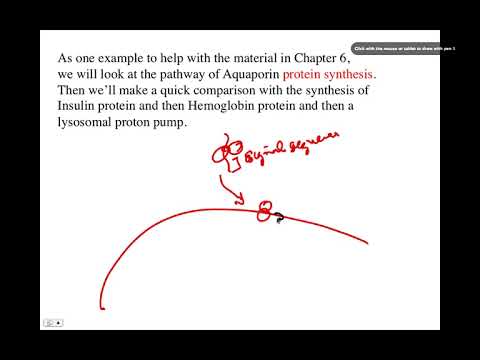
David Champlin explains protein synthesis and intracellular trafficking in eukaryotic cells through four examples: membrane-bound aquaporin, secreted insulin, cytoplasmic hemoglobin, and a lysosomal proton pump. The examples connect DNA-to-mRNA-to-protein synthesis by ribosomes with signal peptides, rough endoplasmic reticulum, Golgi processing, vesicle transport, exocytosis, and mannose-6-phosphate targeting.
Key takeaways
- Ribosomes translate mRNA into amino-acid chains in all cells, but a signal peptide can route a growing protein to the rough ER for membrane insertion or secretion.
- Aquaporin is synthesized into the rough ER membrane, transported through Golgi-bound vesicles, and delivered to the plasma membrane by exocytosis.
- Insulin follows the ER-to-Golgi secretory pathway but travels inside vesicles and is released outside the cell when vesicles fuse with the plasma membrane.
- Hemoglobin illustrates the alternative cytoplasmic route: without an ER-targeting signal, it is synthesized by free ribosomes and remains in the cell’s cytoplasm.
- Lysosomal proton pumps pass through the rough ER and Golgi, where a mannose-6-phosphate tag helps target them to lysosomes instead of the cell surface.
Chapters
0:00
Aquaporin and the Eukaryotic Cell Context
- Aquaporin is a transmembrane protein: it crosses the phospholipid bilayer and forms a channel for water movement.
- The examples focus on eukaryotes, including plant and animal cells, yeast, and other fungi; their DNA is enclosed by a nuclear membrane.
- Champlin frames organelles and protein synthesis as a connected story to help organize the many cell structures and terms.
5:00
Ribosomes Translate mRNA into Proteins
- Ribosomes in both prokaryotic and eukaryotic cells join amino acids with peptide bonds, using mRNA copied from DNA as the template.
- Champlin distinguishes proteins that remain in the cytoplasm, such as hemoglobin, from proteins destined for membranes or secretion, such as aquaporin and insulin.
- A signal peptide near the beginning of some proteins directs the ribosome and growing protein toward the rough endoplasmic reticulum.
9:00
Signal Peptides Route Aquaporin to the Rough ER
- After a ribosome begins translating aquaporin mRNA in the cytoplasm, its signal sequence directs the ribosome to dock on the rough ER.
- The rough ER is studded with ribosomes and synthesizes many membrane-bound and secreted proteins; its internal space is called the lumen.
- Aquaporin enters the ER membrane during synthesis, where hydrophobic amino acids help anchor it in the lipid bilayer; insulin instead enters the ER lumen.
14:00
Golgi Vesicles Deliver Aquaporin and Secrete Insulin
- A vesicle buds from the rough ER carrying membrane proteins such as aquaporin, then fuses with the Golgi apparatus for processing and modification.
- Golgi-derived vesicles transport their cargo to the cell membrane; fusion adds vesicle lipids and proteins to the membrane through exocytosis.
- Insulin carried inside a vesicle is released outside the cell when that vesicle fuses with the plasma membrane.
21:00
Hemoglobin and Lysosomal Proton Pump Take Different Routes
- Hemoglobin is synthesized by ribosomes without ER-targeting signal peptides and remains in the cytoplasm of immature red blood cells.
- A lysosomal proton pump is made through the rough ER and Golgi pathway, then routed to the lysosome rather than the cell surface.
- The Golgi adds a mannose-6-phosphate tag to lysosomal proteins, helping direct vesicles carrying them to the lysosome, where proton pumps help maintain an acidic interior.
Summary, takeaways, and chapters were generated by AI from the video's transcript and may contain errors. The video belongs to its creator, The New Evolution for Everyone.