TEDxGallatin - Amanda D'Annucci - Storytelling, Psychology and Neuroscience
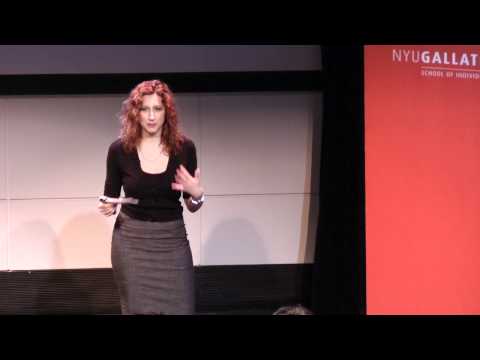 Watch on YouTube →
Overview
Amanda D’Annucci argues that storytelling engages more of the brain than presenting data alone and can support conflict resolution by making others’ experiences emotionally accessible. She connects neuroscience with examples from Michael Jackson’s research among the Koranko people in Sierra Leone and storytelling workshops involving Israeli and Palestinian Israeli students, where shared narratives encouraged empathy and community ties without requiring agreement.
Key takeaways
- Narrative engages memory-related regions such as the amygdala–hippocampus system and language-related regions such as the left perisylvian area.
- Stories can make politically charged events easier to understand by connecting a sequence of events and showing how those events interact.
- Michael Jackson’s storytelling work with the Koranko people in Sierra Leone used listener participation to explore the ethical implications of political stories.
- Shared storytelling can strengthen community bonds without producing consensus; participants can retain different viewpoints while sharing a common experience.
- In Israeli-Palestinian student workshops, personal stories helped listeners recognize familiar feelings in people they had viewed primarily as enemies.
Chapters
0:00
Why Narrative Engages the Brain
- Amanda D’Annucci contrasts storytelling with data-heavy communication, arguing that narrative activates a broader range of the brain.
- She identifies the amygdala–hippocampus system, involved in encoding episodic and autobiographical memories, and the left perisylvian region, involved in language.
- D’Annucci notes that corresponding brain regions activate in storytellers and listeners, linking narrative to shared human experience.
1:15
Stories as a Tool for Understanding Conflict
- D’Annucci’s Gallatin master’s thesis explores storytelling as a tool for conflict resolution and peacemaking.
- Stories connect events into meaningful relationships, helping listeners interpret experiences rather than receive isolated facts.
- She describes narrative as a widespread human practice, spanning oral folklore and hunter-gatherer traditions to contemporary writing for film, Broadway, and television.
3:15
Koranko and Israeli-Palestinian Storytelling Examples
- Researcher Michael Jackson’s sessions with the Koranko people of Sierra Leone let listeners participate in stories about politically and socially significant issues.
- Shared storytelling strengthened community commitment and civil-society ties without requiring participants to adopt one unified opinion.
- In workshops involving Israeli and Palestinian Israeli students, personal accounts helped participants recognize experiences on the other side; one Palestinian student connected with an Israeli peer’s feeling of not being at home.
- D’Annucci concludes that stories can move groups beyond a victim–perpetrator framing toward greater acceptance and respect.
Summary, takeaways, and chapters were generated by AI from the video's transcript and may contain errors. The video belongs to its creator, TEDx Talks.