Rick Rubin: The Only Skill That Matters Now Is The One Thing AI Can Never Steal!
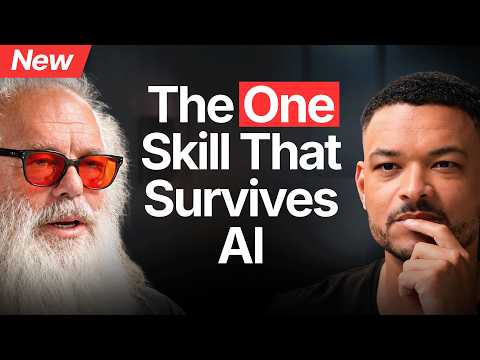 Watch on YouTube →
Overview
Rick Rubin discusses the creative process, emphasizing intuition and "indefensible" artistic choices that push boundaries, drawing parallels between art and entrepreneurship. He highlights the importance of personal expression over commercial success, the role of "vibe coding" as an "indefensible act" that led to unexpected outcomes, and the transformative power of meditation, particularly Transcendental Meditation, in fostering clarity and creativity. Rubin also touches on the societal suppression of creativity, the pitfalls of comparison, and the necessity of embracing uncertainty and risk to achieve greatness, drawing on examples from artists like Jay-Z, Kanye West, and System of a Down.
Key takeaways
- True creativity stems from "indefensible" personal expression and intuition, not from conforming to trends or seeking external validation.
- Meditation, particularly Transcendental Meditation, is a crucial practice for self-discovery, clarity, and accessing deeper creative potential.
- Embracing risk and uncertainty is essential for achieving greatness; playing it safe leads to ordinary outcomes.
- AI can be a powerful tool for artists, but the core creativity lies in the human "prompt" and the unique "point of view" it generates.
- Authentic self-expression, whether in art or life, involves shedding limiting identities and embracing the freedom to "reset" and start anew.
- The most impactful art comes from a place of personal conviction and is offered as a gift, not created for commercial success or external approval.
Chapters
- Jay-Z's lyrical process involves mumbling and humming over a beat for 20-30 minutes before recording.
- He doesn't physically write lyrics, demonstrating an internal creative generation.
- The production of "99 Problems" exemplifies this method, with Jay-Z internalizing the beat before verse creation.
- Rubin has worked with a vast array of iconic artists including Jay-Z, Adele, Kanye West, and the Red Hot Chili Peppers.
- He attributes these collaborations to 40 years of experience in music production.
- He views his clients as "ordinary people who made a decision" rather than inherently special individuals.
- Eminem is characterized by his constant writing and obsessive drive to be the best.
- This dedication fuels his continuous creative output.
- Creativity is often "beaten out" by educational systems that prioritize rules and control over free thinking.
- The suggestion is to break free from these constraints and express oneself freely.
- Greatness is revealed through taking risks, which may require sacrificing aspects of one's current life.
- Rubin experienced a severe depressive episode in his early 30s.
- This period was marked by panic attacks, insomnia, and illness, feeling like being shot with a "poison arrow."
- Rubin identifies primarily as being involved in "art and creativity."
- His role can be that of a coach, collaborator, or consultant for various projects, including film and startups.
- He sees a creative path as a solution to most problems or areas for improvement.
- Rubin explores the concept of "indefensible" in art, viewing it as a positive and necessary extreme.
- This approach goes beyond reason, leaning into intuition and guidance from a "creative force of the universe."
- A meme about "vibe coding" emerged, associating Rubin with the term.
- He responded with an "indefensible act" of writing a joke tweet: "Tools will come, tools will go, only the vibe coder remains."
- The tweet gained 1.5 million views, prompting him to write a book on "vibe coding" as a creative experiment.
- Labels, whether self-imposed or external, limit individuals and make them "smaller."
- The pursuit of creative freedom requires resisting these labels to remain open to all "callings."
- Rubin worked on Kanye West's "Jesus Is King" album, described as an "anti-hip hop album."
- This was an intentional move, pushing into an "indefensible realm" of sound and style.
- The focus was on artistic integrity, not near-term commercial incentives.
- Rubin never considers near-term incentives, focusing on creating "things that are truly personal."
- Art is viewed as a "diary entry" – a personal, true expression.
- This approach aims to expand the listener's perspective beyond "more of the same."
- Rubin advised Linkin Park to move beyond their established rap-rock sound.
- This decision alienated half their audience but set them up for a longer career by finding a "new sound."
- The album "Kid A" represented a significant departure from Radiohead's previous work.
- It alienated some fans but is now considered a potentially favorite album, showcasing the value of creative risk.
- Rubin distinguishes between the "art game" (personal expression) and the "investment commerce game" (market-driven success).
- He prioritizes the art game, focusing on making his "favorite thing."
- Rubin's 40-year career is built on taking risks and making personal favorite things.
- This approach has led to "revolutionary things" that inspire artists to be freer and more honest.
- The goal is to make the world a more interesting place through art.
- Jay-Z's "99 Problems" was created for his "Black Album," intended as his retirement swan song.
- Chris Rock suggested "99 problems" as a hook, inspired by Ice-T's song.
- Rubin suggested to Jay-Z to make the song about "the problems," shifting the focus.
- The president of Def Jam, where Rubin co-founded the label, deemed "99 Problems" a great album track but "never a single."
- This was due to its sound not conforming to radio standards of the time.
- The "old way of thinking" prioritized sounding like existing radio hits over originality.
- Kevin Weatherly at KROQ initially refused to play System of a Down's song "Sugar," calling it "insane."
- One year later, the song became the number one most requested on the station.
- System of a Down later sold out 80,000 seats in Paris for two consecutive nights.
- The consistent approach has been to make things loved by the creators, without questioning audience reception or market fit.
- This "indefensible level" of commitment to personal preference has often led to success.
- Meditation is presented as a key practice for clarifying what one truly loves.
- Rubin learned Transcendental Meditation (TM) at age 14, finding it profoundly impactful.
- Stopping and restarting meditation revealed its deep integration into his identity and worldview.
- TM is described as making "deposits in the bank," building up over time.
- It allows one to see "beyond the surface" and appreciate underlying depth.
- TM is a silent mantra practice learned from a certified teacher.
- A private mantra is given, never uttered aloud or shared.
- The practice involves 20 minutes, typically twice daily, using the mantra to engage the mind.
- Rubin meditated with artists like Tom Petty, Johnny Cash, and the Red Hot Chili Peppers before recording sessions.
- This practice was integrated into the creative process.
- The primary proof of TM's efficacy came from stopping and returning to the practice.
- The "deep and connected" feeling upon returning confirmed its impact.
- Meditation unlocks deeper understanding and creativity across all aspects of life.
- Many successful individuals and "great creatives" like Steve Jobs incorporate meditation into their routines.
- Despite initial difficulties, consistent practice is key to unlocking benefits.
- Meditation fosters a deeper level of calm, groundedness, and connection.
- The exact biological mechanism is unclear, but meditation helps release "ordinary concerns."
- It allows for a deeper connection to oneself and the universe.
- The practice cultivates a sense of groundedness and presence.
- The focus should be on internal cues ("what lights you up") rather than external validation.
- This contrasts with business approaches that work backward from customer problems (e.g., Amazon's customer obsession).
- Amazon lost money for 20 years, considered a poor investment initially.
- The company doubled down on its beliefs despite negative metrics, demonstrating sustained commitment.
- This persistence eventually led to world-changing success.
- Rubin believes creativity is "beaten out" by institutions that teach rule-following over free thinking.
- The purpose of life is to express oneself freely.
- Societal structures often stifle innate creative potential.
- Rubin tends not to think about measuring success in the creative process.
- The focus is on internal feeling and the resonance it creates when shared.
- Numbers cannot always reflect the true impact or value of creative work.
- Blocks include negative self-belief, past criticisms ("you can't sing"), and stifled gifts.
- Everyone is creative, but societal conditioning can lead to "bad information" about one's capabilities.
- The definition of "creative" is often misunderstood, limiting perceived potential.
- All individuals have the potential to improve and excel in areas of interest, not necessarily to be the "best."
- Comparing oneself to others is a natural shortcut but ultimately unhelpful.
- Michael Jackson and Prince are better at being themselves; comparison is "pointless."
- Rubin describes himself as a "lazy workaholic," often preferring not to do scheduled tasks but showing up nonetheless.
- This involves doing what needs to get done, even when motivation is low.
- Rubin avoids setting deadlines until the "code is cracked" and the project is largely complete (around 90%).
- The final 10% is for finishing touches, not crucial for the project's core success.
- This approach prioritizes the integrity of the creative vision over external time constraints.
- Pursuing personal preference in art involves the risk of creating things others dislike.
- The creative process is experimental; ideas can evolve unexpectedly (e.g., a blue statue becoming a red painting).
- Some creations may take years to find their audience, like Amazon's 20-year path to profitability.
- Longer time horizons allow for exploration and prevent premature "finishing."
- Creativity involves phases: seed, experimentation, crafting, and finishing.
- Timelines are impossible early on; the work "takes as long as it takes."
- A work is "good" if it's good to the creator and they are willing to show it to others.
- This personal satisfaction is the ultimate measure, independent of external validation.
- Sharing the work is an act of offering one's perspective.
- The creative act is not just about making things but about "how to be in the world."
- Living to allow creative processes to unfold defines an "artist," regardless of profession.
- This involves embodying one's current perspective and offering it as a reflection.
- Fear of failure and risk (losing money, friends) leads to conformity.
- Rubin advocates for taking risks, even if it means losing friends or pursuing unconventional paths (e.g., "violin up in Peru").
- The dream doesn't have to be the sole profession; a "real job" can support artistic pursuits.
- Rubin does not "persuade" artists but supports their process by asking about their goals.
- He listens to their favorite work and offers honest feedback, asking clarifying questions about their choices and experiences.
- The goal is to help artists remove roadblocks they place in their own way.
- Therapy and deep listening help individuals understand their own beliefs and thoughts.
- Most people are not accustomed to being truly heard.
- The act of being deeply heard can lead to epiphanies and self-understanding.
- Lack of self-trust is a societal condition, often masked by ego or overconfidence.
- The goal is to find a "middle place of reality" by trusting one's internal "taste" or preference.
- This internal compass guides decisions, similar to tasting pizza and knowing which one is preferred.
- Venture capitalists invest in founders, not just businesses, believing in the person's vision.
- Exceptional artists and founders share a unique point of view and innovative approach.
- The "great song" is like a "great product" – a result of a deeper, consistent vision.
- Rubin initially passed on producing for The Strokes twice, not "hearing" their potential.
- On a third attempt, despite poor demo quality (e.g., 20-second voice notes), he "heard what it could be."
- This "knowingness" is an internal feeling, generating curiosity and interest.
- Rubin doesn't set goals, preferring to "just drive" and let life unfold, accepting uncertainty.
- The loss of his Malibu house in a fire highlighted the reality of impermanence.
- Life is viewed as a ride, not a planned journey with fixed destinations.
- Ketone IQ is presented as a focus fuel for sustained mental clarity, combating the randomness of "flow."
- It aims to create conditions for focused work on demand.
- The product is available at ketone.com/stephen and CVS.
- Understanding AI is a significant advantage in business, with AI job postings doubling since 2023.
- Fiverr provides access to top-tier AI specialists for custom solutions and workflow automation.
- Human judgment remains crucial in determining what's worth building with AI.
- Identity, like being a "lawyer in Manhattan," can become a "trade" that boxes people in.
- This perceived confinement leads listeners to feel "stuck."
- The human gift of freedom allows for starting over and taking advantage of new possibilities.
- Rubin recounts a story of a friend who survived a suicide attempt, describing the moment as hitting a "reset button."
- This allowed the friend to shed obligations and start a new life.
- The feeling of being "boxed in" by choices and commitments is often a story, not a reality.
- The first step to hitting the reset button is identifying what needs to change and finding the "cleanest way" to do so (e.g., leaving a job or relationship).
- Commitments made with good intentions can become difficult, leading to feelings of being boxed in.
- At a certain point, it's okay to "hit the reset button" if a commitment becomes detrimental.
- Love is described as a "negative and a positive magnet pulling towards each other."
- Unrequited love is a "fantasy" because love requires mutual attraction.
- Ending relationships that aren't working is better for everyone involved.
- A life filled with numerous small misalignments can feel fundamentally off, even if no single issue is huge.
- These can stem from struggles with honesty in various areas.
- Difficult conversations are necessary to repair these misalignments, though often avoided by people-pleasers.
- Rubin has turned down lucrative offers that didn't align with his principles or desire to make "good things."
- He focuses on the work itself, not the potential financial gain.
- Success is valuable, but decisions are never made for financial reasons.
- Rubin experienced a severe depressive episode at age 33 after a business relationship soured.
- This "poison arrow" event led to panic attacks, illness, and a prolonged struggle.
- The experience fundamentally changed him, providing a more "rooted in reality" perspective and enhancing his understanding of artists facing personal issues.
- The depressive episode was triggered by a professional rejection, questioning his identity and sense of self.
- He sought therapy multiple times a week and used antidepressants.
- The experience felt like being shot with a "poison arrow," impacting him physically and psychologically.
- Rubin had loving, supportive parents who fostered a belief that he could "do no wrong."
- This lack of context for dealing with instability made the professional rejection particularly devastating.
- The success he experienced reinforced this belief until it was challenged.
- Rubin would not erase his depressive episode, believing all life events contribute to who he is now.
- The experience provided a more realistic perspective while retaining belief in the "impossible becoming possible."
- He no longer feels like "Superman" but acknowledges feeling "tired."
- Great artists share a unique "point of view," seeing the world differently or highlighting overlooked aspects.
- This is akin to a great comedian relating observations that resonate with the audience.
- Art widens perspective by allowing us to experience emotions and see things from new angles.
- Great artists work "very hard," facing a "grueling job" and "wildly competitive" environment.
- Talent alone is insufficient; a diligent work ethic and an "interesting perspective" are crucial.
- This unique view challenges others to see the world in novel ways.
- To develop an interesting perspective, look beyond business and self-help material to art, literature, and museums.
- Reading "old books" and "ancient wisdom" is recommended over contemporary works.
- The Dao, Carl Jung's works, and other foundational texts offer profound insights.
- The Dao teaches that "the soft overcomes the hard" and "non-action is often the best action."
- Napoleon's strategy of delaying responses to emergencies illustrates this principle, allowing 99% of problems to resolve themselves.
- This concept is likened to water slowly eroding rock.
- Rubin believes synchronicity and energetic feelings are more fundamental to how the world works than scientific data.
- The world is larger and more interesting than commonly understood, with current scientific understanding subject to change.
- Rationality is seen as a "small" and "overrated" aspect of human experience.
- Believing in intuition and energetic feelings "takes the shackles off" of rigid, number-based thinking.
- This allows for greater self-trust and the ability to recognize "miracles" as they happen.
- The universe operates beyond prediction, but patterns emerge over time.
- Rubin believes in a "higher creative intelligence" or "generative force" that allows life to exist and grow.
- This force isn't necessarily personal but provides an energy to "ride" like a wave.
- Paying attention to these subtle energies is key to participating in this force.
- AI is a "wildly powerful tool" that can be used for good or bad, similar to fire or the internet.
- Concerns about AI replacing jobs and even posing an existential threat are acknowledged.
- The printing press, initially resisted, ultimately democratized information.
- Rubin questions if AI can be truly creative, as creativity is linked to "point of view," which AI lacks.
- AI synthesizes existing ideas rather than originating unique perspectives.
- AI's output can vary significantly, lacking a consistent worldview.
- AI could potentially generate hits by sheer volume, but lacks the human "point of view."
- AI can serve as a tool to assist artists, especially those lacking traditional skills (drawing, instruments).
- Learning to "prompt" AI is a low-barrier entry point to creative expression.
- The creativity lies in the prompt, the instruction given to the AI, not in the AI's output itself.
- This is analogous to Alfred Hitchcock storyboarding his films or Wes Anderson pre-visualizing scenes.
- Prompting is a skill that can be improved through experimentation.
- With low barriers to AI creation, the distinction of great art lies in its ability to change lives and resonate deeply.
- A song losing its appeal upon learning it was AI-generated highlights the importance of human connection and story.
- The "irreplaceably human element" provides relatability and resonance.
- Andy Warhol's pop art, like Campbell's soup cans, originated from his "ideation," not necessarily his direct execution.
- He used screen printing and studio assistants, demonstrating that the concept is paramount.
- This mirrors Renaissance painters who had studios and disciples executing their visions.
- The human element in art, like watching an F1 driver's emotions, provides relatability and connection.
- Removing the human driver makes the spectacle less interesting.
- AI-generated art may lack the "human relatability and resonance" that makes art meaningful.
Summary, takeaways, and chapters were generated by AI from the video's transcript and may contain errors. The video belongs to its creator, The Diary Of A CEO.