Raising a Dog & Mastering Calm Assertive Energy | Cesar Millan
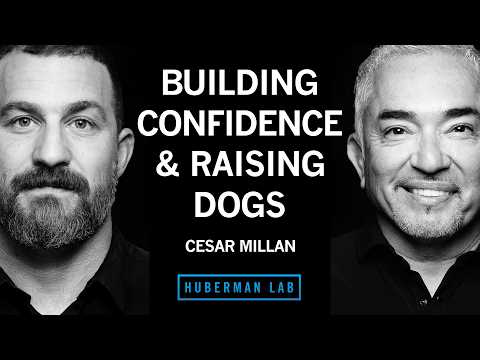 Watch on YouTube →
Overview
Andrew Huberman and Cesar Millan discuss the principles of calm assertive energy, emphasizing its importance in dog training and human relationships. Millan highlights that dogs respond to energy and actions, not just words, and advocates for a leadership approach based on trust, respect, and love, rooted in silence, calmness, and confidence. The conversation explores how understanding dog biology and psychology can lead to better human behavior, emphasizing the need for clear rules, boundaries, and limitations in all interactions.
Key takeaways
- Dogs respond to calm, confident energy and clear boundaries, not just affection or commands. This principle applies to human relationships as well.
- The 'no look, no touch, no speak' protocol upon arrival and structured walks are crucial for establishing a dog's calm, surrendered state.
- A dog's behavior is a direct reflection of the owner's energy, philosophy, and actions; training a dog is essentially training oneself to be a better human.
- True love for an animal involves respecting their nature and providing safety, trust, and respect before affection, which serves as a reward.
- Understanding pack hierarchy (front, middle, back) in both dogs and humans helps in establishing balanced relationships and clear leadership.
- The core formula for a well-behaved dog is exercise, discipline, and then affection, with discipline being about rules and structure, not punishment.
Chapters
0:00
Introduction to Calm Assertive Energy
- Affection should be paired with patience, calmness, and an open mind.
- Dogs respond to energy and actions, not just words.
- A clear, calm state of mind is crucial for effective interaction with dogs and humans.
0:25
Andrew Huberman's Introduction to Cesar Millan
- Andrew Huberman introduces Cesar Millan, the 'Dog Whisperer'.
- The episode is relevant for everyone, not just dog owners, offering insights into human psychology.
- Millan's methods helped Huberman train his first puppy, Costello, fostering an incredible relationship.
0:40
Cesar Millan's Philosophy: Energy, Silence, and Love
- Dog behavioral issues often reflect something in the human.
- Animals react based on instinct, not knowledge; humans must guarantee the right behavior.
- Good energy stems from the power of silence (patience), calmness (trust), confidence (knowledge), and appropriate timing of love and joy.
1:01
The Hierarchy of Animal Identity
- Before being a breed or name, a dog is a spirit, an animal, and a specie.
- Rehabilitating a dog means restoring its happy spirit, healthy instinct, and understanding of rules, boundaries, and limitations.
- Human behavior is mirrored in dog behavior; a good human creates well-behaved dogs.
1:21
Andrew Huberman's Experience with Energy Exchange
- Huberman shares an experience of sending 'approval energy' to his dog, Costello, who responded instantly.
- He also sent 'disapproval energy' to stop unwanted behavior from meters away.
- This energy exchange goes beyond words and is a fundamental form of communication.
1:44
The Power of Silence and Non-Verbal Communication
- Silence is powerful, enabling patience and connection.
- Animals, unlike humans, remain connected to their instincts for safety and peace.
- Communication with animals relies on energy, body language, and intention, not just words.
2:06
The Law of Attraction and Maintenance
- The law of attraction and creation is easy; the law of maintenance is the hardest.
- Patience and silence are crucial for maintaining energy and connection.
- Calmness provides power and allows animals to trust.
2:11
Cats vs. Dogs: Energy and Control
- Cats can control dogs through silence, calmness, and confidence, demonstrating the power of non-verbal energy.
- Thinking of a breed as 'dangerous' gives away personal power; adopting a calm, confident demeanor reclaims it.
- Effective communication with dogs involves silence, calmness, and intention, not just commands.
2:19
The Importance of Arrival and Presence
- How one arrives home impacts the dog's state of mind.
- Bringing a dog into a classroom requires structure and order to prevent misbehavior.
- Sensing one's own energy and the energy of others is a valuable skill, regardless of dog ownership.
2:26
Cultural Differences in Energy and Discipline
- Americans travel to India to practice silence, fasting, and stretching, embodying core principles of discipline.
- In other cultures, learning to control hunger, be quiet, and be calm are fundamental.
- These basic disciplines contribute to becoming good farmers, animal handlers, and family members.
2:35
Walking Dogs Off-Leash: The Role of Energy
- Cesar Millan walked large packs of dogs off-leash in America, which was considered illegal.
- This was possible due to his energy of silence, calmness, and confidence.
- The leash in the animal world represents trust, respect, and love, facilitated by human understanding of these principles.
2:43
The Leash as Trust, Respect, and Love
- The leash symbolizes trust, respect, and love in the animal world.
- Human understanding of silence, calmness, confidence, love, and joy is crucial for effective leadership.
- Pack leadership involves direction and protection.
2:48
Sponsor Segment: Element Electrolytes
- Element is an electrolyte drink with sodium, magnesium, and potassium, containing no sugar.
- Proper hydration and electrolytes are vital for cognitive and physical performance.
- Element is recommended for starting the day and during physical exercise.
3:01
Sponsor Segment: Joovv Red Light Therapy
- Joovv offers medical-grade red light therapy devices.
- Red, near-infrared, and infrared light positively impact cellular and organ health.
- Benefits include faster muscle recovery, improved skin health, wound healing, reduced pain, and improved mitochondrial function.
3:14
Dog Walking: Position Relative to the Human
- Learning to walk a dog correctly can eliminate 90% of behavioral problems.
- Puppies learn to follow their parents; play and exploration are rewards.
- When a dog walks in front, it's in a 'player-explore' mindset; daily leading can make the dog believe it must lead you.
3:25
Pack Hierarchy: Front, Middle, and Back
- A dog in the front of the pack is not inherently stressful if the human has the knowledge to lead.
- Most dogs are perfect middles or backs; backs can become fearful if not handled correctly.
- Middle-pack dogs are naturally happy-go-lucky; too much excitement makes them hyper.
3:33
Pack Positions Across Breeds and Litters
- In every litter, there are front, middle, and back-of-the-pack dogs.
- The 'pick of the litter' is often the front-of-the-pack dog, which can be a police dog.
- Middle-pack dogs are happy-go-lucky (HR of the pack), and back-of-the-pack dogs are sensitive followers.
3:40
Assessing Pack Position in Puppies
- For families, a middle-of-the-pack dog is ideal.
- Front-of-the-pack puppies are the biggest, practice dominance, and move others away from the mother.
- Middle-of-the-pack puppies are the second to reach the mother; back-of-the-pack puppies wait and are more shy.
3:51
Evaluating Puppies Without Mother Interaction
- Breeders often use colored ribbons to identify pack positions.
- If the mother isn't present, observe puppies' reactions to new stimuli: confident ones approach, shy ones stay back.
- A front-of-the-pack puppy will immediately explore new objects; middle-pack will play; back-of-the-pack will be hesitant.
3:59
Guaranteed Good Behavior Through Pack Position
- Choosing a dog's pack position guarantees desired behavior.
- A middle-of-the-pack dog is naturally a follower, making training easier.
- Front-of-the-pack dogs (any breed) require more knowledgeable owners due to their natural leadership disposition.
4:04
Cesar Millan's Personal Pack Dynamics
- Millan has a large energy that animals recognize, creating a sense of his 'land'.
- Despite personal challenges, he maintains his core energy of silence, calmness, confidence, love, and joy.
- He chooses middle and back-of-the-pack dogs for his personal life, as front-of-the-pack dogs require constant jobs and direction.
4:15
Andrew Huberman's Dogs: Costello and Strummer
- Costello, Huberman's first bulldog mix, was likely front-of-the-pack, exhibiting early dominance and resource guarding.
- Raising Costello was challenging due to his stubbornness and front-of-pack tendencies.
- Strummer, his current puppy, is middle or back-of-the-pack, sensitive, and sweeter, requiring different handling.
4:20
The Human Pack Hierarchy
- Humans can move between pack positions (front, middle, back) based on expertise and context.
- Back-of-the-pack humans master calm surrender; front-of-the-pack humans provide direction and protection.
- A dog's pack position is innate; a human's can be developed and shifted.
4:43
Affection vs. Discipline in Animal Relationships
- Humans often prioritize affection, but animals need rules, boundaries, and limitations.
- Giving love at the wrong time can nurture wrong behavior.
- The 'no look, no touch, no speak' rule upon arrival helps establish calm and prevents anxiety.
4:52
The 'No Look, No Touch, No Speak' Protocol
- This protocol, practiced for the first few minutes of contact, helps dogs become calm and open-minded.
- It counters the human tendency to greet dogs with excessive excitement, which can confuse or make them anxious.
- Dogs naturally greet each other with respect and wait for an invitation into personal space.
5:05
Three Key Rituals for Dog Interaction
- Meeting: Remind the dog of safety, peace, trust, and respect through nose, eyes, and ears.
- The Walk: The dog stays next to or behind the human, quietly following.
- Feeding: The dog waits for permission before eating.
5:13
Dog's Sensory Development: Nose, Eyes, Ears
- Puppies' noses open first, followed by eyes, then ears, indicating their primary sensory development order.
- This sequence mirrors how dogs perceive the world and their parents.
- Humans often try to communicate through eyes and ears, overlooking the dog's primary sensory input: the nose.
5:25
Conditioning Horses for Exciting Environments
- Horses, like dogs, need conditioning to handle exciting environments like New York City.
- Their instinct is flight; they must be trained to overcome this for specific tasks.
- Overworking horses, even police horses, can lead to crashes or biting officers.
5:33
The Dangers of Overworking and Under-Stimulating Dogs
- Overworked police dogs can bite officers; overworked horses can crash.
- Dogs that are overworked or under-stimulated can become frustrated, confused, or anxious.
- This can lead to destructive behavior or aggression, as they need to drain energy.
5:50
Creating a Calm Dog: Exercise, Discipline, Affection
- The formula for a well-behaved dog is exercise, discipline, and then affection.
- Discipline is not punishment; it's about following rules, boundaries, and limitations.
- A tired dog is less likely to cause problems.
6:13
The Importance of Structured Walks
- Walks are the most critical activity for a dog's well-being.
- Homeless people and blind individuals often have well-behaved off-leash dogs, demonstrating the power of structured walks and clear energy.
- A yard is not a substitute for a walk; dogs need to walk to drain energy and maintain mental stimulation.
6:52
The Nature of Exercise for Dogs
- A bird must fly, a fish must swim, and a dog must walk; this is species-specific nature.
- Dogs instinctively follow their parents to find food and water.
- As dogs mature (6-8 months), they desire longer walks and exploration.
7:00
The Yard vs. The Walk: Natural Behavior
- A yard provides limited exercise, akin to an animal in a zoo.
- Dogs need the structured activity of walking to drain energy and maintain mental stimulation.
- This is crucial for preventing boredom, confusion, and frustration.
7:13
The Rituals of Greeting, Walking, and Feeding
- Practice the ritual of no touching, no eye contact, and no talking for at least 3 weeks to establish a calm state.
- This creates a dog that is calm, surrendered, and open-minded.
- These three activities (greeting, walking, feeding) are meaningful to dogs and reinforce the human's role as a source of safety and peace.
7:24
Sponsor Segment: AG1 Nutritional Supplement
- AG1 is a comprehensive vitamin, mineral, probiotic, prebiotic, and adaptogen drink.
- It supports gut health, immune health, and overall energy by filling nutritional gaps.
- AG1 is recommended as a foundational nutritional supplement.
7:33
Sponsor Segment: Eight Sleep Smart Mattress Cover
- Eight Sleep regulates bed temperature for optimal sleep.
- Body temperature needs to drop to fall asleep and rise to wake up refreshed.
- The Pod 5 model features Autopilot AI that adjusts temperature based on sleep patterns and can elevate the head for snoring.
7:49
Exercise, Discipline, and Affection: The Core Formula
- The daily routine should be: walk, discipline training, food, then affection.
- Affection should be a reward, not the primary interaction.
- Discipline is about structure and rules, not punishment.
8:00
The Natural Life and Love for Dogs
- Love for dogs should be natural, simple, and profound, not based on human creations like money or fame.
- Animals understand natural instincts and simple love.
- A dog's well-being is a reflection of the owner's energy, philosophy, and actions.
8:11
The Role of Discipline and Rules
- Discipline helps dogs follow rules, boundaries, and limitations, leading to success.
- The word 'discipline' should not be associated with punishment.
- Pet parents provide direction, protection, and then love.
8:27
The Importance of the Walk and Human Connection
- The walk is crucial for connecting with nature and the dog.
- Technology, like phones, disconnects humans from the present moment and their dogs.
- Dogs, like phones, are tools for connection, communication, and relationship.
8:33
The Dog as a Spiritual and Earth Connection
- Dogs facilitate connection to God, Earth, and the present moment.
- A dog's energy imitates the human's energy, creating a shared 'vibe'.
- This connection fosters a natural, simple, and profound relationship.
8:47
Death, Spirituality, and Cultural Perspectives
- In 'third world' countries, awareness of death fosters spirituality and surrender to a higher power.
- Mexico's 'El Dia de los Muertos' (Day of the Dead) normalizes acceptance of death.
- Seeing death frequently leads to belief in divine protection and surrender to natural cycles.
8:53
Cultural Differences in Values: God, Earth, Work, Family
- In Mexican culture, God is prioritized, followed by Mother Nature, then work and family.
- In the US, the focus is often on the self and material possessions as a path to happiness.
- Happiness should be cultivated internally before acquiring external possessions.
9:01
Natural, Simple, Profound: The Animal's Perspective
- Animals understand natural, simple, and profound concepts, not money, fame, or power.
- Natural is instinct, simple is love, profound is spirit.
- An amazing relationship with animals is possible even without advanced intellect or education.
9:10
Costello's Role in the Lab and Human Energetics
- Costello, Huberman's dog, was part of the lab, bringing joy and connection.
- Dogs don't care about human roles or jobs; they focus on presence and connection.
- Interactions with dogs can reveal human creations (roles, jobs) and encourage looking at the world differently.
9:31
Dogs as Honest Mirrors of Human Energy
- A dog's behavior immediately reveals the household's energy, philosophy, and actions.
- Dogs are the most honest members of a house; they don't know how to lie.
- Cesar Millan helps humans identify where they are 'stuck' and guides them towards silence, calmness, and confidence.
9:41
Rehabilitating Dogs: Shifting Energy and Mindset
- Dogs can be rehabilitated by providing silence, calmness, and pack integration.
- Dogs live in the moment; their past experiences are irrelevant to their current behavior.
- A safe, peaceful environment with a trustworthy, respectful human is essential for a dog's well-being.
10:00
Love as a Reward, Not a Primary Driver
- Love is a reward, not the first step in building a relationship with a dog.
- Safety, peace, trust, and respect are the foundational pillars.
- Exercise, discipline, and affection follow, with love as the ultimate reward.
10:05
The Pillars of a Good Life: Happiness, Health, Love, Smartness
- Happiness comes from gratitude and being thankful.
- Health is achieved through breathing and exercise.
- Smartness involves learning, achieving, giving back, or turning the mind off.
10:06
Practicing Love: Mastering Spirit, Instinct, and Mind
- Love is practiced after mastering one's spirit, instinct, and mind.
- This involves loving one's own silence, faith, calmness, trust, confidence, and mind.
- The goal is to become a whole human, integrating all aspects of oneself.
10:09
Can Dogs Smell Stress?
- Dogs can sense and smell stress through the energy and chemistry it creates.
- This sensitivity allows them to detect environmental shifts, like impending earthquakes.
- Their animal instinct allows them to sense energy without relying solely on sight or hearing.
10:17
Human Obsession with Anthropomorphic Intelligence
- Humans are obsessed with projecting their understanding of intelligence onto other species.
- Teaching an octopus to play piano is unimpressive, revealing more about the trainer's patience than the octopus's intelligence.
- This anthropomorphism reveals human short-sightedness and unwillingness to consider other forms of communication.
10:31
Self-Oriented vs. Pack-Oriented Behavior
- Humanizing dogs is often for human fantasy and emotional fulfillment, not the dog's benefit.
- Dogs are pack-oriented and need to learn to live with distance, unlike cats who are independent.
- Dogs can be influenced more quickly than cats because they are inherently pack animals.
10:40
Interacting with Different Species: Prey Drive and Socialization
- Cesar Millan loves all animals and uses his ranch to help dogs interact with various species.
- This interaction helps assess and block prey drive or manage play drive.
- Socialization comes from learning to accept others, not from protective drives.
10:50
The Consequences of Lack of Rules and Boredom
- Dogs without rules, boundaries, or sufficient exercise become bored, confused, or frustrated.
- As predators, they release this energy through destructive behavior or aggression.
- This can lead to lawsuits and liability for owners.
11:00
Calmness as a Choice, Not a Fixed Trait
- Anxiety and calmness are not fixed traits; humans can cultivate calmness regardless of their natural levels.
- We are the only species that follow unstable leaders.
- Pack leaders must embody patience, calmness, confidence, love, and joy at 100% to resolve problems.
11:11
Preparing for Home: A Pre-Arrival Ritual
- Before entering home, perform a self-check: pray for silence, calmness, confidence, love, and joy.
- Practice 'no touching, no talking, no eye contact' upon arrival to help the dog calm down.
- Affection should be given after the dog achieves a calm, surrendered state.
11:21
The Human Desire for Unconditional Love
- Many people seek unconditional love from their pets, projecting human needs onto them.
- This can lead to 'fur baby' syndrome, where pets are treated as human children, ignoring their animal needs.
- True love for an animal involves respecting their nature and providing safety and security first.
11:47
The Dog's Perspective: Spirit, Animal, Breed, Name
- Dogs are spirit, animal, specie, breed, and then name, in that order of importance.
- Humanizing animals can make them feel unsafe or confused.
- The 'no look, no touch, no speak' protocol allows dogs to approach humans on their own terms, fostering trust.
11:57
Selfishness in Pet Ownership
- It's selfish to prioritize one's own desire for a certain interaction with a pet over the animal's needs.
- Understanding the animal's language and needs is crucial for a successful relationship.
- Safety first is the guiding principle for building trust and a strong bond.
12:12
The Pillars of a Good Relationship: Safety, Peace, Love
- The foundation of a good relationship is safety, peace, trust, and respect.
- Love is a reward that comes after these pillars are established.
- This applies to relationships with dogs, humans, and oneself.
12:24
Respecting Animals: Honoring Who They Are
- Honoring and respecting an animal means understanding and accepting who they are, not projecting human desires onto them.
- Dogs are 'man's best friend' but often not treated with the respect their title implies.
- Love should be for who they are, not what we think they should be.
12:35
Human vs. Animal Communication: Lip Smacking and Energy
- Human communication methods (like smiling at monkeys) can be misinterpreted by animals.
- Lip smacking is an affiliative behavior for macaques, not smiling.
- Dogs feel energy and respond to it, even when humans try to project a different emotion.
12:50
The Selfishness of Projecting Human Needs
- It's selfish to impose one's own needs and desires onto a pet, even with good intentions.
- The 'no look, no touch, no speak' protocol is essential for dogs to feel safe and secure.
- This allows dogs to approach humans on their own terms, assessing trustworthiness and peacefulness.
13:02
The Dog as a Reflection of the Owner
- A dog's behavior is a reflection of the owner's energy, philosophy, and actions.
- Working with a dog is working on oneself, promoting natural, simple, and profound living.
- A good relationship with a dog leads to a good relationship with God and a better human.
13:20
The Power of Unity and Right Information
- Separation and conflict lead to chaos; unity creates power.
- Misinformation purposefully divides people, hindering connection and communication.
- Cesar Millan aims to provide the right information about dogs, God, and Earth to foster unity.
13:31
Sponsor Segment: Function Health Testing
- Function provides over 160 advanced lab tests for a snapshot of bodily health.
- Tests cover heart health, hormone levels, nutrient status, and more, with access to MRI and CT scans.
- Function analyzes results and provides recommendations from top doctors; membership is $1/day.
13:50
Leadership Energy: Confidence vs. Certainty
- Modern leaders often project confidence and certainty, regardless of political aisle.
- This selection for perceived certainty may not align with true leadership traits.
- Observing leaders with dogs could offer a more accurate assessment of their energy and philosophy.
13:57
The Dog's Energy as a Leader's Assessment Tool
- Dogs can reveal a leader's true energy and philosophy, beyond their spoken words.
- Mexico's experience with a female president shows that promises don't guarantee safety or peace if the underlying energy remains unchanged.
- Cesar Millan's contribution is to bring silence, calmness, and confidence, counteracting fight-flight-avoidance in humans.
14:15
Chimpanzee Hierarchy vs. Dog Trust
- Chimpanzees exhibit complex, often brutal, hierarchical behaviors similar to humans (lying, cheating, ostracization).
- Dogs, in contrast, are trustworthy and do not engage in such manipulative behaviors.
- Jane Goodall prefers dogs over chimpanzees due to their inherent honesty and lack of deceit.
14:18
The Challenge of Self-Discipline in Dog Ownership
- Training oneself for interactions with dogs requires self-discipline, awareness, calmness, and breathing.
- This is a daily practice, not just a momentary action.
- The temptation to prioritize immediate emotional gratification (e.g., cuddling) over the dog's long-term well-being is a common challenge.
14:33
Pack Order and its Role in Relationships
- In the US, dogs often occupy the 'front' position in the family pack due to owners prioritizing affection over rules.
- Husbands may be relegated to the 'back' due to owners applying rules and limitations to them, but not the dog.
- This imbalance leads to dogs taking over and causing behavioral issues.
15:06
Masculine and Feminine Energies in Relationships
- Cesar Millan found success by embracing his masculine energy (direction, protection) and attracting a partner who surrendered to that instinctual role.
- This is not about gender roles but about instinctual alignment.
- A woman may seek calm surrender at home after being a pack leader in her professional life.
15:41
The Instinctual Foundation of Relationships
- Instinct is the permanent foundation of relationships, unlike temporary emotional or intellectual connections.
- A man must earn the position of providing direction and protection through consistent energy, philosophy, and actions.
- Self-knowledge, self-value, and self-love are essential for attracting a compatible partner.
16:00
The Search for the Right Partner
- Millan realized he was choosing the wrong women due to a flawed philosophy about relationships.
- He learned to identify a woman with the right spirit, instinct, heart, and mind, who could also be a pack leader in her own domain.
- The ideal partner offers calm surrender, allowing the man to fulfill his role of providing direction and protection.
16:30
The Breakdown of Human-Animal and Human-Human Relationships
- Societal divisions and distrust, fueled by anger at leaders and conflicting beliefs, create chaos.
- This separation prevents unity and power, leading to fight-flight-avoidance even within relationships.
- The goal is to provide the right information to foster connection, communication, and relationships.
16:40
Universal Desires: Safety, Peace, Love
- Humans and dogs share universal desires: safety, peace, love, trust, respect.
- This translates to body, mind, heart alignment and exercise, discipline, affection.
- The ultimate goal is a natural, simple, profound life, achievable through a good relationship with a dog.
16:50
The Dog Trainer's Dream: Training Humans, Rehabilitating Dogs
- Millan's dream evolved from being the best dog trainer to training humans and rehabilitating dogs.
- He helps humans overcome fight-flight-avoidance and embrace calm, confident states.
- A well-balanced dog is a reflection of a well-trained human.
17:13
The Paradox of American Dog Ownership
- American dogs are often overweight and have psychological problems despite having rights and abundant resources.
- This contrasts with dogs in other countries that are leaner but psychologically healthier.
- The humanization of dogs (birthday parties, weddings) doesn't equate to happiness or health for the dog.
17:21
The Path to Happiness: Gratitude and Service
- Happiness and health stem from gratitude, thankfulness, and loving one's spirit, instinct, and mind.
- Learning, achieving, and giving back are crucial for intellectual growth.
- Being of service to others (humans and animals) is a key component of a fulfilling life.
18:01
Turning Off the Mind: The Cold Plunge Experience
- Deliberate cold exposure (cold plunge) helps people experience a clear mind by moving through fight-flight-avoidance to calm surrender.
- This process teaches breath control, patience, and confidence, allowing the mind to be still.
- The physical shock of cold prevents strategic thinking, forcing focus on instinct and spirit.
18:35
The Benefits of Adrenaline and Norepinephrine
- Deliberate cold exposure reliably releases adrenaline and norepinephrine, waking up the brain.
- This process temporarily diminishes the prefrontal cortex's control over impulses.
- The resulting calm surrender and peace are the energies to bring to interactions.
19:06
The Long-Lasting Dopamine Arc of Cold Exposure
- Deliberate cold exposure produces a long arc of dopamine in the brain and body, lasting for hours.
- This contrasts with drugs, which cause a spike and drop.
- A good relationship with a dog also provides long-lasting dopamine and a well-balanced state.
20:22
Honoring Death: A Peaceful Exit for Dogs
- Andrew Huberman ensured Costello had a peaceful exit, bringing in a vet to the house.
- Honoring death is crucial; a sad ritual can prolong suffering, while a happy ritual celebrates the life lived.
- The spirit never dies; death is a transition back to the source.
20:41
Dealing with Grief and Dogs' Emotional Support
- Dogs can absorb negative energy from humans experiencing grief or sadness.
- It's important to help dogs release this absorbed energy, for example, by going to the beach.
- Therapy dogs in hospitals absorb negative energy; their role is to help, but they also need to release it.
20:53
The Selfishness of Using Dogs for Emotional Support
- Using dogs solely for emotional support without addressing their needs is selfish.
- This blinds owners to the dog's basic needs and can be as detrimental as using animals for human advancement.
- The key is to be of service to the animal before expecting service from them.
21:45
Contradictory Advice on Dog Interaction
- Social media offers conflicting advice on dog interaction (e.g., hugging, sleeping arrangements).
- The energy and intention behind the action are more important than the action itself.
- A dog's state of mind (calm vs. fearful) dictates whether an interaction is beneficial or detrimental.
21:53
Invading vs. Inviting: Dog's Access to Space
- When a dog enters a space on its own, it's invading; when invited, it's a sign of surrender.
- Dogs that invade become territorial; invited dogs enter a surrender mindset.
- Owners must be in agreement about boundaries; otherwise, dogs can exploit the lack of unified leadership.
22:27
The Importance of Energy and Leadership
- A dog's energy must be bigger than the human's for the human to lead.
- If the human's energy drops, the dog will take over.
- Animals cannot be lied to; they respond to authentic energy.
22:40
The Gym of Mother Nature: Daily Practice
- Interacting with dogs in natural settings (beach, streets) is like going to the gym for Mother Nature.
- This daily practice of silence, calmness, confidence, love, and joy is essential.
- It creates a dog that waits in a resting state, ready for interaction.
22:50
The Simple Formula for No Bad Behavior
- The formula: daily walks, no touching/talking/eye contact upon arrival, then greeting, followed by play/explore.
- This prevents boredom, frustration, and destructive behavior.
- It creates a dog that is calm, surrendered, and well-behaved.
23:10
Treadmill Training for Dogs
- Treadmills can be used for emergency exercise when outdoor walks are not possible.
- It challenges the dog's mind and body, preventing boredom and frustration.
- The goal is to drain energy and maintain a resting state, not to replace regular walks.
23:25
The Four Worlds: Spirit, Instinct, Heart, Mind
- Dogs need challenges in all four worlds: spirit, instinct, heart, and mind.
- This requires creativity from the owner, going beyond simple emotional interaction.
- A well-trained dog is a reflection of a well-trained human.
23:37
Spay/Neuter Debate and Dog Population Control
- In America, spaying/neutering is often necessary due to indoor lifestyles and overpopulation.
- Millions of dogs die annually due to overpopulation, costing taxpayers money.
- Regulation through spay/neuter is the only way to control the dog population.
23:44
Petting Techniques: Energy and Intention
- The way one pets a dog should align with the desired state of mind.
- Fast petting is suitable for excited dogs (e.g., during agility); slow, soft petting is for calm dogs (e.g., in a restaurant setting).
- The energy and intention behind the petting are more important than the action itself.
24:10
Managing Barking and Destructive Behavior
- Excessive barking or destructive behavior often stems from lack of exercise and mental stimulation.
- Dogs need to drain energy; barking or destruction is a way to do this when walks are insufficient.
- Owners must provide daily walks to prevent these issues.
24:27
The Importance of Daily Walks and Rest
- Dogs instinctively stretch and want to walk upon waking.
- Forcing a dog to wake up for a walk is beneficial for draining energy and establishing a resting state.
- A walk is the only activity besides play/explore that provides calm surrender.
24:40
Varying Walk Routines and Environmental Challenges
- Initially, use the same walk path to build trust in the environment.
- Once familiar, change the path or direction to provide new challenges.
- Creating environmental challenges within the home (e.g., food on the floor) prevents boredom and promotes growth.
25:05
The Role of the Owner as Coach
- Owners can act as personal trainers or coaches for their dogs, challenging their minds and bodies.
- This goes beyond simply being a 'dog lover' or 'mom/dad'.
- Developing the dog's spirit, instinct, heart, and mind leads to a better relationship and a better human.
25:12
The Dog as a Mirror for Human Growth
- A dog's behavior is a reflection of the owner's energy, philosophy, and actions.
- Working with a dog is a workout for oneself, promoting a natural, simple, profound life.
- This leads to trust, respect, and love, ultimately creating better humans.
25:31
The Goal: Off-Leash Trust and Respect
- The ultimate goal is an off-leash relationship built on trust, respect, and love.
- This is earned through daily practice of spirit, instinct, heart, and mind.
- A dog that behaves well off-leash is a testament to the owner's commitment and leadership.
25:41
The Power of a Good Human
- If the world were led by good humans, it would be a better place.
- A good human, trained through relationships with dogs, embodies good energy, philosophy, and actions.
- This creates a positive ripple effect, improving relationships with oneself, animals, and other humans.
25:46
Gratitude and Wisdom from Cesar Millan
- Andrew Huberman expresses immense gratitude for Cesar Millan's knowledge, wisdom, and tangible energy.
- Millan's work connects the spiritual aspects of animals and humans, promoting timeless values.
- His practical teachings help people become better humans through dog training.
25:50
Podcast Outro and Call to Action
- Huberman Lab podcast encourages subscriptions, follows on Spotify/Apple, and five-star reviews.
- Listeners can submit questions and topic suggestions in YouTube comments.
- Huberman's new book, 'Protocols: An Operating Manual for the Human Body,' is available for pre-sale.
26:11
Social Media and Newsletter Promotion
- Huberman Lab is active on all social media platforms (Instagram, X, Threads, Facebook, LinkedIn).
- The Neural Network Newsletter offers free podcast summaries and protocols (sleep, dopamine, fitness).
- The newsletter is zero-cost and emails are not shared with third parties.
Summary, takeaways, and chapters were generated by AI from the video's transcript and may contain errors. The video belongs to its creator, Andrew Huberman.