Professor Brian Greene: The Threat of AI, Consciousness & The End of Humanity
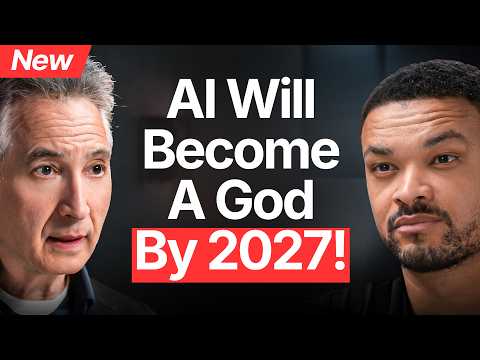 Watch on YouTube →
Overview
Physicist Brian Greene explores the nature of reality, consciousness, and the future of humanity, discussing string theory, the simulation argument, and the potential for artificial general intelligence (AGI). Greene posits that consciousness is an emergent property of complex physical processes, suggesting AI could become conscious and potentially lead to a future where simulated realities outnumber physical ones. He also touches on the vastness of the universe, the potential for extended lifespans, and the existential risks and opportunities presented by advanced AI.
Key takeaways
- Brian Greene views consciousness as an emergent physical process, suggesting AI could achieve it, raising ethical questions about rights and sentience.
- The simulation argument, popularized by Nick Bostrom, posits that we are statistically likely to be living in a simulated reality.
- String theory proposes that fundamental particles are vibrating filaments, and their different vibrations create different particles.
- The universe's far future, as described by Greene, involves the eventual disintegration of stars, galaxies, protons, and black holes, leading to a cold, dark expanse.
- While AI may surpass human capabilities in many areas, truly novel, unimaginable creativity might remain a human domain, though this is also speculative.
- The ability to comprehend our cosmic insignificance is not a source of despair but a liberation that fosters connection and encourages risk-taking.
Chapters
0:00
The Simulation Argument and Consciousness
- The possibility of living in a simulation, like 'The Matrix', is logically consistent.
- AI researchers debate whether systems like ChatGPT are conscious.
- The question of robot rights arises if consciousness is attributed to them.
0:40
The Ultimate Question: The Nature of Reality
- Brian Greene's ultimate question is the true nature of reality.
- Humans seek purpose and understanding of their existence within the vast universe.
- Understanding our smallness can foster a connection to something larger.
2:15
The End of the Earth and Cosmic Scales
- The Earth's eventual end is a consideration for long-term cosmic timelines.
- The vastness of space and time can be overwhelming but also awe-inspiring.
4:03
Brian Greene's Academic Journey
- Grew up near the Hayden Planetarium, fostering an early interest in the universe.
- Studied mathematics and physics at Harvard, then pursued a doctorate in string theory at Oxford.
- Has been a professor at Columbia University for over 30 years.
8:24
Explaining String Theory to a 12-Year-Old
- Matter is composed of fundamental particles like electrons and quarks.
- String theory proposes these particles are tiny vibrating filaments.
- Different vibrations of these strings produce different particles, analogous to musical notes from a violin string.
10:37
The Scientific Basis and Predictions of String Theory
- String theory's predictions are currently untestable due to technological limitations.
- Its validity stems from the mathematical harmony when combined with quantum mechanics and general relativity.
- The theory suggests that energy manifests as vibrational patterns of these fundamental strings.
15:36
The Narrative from the Big Bang to Life
- String theory indirectly addresses our existence as aggregates of fundamental strings.
- The Big Bang's energy transmuted into particles, which clumped to form stars and planets.
- Over billions of years, particles coalesced into molecules, then cells, leading to the evolution of life.
19:03
The Simulation Argument and AI's Influence
- The nature of reality is questioned, as we only access the present moment.
- AI's rapid advancement prompts re-evaluation of fundamental assumptions about existence.
- The simulation argument suggests we might be living in a computer program created by a future civilization.
23:55
The Probability of Simulated Realities
- If advanced civilizations can create conscious simulations, simulated realities would vastly outnumber the base reality.
- The core assumption is whether self-awareness can be programmed into a computer.
- Some AI researchers believe current models like ChatGPT exhibit consciousness.
25:17
The Nature of Consciousness and Emotion
- Human emotions like love, hate, and anxiety are viewed as electrical impulses in the brain.
- This reduction to physical processes does not diminish the wonder of human experience and creativity.
- Consciousness is seen as an emergent property of complex information processing.
31:54
Artificial vs. Organic Intelligence
- The substrate (biological vs. silicon) is less important than the functional processes for consciousness.
- If artificial systems are given sensory input (tactile, olfactory, visual), the distinction blurs.
- Simulations may eventually outnumber real worlds, making it probable we are in a simulation.
34:05
The Impact of Simulation on Life
- Living within a simulation does not fundamentally change the experience of life.
- Physicists' work might be discovering the laws imposed by the simulation's creators.
- The beauty lies in exploring the universe's laws, regardless of its ultimate nature.
35:19
AI and the Future of Control
- The rise of superintelligence raises concerns about human control.
- A more likely scenario involves humans and AI working collaboratively.
- The distinction between biological and artificial intelligence may blur, leading to a new life form.
38:28
Evolution and Human Adaptation to Change
- Evolution is a continuous process, and humanity is likely to continue evolving.
- Partnership with AI could be the next stage of human evolution.
- Humans are accustomed to slow change, making rapid technological shifts uncomfortable.
40:56
The Possibility of Extended Lifespans
- Death can be viewed as an increase in entropy in a physical system.
- Science may be able to forestall degradation and extend human lifespans significantly.
- The awareness of mortality drives much of human behavior and motivation.
47:17
Long-Termism and Decision-Making
- Changing the time horizon of decisions profoundly impacts choices.
- A longer lifespan might not fundamentally alter human motivations or life patterns.
- The drive for legacy and recognition persists regardless of lifespan.
50:54
Least and Most Inspiring Cosmic Answers
- The least inspiring answer is that existence is a mere accident with no deep purpose.
- The most satisfying answer is a fundamental explanation for existence that aligns with scientific laws.
- The human brain's capacity for abstract thought and scientific discovery is miraculous.
53:51
The Predictive Power of Physics
- The universe's deep patterns suggest underlying explanations beyond mere happenstance.
- Quantum mechanics accurately predicts phenomena like electron magnetic fields to 15 decimal places.
- This predictive power instills confidence in our scientific understanding of the cosmos.
55:53
Science, Religion, and the Concept of God
- Traditional, anthropomorphized Gods are seen as human creations, not scientific explanations.
- Religion's role is to quell existential anxiety rather than explain the universe's workings.
- Personal prayer is seen as a ritualistic act connecting to the universe, not a deity.
1:02:27
The Big Bang and Cosmic Origins
- Edwin Hubble's observations showed galaxies moving away, suggesting an expanding universe.
- Georges Lemaître proposed the Big Bang theory based on general relativity.
- Cosmic Microwave Background radiation provides evidence of the Big Bang's residual heat.
1:07:13
Cosmic Time Scales and Human Perception
- Human perception of time (e.g., 33 years) is minuscule compared to cosmic scales.
- Carl Sagan's cosmic calendar compresses 13.8 billion years into one year, highlighting humanity's recent emergence.
1:11:49
Cosmic Insignificance and Wondrous Understanding
- The universe's vastness (billions of galaxies) can make humans feel small.
- However, the ability to comprehend this vastness provides a sense of connection and significance.
- Understanding our predicament is a measure of significance.
1:15:53
Evidence for Scientific Understanding: CMB Radiation
- The Cosmic Microwave Background (CMB) radiation is residual heat from the Big Bang.
- Tiny temperature variations in the CMB are predicted by mathematical models.
- The agreement between predictions and observations provides confidence in scientific truth.
1:18:39
The Observable Universe and Its Limits
- The observable universe is a sphere approximately 45 billion light-years in radius.
- The CMB image represents the universe's state ~300,000 years after the Big Bang.
- The consistency of scientific laws suggests the universe beyond our observable horizon is not a ruse.
1:20:41
Infinite Universe and Identical Copies
- If the universe is infinite, identical copies of ourselves and Earth are virtually guaranteed to exist.
- This is due to the finite number of particle arrangements in any given region of space.
- An infinite universe challenges our sense of self and individuality.
1:26:46
The Fascination with Aliens and Extraterrestrial Life
- Interest in aliens stems from a desire for something beyond the apparent and a sense of cosmic loneliness.
- The raw materials for life are common, making microbial life elsewhere plausible.
- Intelligent life may be rare due to contingent evolutionary events (e.g., asteroid impacts).
1:30:47
AI-Powered Content Creation Tools
- Tools like Stanley use AI to analyze user feeds and suggest or create social media posts.
- This addresses psychological barriers to content creation, such as fear of judgment.
- Building an audience is presented as a life-changing endeavor.
1:32:23
LinkedIn Hiring Pro for Small Businesses
- Hiring the wrong person is a significant threat to small business growth.
- LinkedIn Hiring Pro streamlines recruitment with AI-powered screening and initial interviews.
- Nearly 60% of hirers find a candidate within a week using the tool.
1:34:06
The Meaning of Life and Human Connection
- The meaning of life is not found externally but created internally through personal choices and relationships.
- Connection to the universe arises from understanding that our particles originated from the Big Bang.
- The brief window of conscious existence in cosmic history is a source of wonder and gratitude.
1:39:16
Liberation Through Cosmic Perspective
- Understanding our cosmic insignificance can be liberating, reducing worry and encouraging risk-taking.
- Carl Sagan's 'Pale Blue Dot' perspective highlights the smallness of human concerns in the cosmic context.
- This perspective fosters a sense of liberation rather than insignificance.
1:41:41
Confidence Spectrum: Free Will
- Brian Greene has high confidence that humans do not possess free will.
- Free will is defined as being the ultimate author of one's actions.
- Decisions are governed by the laws of physics dictating particle behavior.
1:47:24
The Laws Governing Particles
- The movement of particles is determined by a body of physical laws and repeating patterns.
- Mathematics is the language used to describe these laws.
- The feeling of authorship over our actions is a self-told story, possibly with evolutionary utility.
1:51:54
Consciousness as an Emergent Physical Process
- Consciousness is believed to emerge from complex information processing via particle motion.
- Concepts like 'care', 'meaning', and 'morality' are human-made constructs, not inherent in the universe.
- These concepts provide utilitarian advantage for organizing human experiences.
1:55:04
Idealism vs. Emergent Consciousness
- Idealism posits consciousness as fundamental reality; Greene believes it emerges from physical processes.
- Dogs and cats possess a level of consciousness, but insects and viruses likely do not.
- The idea of a universal consciousness rejoining a source after death is seen as a comforting human story.
2:00:34
The Universe: Infinite or Finite?
- Greene places medium confidence in the universe being infinite, but his current work explores finite models.
- A finite, curved universe would mean traveling in one direction eventually returns you to the starting point.
2:02:03
Intelligent Life Beyond Earth
- Greene places moderate confidence in the existence of intelligent extraterrestrial life.
- He distinguishes between the probability of life existing and the likelihood of receiving signals or visitation.
- Advanced aliens would likely be undetectable and uninterested in abducting humans.
2:06:55
Interstellar Travel: Wormholes and Time Travel
- Brute-force travel near light speed is insufficient for galactic distances.
- Wormholes, theoretical tunnels through spacetime, could offer shortcuts.
- Time travel to the future is possible via relativistic effects; travel to the past is highly speculative.
Summary, takeaways, and chapters were generated by AI from the video's transcript and may contain errors. The video belongs to its creator, The Diary Of A CEO.