Overview, BIO105 Introductory Biology, David Champlin, USM
 Watch on YouTube →
Overview
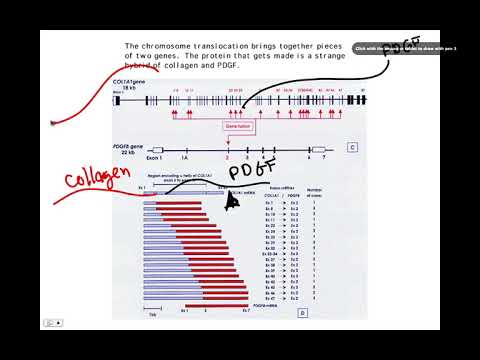
David Champlin previews BIO105’s genetics sequence: DNA carries inherited instructions for proteins, while gene regulation determines which genes cells use and when. He connects protein synthesis and gene regulation to Mendelian genetics, DNA replication, and biotechnology, then explains how a chromosome translocation can fuse a collagen promoter to a PDGF gene, causing skin cells to produce a growth signal associated with cancer.
Key takeaways
- DNA inheritance includes instructions for proteins, but having a gene does not mean a cell actively produces its protein.
- Gene regulation explains how cells with the same insulin gene can produce insulin in the pancreas but not in skin cells, and why insulin production changes during development.
- A gene’s transcription unit supplies the sequence transcribed into RNA, while its promoter helps determine where and when transcription occurs.
- In the cancer example, a chromosome translocation placed a PDGF transcription unit under a skin-active collagen promoter, leading skin cells to produce a growth-stimulating signal.
- Champlin’s course sequence introduces molecular genetics before Mendelian inheritance, then connects DNA replication to biotechnology and DNA manipulation.
Chapters
0:00
DNA, Protein Synthesis, and Gene Regulation in Chapters 17–18
- DNA is the primary heritable molecule in cells and carries instructions for proteins such as insulin, ATP synthase, and the LDL receptor.
- Chapter 17 focuses on ribosomes translating an mRNA template into a protein.
- Chapter 18 covers gene regulation: although cells contain the insulin gene, insulin is produced in the pancreas and activated at particular stages of development.
- Champlin introduces totipotency as the potential for cells to make many proteins, while gene regulation limits each cell to a subset.
3:36
How Molecular Genetics Connects to Mendelian Genetics and Biotechnology
- Chapters 14 and 15 revisit Mendelian, or transmission, genetics through crosses such as red-flowered and white-flowered plants producing pink offspring.
- Champlin places molecular genetics before Mendelian genetics, arguing that understanding DNA and proteins makes inheritance patterns easier to interpret.
- Chapter 16 covers DNA replication and leads into Chapter 20 on biotechnology and deliberate DNA manipulation.
- DNA is physical material that can be altered by researchers or changed by mutations.
5:34
A Chromosome Translocation Fuses a Collagen Promoter to PDGF
- A chromosome translocation joined DNA from two chromosomes, placing the PDGF gene’s transcription unit next to a collagen gene promoter.
- Genes include a transcription unit, which is copied into RNA, and a promoter, which regulates gene activity; the protein-coding region is part of the transcription unit.
- The collagen promoter is active in skin cells, so the rearrangement causes those cells to produce PDGF, which they normally do not make there.
- Released PDGF binds its receptor and stimulates the cell cycle, helping explain the woman’s skin cancer.
Summary, takeaways, and chapters were generated by AI from the video's transcript and may contain errors. The video belongs to its creator, The New Evolution for Everyone.