Mitosis, BIO105 Introductory Biology, David Champlin, USM
 Watch on YouTube →
Overview
David Champlin reviews interphase and mitosis in eukaryotic cells, connecting cell-cycle regulation—including CDK1 and PDGF signaling—to the visible steps of cell division. He highlights G0 as a pause at Start and explains how chromosomes condense, align, separate, and are distributed as the cell divides.
Key takeaways
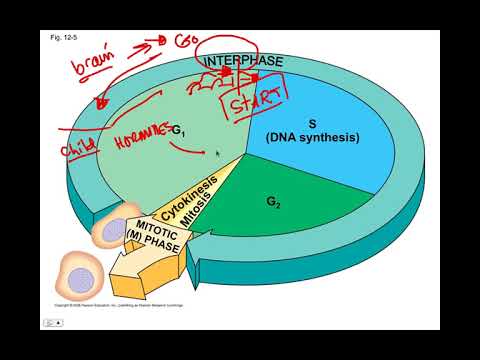
- Interphase comprises G1, S, and G2; DNA replication occurs in S phase, while G0 represents a pause at the Start control point.
- Cells in G0 may pause temporarily or remain there long-term: nondividing brain cells are one example, while some cells await puberty hormones.
- CDK1 promotes chromosome condensation in prophase by phosphorylating histones, which causes the DNA-packaging proteins to pack more tightly.
- Microtubules position chromosomes at the cell’s midpoint during metaphase and move them toward opposite ends during anaphase.
- Nuclear reformation in telophase involves intermediate filaments, while actin microfilament contraction drives cytokinesis.
- Prokaryotic fission differs from eukaryotic mitosis, and eukaryotes share conserved cell-cycle proteins such as Cdc25.
Chapters
0:00
Cell-Cycle Control: CDK1, PDGF, and the Start Checkpoint
- Chapter 12 covers regulation at Start, the G2-to-M transition, and the mitotic checkpoint.
- CDK1 activation is a key control mechanism for entry into mitosis.
- PDGF signaling regulates CDKs at Start, affecting skin-cell proliferation and wound healing.
1:25
Interphase and G0: Growth, DNA Replication, and Cell-Cycle Pauses
- Interphase consists of G1, S, and G2, encompassing cell growth and DNA replication.
- G0 is a pause at Start; brain cells that no longer divide can remain there for long periods.
- Some cells wait in G0 for puberty hormones to stimulate secondary sex-characteristic growth and maturation.
3:20
Mitosis: CDK1-Driven Condensation Through Cytokinesis
- In prophase, CDK1 phosphorylates histones, causing chromosomes to condense and become visible; in metaphase, microtubules position them at the cell’s middle.
- During anaphase, chromosomes separate and move toward opposite ends of the cell.
- In telophase, intermediate filaments help the nucleus reform; actin microfilaments contract to drive cytokinesis.
- Prokaryotes divide by fission, unlike eukaryotes, which use mitosis; conserved eukaryotic proteins include Cdc25.
Summary, takeaways, and chapters were generated by AI from the video's transcript and may contain errors. The video belongs to its creator, The New Evolution for Everyone.