Lecture 5: Can Nuclear Compete Given Decarbonization?
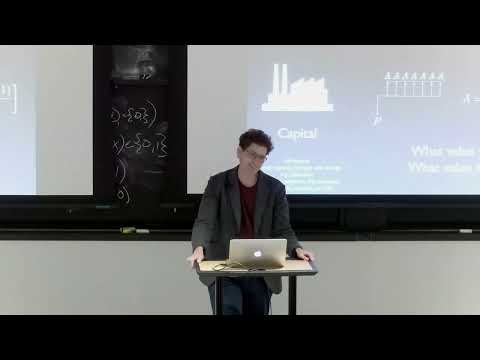 Watch on YouTube →
Overview
R. Scott Kemp analyzes the economic viability of nuclear power in a decarbonizing grid, highlighting its high capital costs driven by long construction times and financing. He contrasts this with cheaper renewables like solar and wind, and discusses how government loan guarantees and financing strategies, like those used for Vogtle, enable nuclear construction despite its expense. Kemp concludes that nuclear's competitiveness hinges on significantly reducing its capital costs to compete with other low-carbon, dispatchable options like geothermal and natural gas with carbon capture.
Key takeaways
- Nuclear power's high capital costs, driven by long construction times and financing, make it less competitive than renewables like solar and wind, despite its dispatchable nature.
- Government loan guarantees and favorable financing, as seen with Vogtle, are critical for enabling new nuclear construction in the US, but these strategies are not universally applicable or sustainable.
- The cost-effectiveness of energy technologies is highly dependent on their capacity factor, as illustrated by screening curves, where nuclear is best suited for base load if its capital costs can be reduced.
- Integrating non-dispatchable renewables like wind and solar requires sophisticated modeling tools like GenX, which account for resource availability and operational constraints, unlike simpler screening curve analyses.
- The social cost of carbon significantly impacts the optimal energy mix; higher carbon costs make nuclear and natural gas with carbon capture more competitive against unabated natural gas.
- Nuclear power's role in decarbonization is contingent on building plants rapidly and affordably, comparable to or better than current geothermal or natural gas with CCS, which requires substantial cost reductions.
Chapters
0:00
Calculating Nuclear's Capital Costs and Construction Delays
- Investment cost is sensitive to construction timelines, with factory fabrication aiming to reduce costs compared to 'stick-built' methods.
- A 4% real interest rate is used for calculations, which is slightly low and biases costs downwards.
- Nuclear plants are licensed for 40 years but realistically operate for 60 years, influencing annual payment calculations.
0:48
Determining Annual Capital Charges for Power Plants
- The annual capital charge is calculated using an investment cost and the plant's lifetime (n) and interest rate (r).
- A real interest rate is used to simplify analysis by ignoring inflation's effect on future revenues.
- Nuclear plants are assigned a lifetime of 60 years for this calculation.
13:14
Comparing Capital Charges Across Different Energy Technologies
- Nuclear's capital charge is presented alongside other technologies like solar-thermal, fuel cells, natural gas (with/without CCS), solar with storage, wind, and geothermal.
- Solar-thermal and fuel cells have high capital costs, making them less competitive.
- Natural gas (with/without CCS) and solar with 4 hours of storage are under $100/kW/year.
- Wind is $162/kW/year, and geothermal is $221/kW/year.
16:46
The Competitiveness of Solar and Wind Power
- Solar is the cheapest carbon-free energy source at $110/kW/year, driving massive installations in China (1.3 GW/day).
- China's rapid solar deployment is attributed to low panel costs and labor.
- While solar is cheap and fast, it's not a complete solution for climate change due to intermittency.
20:22
Financing Mechanisms for Nuclear Plants in the US
- Nuclear plants are often financed through bonds and government loan guarantees, which reduce interest rates to the risk-free rate.
- The federal government guarantees a portion of the loan, allowing for lower interest rates.
- The Vogtle project utilized customer billing for costs 10 years before operation and sued Westinghouse for $3.7 million.
25:26
History and Scale of Federal Loan Guarantees for Nuclear
- Federal loan guarantees, introduced by the Energy Policy Act of 2005, can cover up to 50% of a plant's cost.
- Initially, 29 license applications were filed, but most were abandoned due to cost concerns.
- Only Vogtle survived among the 29 applications, with Sumner also being abandoned mid-construction.
30:02
Vogtle's Financing and Cost Inflations
- Vogtle issued bonds at 1% interest in 2009, benefiting from low rates post-2008 crash and higher inflation.
- Some reported overnight costs for Vogtle are lower because they don't account for these favorable financing details.
- The high cost of Vogtle is attributed to financing details and the need for government support, not just construction delays.
32:08
International Approaches to Nuclear Power Financing
- China funds nuclear projects directly from the national budget.
- India uses a mix of annual budget (33%) and foreign loans (60%).
- Japan and France utilize government-backed loans or state-owned utilities, bypassing competitive market financing.
33:49
Cost Comparison: Coal vs. Nuclear Power Plants
- A fully operational coal plant costs $209-$300 per kilowatt to build.
- A nuclear plant's total investment cost is around $11,000/kW, compared to $5,000/kW for coal.
- Nuclear plants are approximately twice as expensive as coal plants based on these investment costs.
35:11
Factors Influencing Nuclear Plant Costs
- Nuclear costs are high due to safety considerations, construction delays, and potential cost inflation.
- Vendor estimates are often lower than actual costs, and contingency is added.
- Achieving lower costs requires addressing multiple factors contributing to complexity and expense.
36:55
National Policy and Nuclear Plant Competitiveness
- Other countries build nuclear plants as a matter of national policy, not necessarily market competition.
- These are often nationalized electric systems where cost is less of a deciding factor.
- The decision to build is driven by national goals rather than pure economic competitiveness.
37:23
Motivations for Building Nuclear Power in the US
- Primary drivers are vendors, lobbyists, and some public utility commission officials.
- From a social benefit perspective, nuclear is not the preferred choice at current prices.
- Decarbonization goals may push towards dispatchable technologies, potentially benefiting nuclear if costs decrease.
41:53
Analyzing Technology Mix Using Screening Curves
- The cost of electricity varies with the capacity factor (hours per year the plant operates).
- Screening curves plot cost against operating hours to determine the optimal technology mix.
- Geothermal has no fuel cost, resulting in a flat cost curve.
- Natural gas plants have steeper curves due to fuel costs, with combined cycle being more efficient.
50:00
Demand Curves and Optimal Technology Selection
- A demand curve plots electricity demand over 8,760 hours per year, showing daily and seasonal variations.
- Sorting demand data allows for determining how much capacity is needed at different load levels.
- Screening curves, combined with demand data, help determine the optimal amount of each technology to build based on operating hours.
55:40
The Role of Base Load Power Generation
- Base load is the minimum continuous demand, typically met by the lowest-cost technology at high capacity factors.
- There's no inherent property making nuclear uniquely suited for base load; it's simply the lowest-cost option at high utilization.
- Nuclear's high capital cost (intercept on the screening curve) makes it suitable primarily for base load applications.
1:02:19
Market Bidding and Long-Run Marginal Cost
- Existing plants consider their long-run marginal cost (LMC) for bidding in electricity markets.
- Nuclear plants bid very low (near $0) to avoid shutdown costs and capture revenue, even if it doesn't cover full capital costs.
- Older plants may shut down if maintenance costs exceed their LMC, making them unable to cover operating expenses.
1:12:20
Historical Nuclear Costs and Break-Even Economics
- Historical nuclear plants had lower costs and are now primarily incurring maintenance and operating expenses after loans are paid off.
- Existing nuclear plants have different economics than new builds.
- New nuclear plants struggle to break even due to high capital costs not covered by market prices alone.
1:14:00
Understanding Negative Electricity Prices
- Negative prices occur when generation exceeds demand, signaling generators to reduce output.
- This is a market signal, not necessarily a problem, and helps stabilize the grid.
- Solar's $0 marginal cost contributes to negative pricing, incentivizing curtailment or storage.
1:19:03
Price Volatility and Ancillary Services
- Increased price volatility is a symptom of integrating variable renewables.
- Thermal generators struggle with volatility, while inverter-based generators (solar, wind) can respond quickly.
- Ancillary services (grid stabilization, frequency response) are crucial and have emerging markets.
Summary, takeaways, and chapters were generated by AI from the video's transcript and may contain errors. The video belongs to its creator, MIT OpenCourseWare.