Lecture 18: Applying Data Science and Artificial Intelligence to Managing Biomedical Portfolios
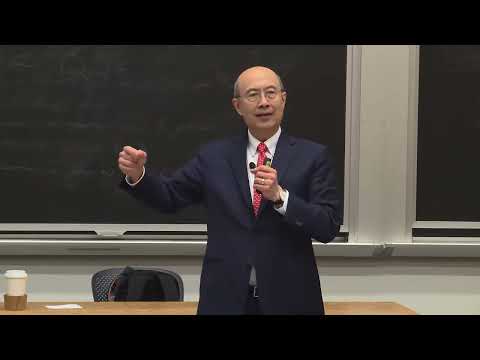 Watch on YouTube →
Overview
Andrew Lo discusses applying financial engineering and portfolio theory to biomedicine and energy, specifically targeting the "valley of death" in drug development and the challenges of energy transition. He highlights the success of BridgeBio Pharma, a company founded on the principle of diversifying investments in rare disease therapeutics, and proposes a similar portfolio approach to funding fusion energy research.
Key takeaways
- Financial engineering, particularly portfolio diversification, can significantly reduce the risk associated with drug development for rare diseases, making it more attractive to investors.
- BridgeBio Pharma's success demonstrates the real-world applicability of portfolio theory in biomedicine, leading to the development of life-changing therapies for rare diseases like Canavan disease.
- Despite the growth of renewable energy, fossil fuel consumption continues to rise due to population growth and increasing middle-class consumption, necessitating the development of alternative energy sources.
- Fusion energy holds immense potential as a sustainable and abundant energy source, but requires significant investment in various technologies to achieve commercial viability.
- A portfolio approach, similar to that used by BridgeBio Pharma, can be applied to fusion energy research by investing in a diverse set of technologies with independent value, reducing overall risk and attracting investment.
- Even small individual investments, when aggregated, can provide the necessary capital to fund large-scale projects like fusion energy research, highlighting the power of collective action.
Chapters
0:00
Introduction to Financial Engineering for Societal Challenges
- Andrew Lo introduces the application of financial economics to address challenges like climate change and cancer.
- He asserts that finance is crucial for transformative projects, requiring understanding of cost of capital and net present value.
- The lecture will focus on biomedicine and fusion energy as examples.
0:28
Biomedicine at an Inflection Point: Gene Therapy Examples
- Andrew Lo argues that biomedicine is at an inflection point, citing gene therapy as a revolutionary treatment.
- He presents the case of Caroline and Cole Carper, who regained sight after gene therapy for Leber's congenital amaurosis.
- He introduces Canavan disease, a genetic disorder causing myelin sheath degradation, and its potential treatment via gene therapy.
15:47
The Miraculous Impact of Gene Therapy on Canavan Disease
- Andrew Lo presents a video of a Canavan disease patient regaining motor skills after gene therapy.
- He emphasizes the unprecedented nature of this recovery, as no Canavan patient has previously achieved such progress.
- He quotes Sharpe, Hockfield, and Jacks' concept of 'convergence' of life sciences, physical sciences, and engineering as key to biomedical progress.
21:51
The Omics Revolution and the Bottleneck of Economics
- Andrew Lo discusses the 'omics revolution' (genomics, epigenomics, transcriptomics, proteomics, metabolomics, microbiomics) and its impact on biomedical knowledge.
- He identifies economics as the bottleneck to progress, due to reliance on outdated business models.
- He introduces the concept of the 'valley of death' – the funding gap between scientific experiments and clinical trials.
24:55
The Valley of Death: Risk, Uncertainty, and Drug Development
- Andrew Lo explains the 'valley of death' as a challenge caused by increasing risk and uncertainty in drug development.
- He contrasts risk (parameterizable randomness) with uncertainty (unknown unknowns).
- He highlights the high costs, low probabilities of success, and long timelines (10-15 years) associated with drug development.
30:28
The Madoff Ponzi Scheme as an Example of Risk Misperception
- Andrew Lo presents a scenario involving four investments to illustrate risk perception.
- He reveals the investments as Treasury bills, the US stock market, Pfizer stock, and the Fairfield Sentry Fund (a Madoff feeder fund).
- He explains that investors often seek high-yielding, low-risk assets, measured by the Sharpe ratio.
35:19
Declining Sharpe Ratios in Biomedicine and the Need for Financial Innovation
- Andrew Lo notes that biomedicine's Sharpe ratio has been declining due to increasing risk and uncertainty.
- He argues for increasing the Sharpe ratio through new financing and business models.
- He presents a hypothetical investment in a single anti-cancer drug with a 5% success rate and a potential $12.3 billion payout.
40:16
Increasing the Sharpe Ratio: Portfolio Diversification
- Andrew Lo presents the equation for increasing the Sharpe ratio, either by increasing the numerator (return) or decreasing the denominator (risk).
- He proposes investing in a portfolio of 150 drugs to reduce risk through diversification.
- He explains that if the projects are statistically independent and identically distributed (IID), the risk decreases by the square root of the number of projects.
48:34
Rare Diseases as a Model for Portfolio-Based Drug Development
- Andrew Lo highlights rare diseases as an ideal application for portfolio diversification due to low correlation in therapeutic program successes.
- He notes that while individual rare diseases affect small populations, collectively they impact over 30 million Americans.
- He explains that rare disease drug development is often easier due to better understanding of the underlying genetics and smaller clinical trial sizes.
56:17
BridgeBio Pharma: A Real-World Example of Portfolio Theory in Action
- Andrew Lo discusses his paper on portfolio diversification for rare diseases and its impact on Neil Kumar, a former student.
- Neil Kumar founded BridgeBio Pharma based on this concept, raising substantial funding from KKR and other investors.
- BridgeBio Pharma achieved a $4.6 billion market cap and has two approved drugs, with a third expected soon.
1:05:33
The Human Impact of Financial Engineering: Treating Canavan Disease
- Andrew Lo shares his personal experience meeting a young Canavan disease patient treated with a BridgeBio drug.
- He emphasizes that finance cannot turn a bad drug into a good one, but the right financing can enable a good drug to reach patients.
- He transitions to the second topic: energy transition.
1:10:26
The Reality of Energy Transition: Fossil Fuels Still Dominate
- Andrew Lo addresses the challenge of energy transition and climate change.
- He presents data showing that fossil fuel consumption is still growing despite progress in renewables.
- He attributes this to population growth and increasing middle-class consumption.
1:14:06
The Potential of Fusion Energy as a Sustainable Solution
- Andrew Lo argues that renewable energy alone is insufficient and emphasizes the need for low-carbon, on-demand energy sources.
- He identifies fusion, fission, and geothermal as potential long-term solutions.
- He focuses on fusion energy due to its abundance, lack of long-lasting radioactive waste, and higher energy output compared to fission.
1:18:20
The Lawson Triple Product and the Promise of Fusion
- Andrew Lo explains the Lawson triple product (temperature, pressure, and time) required for fusion.
- He highlights MIT and Commonwealth Fusion Systems' creation of a 20-tesla magnet as a breakthrough.
- He mentions Lawrence Livermore Laboratory's achievement of an exothermic fusion reaction.
Summary, takeaways, and chapters were generated by AI from the video's transcript and may contain errors. The video belongs to its creator, MIT OpenCourseWare.