Is Van Gogh’s ‘Sunflowers’ Actually A Fake? | The Authenticity Of The Sunflowers
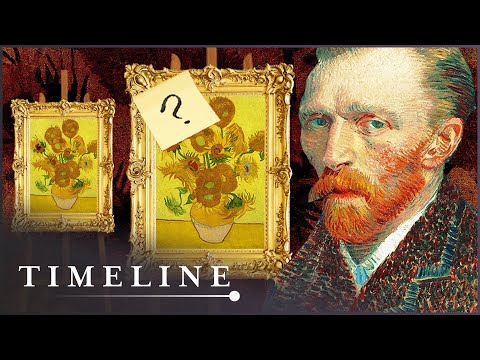 Watch on YouTube →
Overview
The Yasuda Fire and Marine Insurance Company paid £22.5 million for a 14-sunflower painting attributed to Vincent van Gogh in 1987, but its authenticity remains disputed. Visual comparisons, gaps in Van Gogh’s letters and early records, and the painting’s connection to Émile Schuffenecker support the forgery case; however, scientific testing and access to key archives remain limited, while Yasuda, Christie’s, and the Van Gogh Museum have not resolved the dispute publicly.
Key takeaways
- The Yasuda Sunflowers differs from the two better-documented 14-sunflower versions: it is unsigned, absent from Van Gogh’s letters, and generally judged visually inferior by the critics discussed.
- Alain Tarica’s visual case focuses on specific construction errors—stems crossing leaves, broken stem connections, and petals detached from the flower center—that he says reflect poor handling of Van Gogh’s thick impasto.
- Émile Schuffenecker is a leading suspect because he lent the Yasuda painting to the 1901 Bernheim-Jeune exhibition and had access to the London Sunflowers while restoring it; these circumstances indicate opportunity, not proof of forgery.
- The strongest documentary evidence is incomplete: Van Gogh’s letters do not mention the Yasuda painting, while early inventories often identify sunflower works only as tournesol, making individual paintings difficult to distinguish.
- Scientific analysis could help resolve the attribution, but the painting’s reported relining may have removed evidence, and its owner has not invited the open investigation critics seek.
- The dispute is entangled with financial and institutional interests: Yasuda paid £22.5 million and later donated $37.5 million to the Van Gogh Museum, while Christie’s and the museum have limited their public commentary.
Chapters
0:00
The £22.5 Million Yasuda Sunflowers and the Forgery Question
- In 1987, Yasuda Fire and Marine Insurance Company bought Van Gogh’s 14-sunflower painting for £22.5 million, nearly three times the previous auction record.
- The purchase carried special meaning in Japan, where a different Van Gogh painting of five sunflowers had been destroyed during the 1945 bombing of Japan.
- Critics questioned the Yasuda painting’s muddy appearance and lack of the visual force associated with Van Gogh.
- The earlier auction of Garden at Auvers, whose authenticity had also been challenged, prompted wider media scrutiny of suspected Van Gogh fakes.
5:00
Three Sunflower Versions and the Evidence Used to Test Authenticity
- Three 14-sunflower versions are central to the dispute: the London National Gallery painting, the Amsterdam Van Gogh Museum version, and the Yasuda picture.
- The Yasuda version is unsigned and unmentioned in Van Gogh’s letters to his brother Theo, unlike the London and Amsterdam paintings.
- Benoît Landais noted differences in flower details and argued that paint layering in the Yasuda picture conflicts with Van Gogh’s color-based working method.
- Visual comparison, documentary research, and scientific testing are the three main approaches proposed for evaluating the painting.
10:00
Alain Tarica’s Case Against the Yasuda Painting’s Brushwork
- Art dealer Alain Tarica compared replicas of all three sunflower paintings and argued that the Yasuda artist misunderstood the plants’ structure.
- He pointed to stems that appear to pass through leaves, broken stem connections, and flower petals that fail to join the central flower disk.
- Tarica attributed these inconsistencies to clumsy handling of the thick impasto that was characteristic of Van Gogh’s painting.
- Van Gogh painted the sunflower series in Arles in 1888 to decorate the Yellow House for Paul Gauguin’s anticipated arrival.
15:00
Van Gogh’s Yellow House, Gauguin, and the Sunflower Symbol
- Van Gogh used yellow as a life-affirming color associated with the sun, nature, love, and gratitude.
- The sunflower paintings were part of his preparations to welcome Gauguin to the Yellow House in Arles.
- Van Gogh later identified the sunflower as his characteristic flower, connecting the subject to his artistic identity.
- The relationship between the artists deteriorated; Van Gogh’s crisis led to the loss of part of his ear and his admission to an asylum near Saint-Rémy.
20:00
Theo’s Letters, Johanna’s Inventory, and Schuffenecker’s Opportunity
- After Vincent died in 1890, Theo inherited his paintings, but Theo’s death six months later left the collection to his infant son, Vincent Willem van Gogh.
- Theo’s widow, Johanna van Gogh-Bonger, preserved and transcribed the brothers’ letters, a vital source for identifying works Van Gogh described.
- The Yasuda painting is absent from the letters, while ambiguous inventory entries often use only the word tournesol, French for sunflower.
- At the 1901 Bernheim-Jeune exhibition, the Yasuda picture was lent by Émile Schuffenecker, who had also restored the London version—giving him access to a model for a possible copy.
25:00
Émile Schuffenecker, Suspected Copies, and Christie’s Provenance
- Schuffenecker had the artistic ability and opportunity to copy the London Sunflowers, but the evidence does not establish whether any copy was intended as a forgery.
- His daughter inherited several works considered Van Gogh fakes, and researchers have linked Schuffenecker to other disputed Van Gogh paintings.
- A disputed bandaged-ear self-portrait was criticized for details that seem inconsistent with Van Gogh’s condition and self-portraiture.
- Christie’s promotional material showed a Schuffenecker inscription in the painting’s ownership history, though the auction house continued to affirm the work’s authenticity.
30:00
The Van Gogh Museum Archives and the Wacker Forgery Scandal
- The Van Gogh Museum holds crucial family archives, but its director, John Leighton, declined to discuss attribution without the owner’s permission.
- The museum’s relationship with Yasuda was complicated by the company’s $37.5 million contribution toward a new museum wing.
- The 1928 Berlin scandal exposed paintings supplied by dealer Otto Wacker that experts recognized as works by another hand; Wacker was jailed for 19 months and fined.
- Jacob-Baart de la Faille’s first Van Gogh catalogue included 33 Wacker fakes, illustrating how even major scholarly catalogues can mistakenly authenticate works.
36:00
Dr. Gachet’s Collection and Disputed Van Gogh Paintings
- The Kröller-Müller Museum moved paintings no longer attributed to Van Gogh out of its main galleries, including works associated with earlier forgery controversies.
- The Musée d’Orsay holds eight Van Gogh attributions donated by Paul Gachet’s son, some of which are now questioned.
- A second portrait of Dr. Gachet differs from the version sold at Christie’s in 1990 for a record price; critics cite conflicting colors and weaker integration of figure and background.
- A letter from Van Gogh dated June 15 refers to one portrait of Gachet, a documentary clue used to challenge the existence of a second version.
42:00
Yasuda’s Refusal to Reopen the Sunflowers Authenticity Debate
- Dr. Gachet and his son Paul, known as Coco, were both painters; Paul used the pseudonym Louis van Ryssel when signing his own works and copies.
- Yasuda chairman Yasuo Goto said the company had no doubts about authenticity and would not participate in further discussion or answer questions.
- The painting was reportedly relined after arriving in Japan, possibly removing material evidence that could have helped researchers.
- The documentary concludes that the case remains unresolved: critics cite missing documentation, Schuffenecker’s connection, and visual inferiority, while Christie’s maintains its attribution and experts remain divided.
Summary, takeaways, and chapters were generated by AI from the video's transcript and may contain errors. The video belongs to its creator, Timeline - World History Documentaries.