Iran's Economic Dilemma
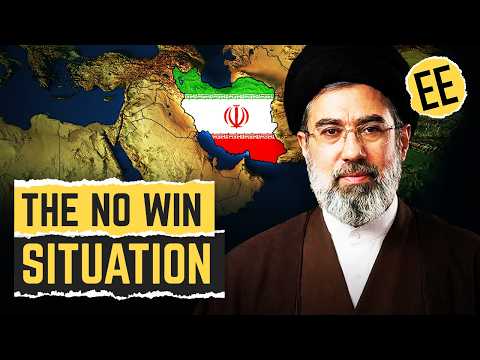 Watch on YouTube →
Overview
Iran faces a severe economic dilemma due to its heavy reliance on oil exports, compounded by 45 years of international sanctions that cripple its ability to trade and access essential infrastructure. Despite vast energy reserves and a strategic location, the country suffers from internal inefficiencies, subsidized energy leading to black market exploitation and energy crises, and a leadership resistant to reforms that could jeopardize their power, creating a cycle of vulnerability and missed potential.
Key takeaways
- Iran's economy is severely hampered by 45 years of sanctions, preventing trade and access to critical infrastructure, despite possessing the world's largest energy reserves.
- Internal energy crises stem from aging infrastructure and mismanagement, exacerbated by heavily subsidized energy prices that disincentivize efficiency and fuel black market activities like cryptocurrency mining.
- The true cost of gasoline in Iran is drastically lower than the official rate due to a highly unfavorable black market exchange rate, creating lucrative smuggling operations.
- International sanctions are enforced through a network of financial and trade restrictions, making it difficult for any global business to engage with Iran without risking exclusion from the US market.
- OPEC's collective power to influence oil prices is not leveraged to support Iran due to members' individual economic interests and geopolitical rivalries.
- Iran's leadership is resistant to economic reforms that could improve citizens' lives, fearing loss of power and civil unrest, leading to a self-perpetuating cycle of economic stagnation and vulnerability.
Chapters
0:00
Iran's Strategic Advantages vs. Economic Vulnerabilities
- Iran possesses immense energy reserves (3rd largest oil, 2nd largest natural gas) and a well-educated population.
- Its strategic location along busy trade routes offers significant economic opportunities.
- Neighboring Gulf states have significantly higher GDP per capita due to oil wealth.
- Economy heavily dependent on volatile oil exports, making it vulnerable to exploitation.
8:30
Internal Energy Crises and Inefficient Resource Management
- Aging infrastructure and mismanagement lead to prolonged blackouts despite abundant natural gas.
- Sanctions hinder access to modern electrical equipment for infrastructure upgrades.
- Heavily subsidized energy leads to low consumer value and inefficient usage, fueling cryptocurrency mining.
- Iran is one of the least energy-efficient economies, using more energy per capita than Denmark for significantly less output.
14:00
Sanctions, Subsidies, and the Status Quo Trap
- Sanctions restrict access to modern refining tools, leading to poor quality gasoline that damages engines and causes pollution.
- Radically subsidized gasoline prices (true cost ~$0.05/liter) create a thriving black market for smuggling into neighboring countries.
- International sanctions are enforced through exclusion from US banks, SWIFT, and trade partners, making compliance by global businesses paramount.
- The leadership maintains the status quo, as concessions to the West are seen as weakness, and economic reforms risk civil unrest, despite long-term unsustainability.
Summary, takeaways, and chapters were generated by AI from the video's transcript and may contain errors. The video belongs to its creator, Economics Explained.