Introduction to Cognitive Bias: Crash Course Scientific Thinking #1
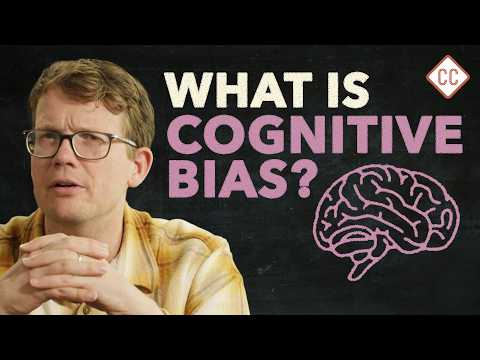 Watch on YouTube →
Overview
Hank Green introduces cognitive biases as predictable weaknesses in human thinking that stem from our evolved pattern recognition and mental shortcuts (heuristics). He explains how biases like availability bias (overweighting easily recalled information) and confirmation bias (favoring information that aligns with existing beliefs) can lead to flawed perceptions, using examples like the perceived increase in plane crashes and the myth of learning styles. The video highlights science, particularly methods like randomized controlled trials and double-blind studies, as a system designed to overcome these inherent biases through evidence-based, communal vetting.
Key takeaways
- Cognitive biases, such as availability bias and confirmation bias, are unconscious mental shortcuts that can distort our perception of reality.
- The myth of personalized learning styles persists despite lacking scientific evidence, largely due to confirmation bias reinforcing educators' beliefs.
- Science, through methods like randomized controlled trials and double-blind studies, is a systematic approach designed to minimize human cognitive biases.
- Awareness of one's own biases is the first step to combating them; interacting with diverse individuals and communities is also vital.
- Cognitive flexibility, the willingness to consider that one might be wrong, is a powerful tool for overcoming ingrained biases.
- Scientific thinking, which relies on evidence and community vetting, is presented as a superior tool for understanding the world compared to relying solely on intuition.
Chapters
- Cognitive biases are predictable weaknesses in thinking, stemming from evolved pattern recognition and mental shortcuts (heuristics).
- These shortcuts help us process information quickly but can lead to errors when intuition is insufficient for complex questions.
- Availability bias occurs when judgments are based on easily accessible information (e.g., perceived increase in plane crashes after media coverage).
- Confirmation bias leads to favoring information that confirms existing beliefs and filtering out contradictory evidence (e.g., persistence of learning style myths).
- Science is presented not as a body of knowledge, but as a system for interrogating the universe and building durable knowledge.
- Sage the Bad Naturalist explains how scientific methods are designed to reduce bias.
- Randomized controlled trials (RCTs) are used to test interventions, reducing bias in participant selection and outcome comparison.
- Double-blind studies, where neither participants nor researchers know group assignments, further minimize bias in research.
Summary, takeaways, and chapters were generated by AI from the video's transcript and may contain errors. The video belongs to its creator, CrashCourse.