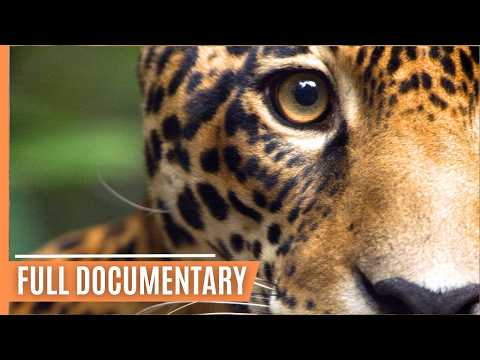
Into the Wild - The Untamed Rainforests and Unique Creatures of Guyana | Full Documentary
 Watch on YouTube →
Overview
Guyana's vast, pristine rainforests, covering 80% of the country, are home to unique biodiversity and indigenous communities. The Iwokrama Forest Reserve, managed by local indigenous groups, serves as a model for ecotourism and research, protecting species like jaguars and harpy eagles. However, illegal gold mining poses a significant threat, causing environmental devastation and conflict, while traditional indigenous farming practices offer a sustainable alternative to widespread deforestation.
Key takeaways
- Guyana's Iwokrama Forest Reserve is a successful model for ecotourism and research, managed by indigenous communities.
- Illegal gold mining poses a severe threat to Guyana's pristine rainforests, causing significant environmental damage and conflict.
- Traditional indigenous farming methods, like small-scale slash-and-burn, are sustainable and allow for forest regeneration.
- The decline of the balata industry has impacted traditional livelihoods in villages like Aperai, highlighting the shift from natural resources to synthetic alternatives.
- The Essequibo River ecosystem supports a high density of species, including apex predators like black caiman and social hunters like giant otters.
- Communities like Surama demonstrate a strong commitment to conservation through education, community projects, and respectful coexistence with wildlife.
Chapters
0:00
Introduction to Guyana's Diverse Ecosystems
- Guyana, located northeast of South America, boasts varied landscapes and wildlife.
- Approximately 80% of the country is covered by pristine rainforest, crisscrossed by rivers.
- Indigenous peoples inhabit these forests, balancing nature and modern life, with many working to protect their environment.
3:36
The Essequibo River and the Road to the Interior
- A single road, nearly 500 km long, connects the capital Georgetown to Brazil, crossing the Essequibo River.
- The Essequibo River, over 1,000 km long, is an untamed waterway, challenging to navigate due to rapids.
- About 90% of Guyana's population lives on the coast; few venture into the interior.
7:04
Entering the Iwokrama Rainforest and its Wildlife
- Michael Davis, head ranger at the Iwokrama River Lodge, highlights the pristine rainforest.
- The Iwokrama protected area, meaning 'refuge' in Makushi, is one of Earth's last pristine rainforest regions.
- The forest is home to numerous endemic species, including jaguars, known for their stealthy hunting techniques.
10:41
Canopy Life and the Harpy Eagle's Domain
- Life thrives in the canopy, with animals like spider monkeys and porcupines adapted for arboreal living.
- Hummingbirds rely on precise knowledge of nectar sources, while fruit-bearing trees attract diverse wildlife.
- The harpy eagle, one of the world's most powerful raptors, nests in tall trees, with parents caring for eaglets for up to two years.
16:51
The Canopy Walkway and Ecotourism at Atta Lodge
- Atta Lodge offers a canopy walkway, 30 meters high, providing unique views of the forest canopy.
- This elevated perspective allows for better observation of canopy-dwelling animals, especially during fruiting seasons.
- The walkway is crucial for ecotourism and research, aiming for sustainable forest use.
22:13
The Threat of Illegal Gold Mining
- Guyana's rich gold and diamond deposits attract illegal mining activities.
- Chin Landing is identified as a key entry point for poachers and illegal miners into the Iwokrama reserve.
- Joint missions involving rangers and government inspectors confront miners, often finding abandoned camps and environmental devastation.
29:07
Confronting Illegal Miners and Environmental Impact
- Authorities face challenges in confronting miners due to safety risks and the need for negotiation.
- Confiscation of barrels and equipment is used to disrupt illegal operations, though it's a recurring battle.
- Gold prospecting destroys the humus layer, leaving behind barren sand and requiring years for recovery.
32:36
Traditional Indigenous Farming Practices
- Indigenous tribes use traditional slash-and-burn techniques on small, short-term plots.
- This method preserves the humus layer, with ash acting as a natural fertilizer.
- After a few years, abandoned fields regenerate into secondary forests, with no lasting sign of farms.
42:00
Aperai Village and the Decline of Balata Production
- Aperai village, at the confluence of the Essequibo and Rupununi rivers, was once a major center for balata production.
- Balata, a latex similar to rubber, was crucial during World Wars for drive belts and cable sheathing.
- Industrialization and synthetic rubber have replaced balata, leading to economic decline in villages like Aperai.
Summary, takeaways, and chapters were generated by AI from the video's transcript and may contain errors. The video belongs to its creator, Free High-Quality Documentaries.