How to Rebuild an Economy
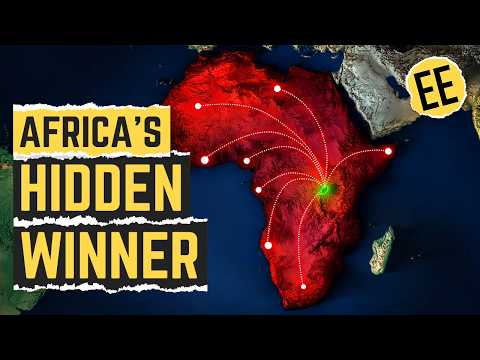 Watch on YouTube →
Overview
Rwanda's economic transformation from the aftermath of the 1994 genocide to a nation with a 7% average annual GDP growth over the last decade is examined, contrasting its "ease of doing business" improvements with Singapore's higher GDP per capita. The analysis highlights Rwanda's strategic focus on stability, institutional reform, and rebranding, alongside its ambition to become an East African hub for trade and services, while acknowledging significant challenges in geography, education, and export diversification.
Key takeaways
- Rwanda's economic recovery from the 1994 genocide involved prioritizing stability, institutional reform, and rebranding, leading to significant GDP growth.
- Rwanda has dramatically improved its 'ease of doing business' ranking (38th globally), making it easier to start companies and register property.
- Despite business-friendly reforms, Rwanda faces significant geographical disadvantages as a landlocked country, increasing logistics costs for imports and exports.
- While Rwanda is developing its service and technology sectors, agriculture still employs 40% of the workforce, and 27% live below the national poverty line.
- Rwanda's reliance on mineral exports, particularly gold, raises concerns due to potential sourcing from conflict zones in the DRC and geopolitical fragility.
- The long-term sustainability of Rwanda's economic model is linked to its institutional strength beyond President Paul Kagame's leadership, a contrast to Singapore's robust succession.
Chapters
0:00
Rwanda's Post-Genocide Collapse and Early Recovery
- Rwanda experienced a 50% economic collapse following the 1994 genocide, killing 500,000-1 million people.
- The Rwandan Patriotic Front prioritized stability over retribution, abolishing ethnic categories and promoting national identity.
- Foreign aid financed up to 40% of the national budget, providing scaffolding for reconstruction of infrastructure like roads and schools.
- Vision 2020, launched in 2000, aimed to transform Rwanda into a knowledge-based, service-oriented economy.
6:30
Building a Business-Friendly Environment and Regional Hub Ambitions
- Rwanda improved its global ease of doing business ranking from 140th in 2008 to 38th by 2019.
- Registering a business now takes 6 hours online, and property registration averages seven days, down from 354 days in 2005.
- Despite ease of registration, challenges remain due to landlocked geography, high shipping costs (3-4x Shanghai to Mombasa), limited financing, and inconsistent tax incentive enforcement.
- Rwanda aims to be a base for multinationals in East and Central Africa, leveraging its stability, low corruption, and fast bureaucracy to access a market of 330 million people.
18:34
Challenges: Geography, Education, Exports, and Leadership Transition
- Landlocked geography makes inland shipping from Mombasa to Kigali cost $4,000 per container, significantly higher than coastal shipping.
- Education investment is strong at primary levels, but tertiary education enrollment is low (9% for ages 16-30), impacting the skilled workforce needed for a knowledge economy.
- Mineral exports, particularly gold, account for a significant portion of revenue ($1.7 billion in 2024), raising concerns about sourcing from conflict zones in the DRC.
- Rwanda's economic success is heavily tied to Paul Kagame's leadership, with concerns about institutional strength and smooth transition without him, unlike Singapore's stable succession.
Summary, takeaways, and chapters were generated by AI from the video's transcript and may contain errors. The video belongs to its creator, Economics Explained.