How Scientists Build Consensus: Crash Course Scientific Thinking #5
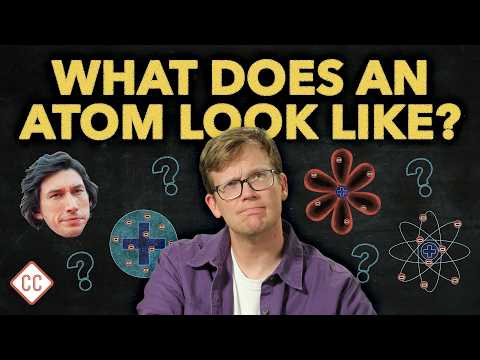 Watch on YouTube →
Overview
Hank Green explains scientific consensus as the broad acceptance of an idea by experts, built through rigorous testing, skepticism, and evidence accumulation, akin to assembling a jigsaw puzzle without a box. He uses atomic theory's development from ancient Greek philosophy through John Dalton's work and the discovery of electrons and the nucleus to illustrate this process. Green also addresses why consensus is strong on fundamental nutrition but weaker on specific food impacts like chocolate, due to the complexity of human studies and confounding variables.
Key takeaways
- Scientific consensus is the point where an idea gains broad acceptance by experts due to a strong, rigorously tested evidence base.
- The development of atomic theory, from ancient philosophy to understanding subatomic particles, illustrates the long, iterative process of building scientific consensus.
- Complex human health studies, like those on food's impact, face challenges in reaching consensus due to numerous confounding variables and ethical limitations.
- Scientific debate often occurs within established consensus on finer details, rather than challenging the core, well-supported conclusions.
- Consensus statements, such as those on climate change, reflect an overwhelming body of evidence that has withstood extensive scrutiny.
- Science progresses by becoming 'less wrong' over time, acknowledging uncertainty while recognizing robust explanations that have stood up to challenges.
Chapters
0:00
Defining Scientific Consensus and Its Importance
- Scientific consensus is broad acceptance of an idea with a strong evidence base by scientific experts.
- It is achieved only after a claim has undergone extensive skepticism, repeated testing, and scrutiny.
- The development of atomic theory, from ancient ideas to understanding subatomic particles, exemplifies consensus building over centuries.
3:28
The Jigsaw Puzzle Analogy for Scientific Consensus
- Sage compares building scientific consensus to assembling a jigsaw puzzle without seeing the picture on the box.
- John Dalton's early 1800s work on chemical reactions provided initial 'puzzle pieces' for atomic theory.
- Later discoveries of electrons and the nucleus added more pieces, refining the atomic model.
- Visualizing electrons as 'clouds of probability' in 1926 represented a consensus on uncertainty and likelihood.
7:01
Challenges in Reaching Consensus on Complex Topics
- While basic nutrition (e.g., vitamin C, fiber) has consensus, specific food impacts (e.g., chocolate and cancer) are harder to establish due to study complexity.
- Areas of uncertainty exist within broader consensus, driving modern scientific inquiry.
- Large, high-quality studies are needed for consensus, but are difficult and expensive for complex human health questions with many variables (diet, genetics, environment).
Summary, takeaways, and chapters were generated by AI from the video's transcript and may contain errors. The video belongs to its creator, CrashCourse.