How Kim Jong Un "Accidentally" Fixed North Korea's Economy
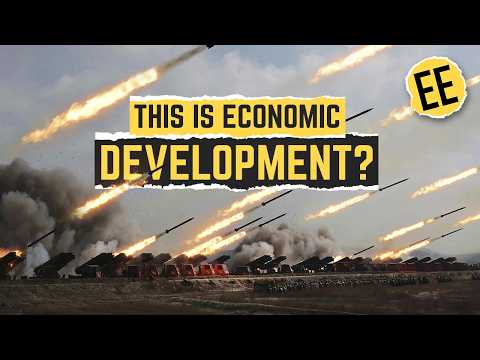 Watch on YouTube →
Overview
North Korea's economy is experiencing an unprecedented boom, driven by its "mutually beneficial arrangement" with Russia, which supplies munitions and soldiers in exchange for food, fuel, and technical assistance. This trade, facilitated by China's role as an intermediary and Russia's veto of UN sanctions monitoring, has led to visible modernization in Pyongyang, including increased smartphone usage and new construction, though the benefits are concentrated among elites and the long-term sustainability is questionable.
Key takeaways
- North Korea's economic surge is primarily driven by exporting decades-old munitions stockpiles to Russia, not new production.
- The trade is a barter system of munitions and soldiers for food, fuel, and technical assistance, bypassing international financial sanctions.
- Russia's veto of the UN Panel of Experts has removed sanctions enforcement, allowing for increased, albeit deniable, trade between North Korea and China.
- Visible modernization in Pyongyang, including luxury cars and smartphones, is a direct result of this trade, but benefits are concentrated among elites.
- The economic boom is unsustainable as it relies on a single customer (Russia) in a single war, and North Korea's stockpiles are depleting.
- While the trade has led to some visible improvements and potential for increased independence via technology, it also strengthens regime control through distributed rewards.
Chapters
0:00
North Korea's Apparent Economic Boom and its Drivers
- Satellite data shows North Korea's economy is three times brighter, with increased construction and smartphone usage.
- The boom is attributed to Russia's invasion of Ukraine, creating a trade arrangement between the two sanctioned states.
- North Korea supplies munitions and soldiers to Russia, receiving natural resources and components in return via China.
5:13
The Munitions-for-Goods Trade with Russia
- North Korea has shipped an estimated 6,700 containers of munitions, potentially millions of artillery rounds, to Russia since 2023.
- This trade accounts for up to half of Russia's artillery ammunition usage, with North Korea also supplying 14,000-15,000 soldiers and laborers.
- Barter is the primary payment method due to both countries' exclusion from international financial systems, with North Korea receiving food, fuel, fertilizer, and technical assistance.
Summary, takeaways, and chapters were generated by AI from the video's transcript and may contain errors. The video belongs to its creator, Economics Explained.