How Do Minerals Form?: Crash Course Geology #5
 Watch on YouTube →
Overview
Sage from Crash Course Geology defines minerals as inorganic solids with crystalline structures and specific chemical compositions formed by geological processes, distinguishing them from rocks (aggregates of minerals). The video details five primary formation methods: cooling of magma/lava, metamorphism, biological processes, evaporation/cooling of water, and highlights key identification properties like luster, color, streak, hardness (Mohs scale), cleavage, specific gravity, and crystal habit, emphasizing the symbiotic relationship between mineral diversity and life on Earth.
Key takeaways
- A mineral is defined by being inorganic, solid, having a specific chemical composition, and a crystalline structure formed by geological processes.
- Rocks are composed of one or more minerals, while substances like opal, pearl, mineral oil, and glass do not meet the full definition of a mineral.
- Minerals form via cooling of molten rock, metamorphism, biological activity, and evaporation/cooling of water.
- Identification relies on properties such as luster, color, streak, hardness (Mohs scale), cleavage, specific gravity, and crystal habit.
- Mineral diversity on Earth is significantly higher than elsewhere in the solar system, partly due to the influence of life.
- Life and minerals have a symbiotic relationship: minerals enable life, and life, in turn, has spurred the creation of thousands of new minerals.
Chapters
0:00
Defining Minerals: The Building Blocks of Earth
- Minerals are inorganic solids with a specific chemical composition and orderly crystalline structure, formed by geological processes.
- Distinguishes minerals from rocks, which are solid aggregates of one or more minerals.
- Examples of minerals include halite (salt), natrolite (baking soda), and ice, while opal, pearl, mineral oil, rock candy, and glass are not minerals.
- Over 6,000 minerals are known, with varying rarity and presence in everyday life.
3:55
Mineral Formation Processes and Identification Properties
- Minerals form through magma/lava cooling and crystallization, metamorphism (heat and pressure), biological processes (bones/shells), and evaporation/cooling of water.
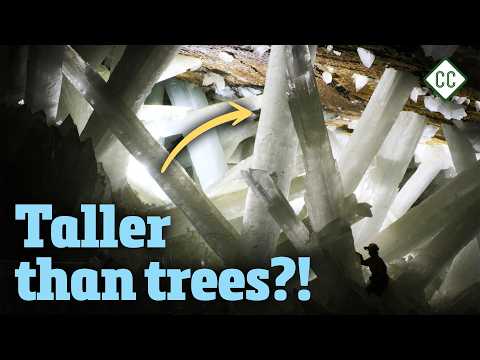
- Notable examples include gypsum crystals in Mexico formed over a million years and calcium carbonate deposits on faucets.
- Mineralogists identify minerals by chemical composition and physical properties, with some minerals like apatite being deceptive.
- Key identification properties include luster (how light reflects), color (often unreliable), streak (powder color), hardness (Mohs scale 1-10), cleavage (how they break), specific gravity, and crystal habit (shape).
Summary, takeaways, and chapters were generated by AI from the video's transcript and may contain errors. The video belongs to its creator, CrashCourse.