How Do Gems Form?: Crash Course Geology #7
 Watch on YouTube →
Overview
Crash Course Geology explores the formation of gems, from ancient Egyptian artifacts to modern scientific understanding. Gems are defined as valuable minerals with specific crystalline structures, though organic materials like pearls can also be considered gems. The formation of Libyan Desert Glass, a gem found in Egypt, is attributed to meteorite impacts melting desert sand, highlighting the role of extraterrestrial events in gem genesis.
Key takeaways
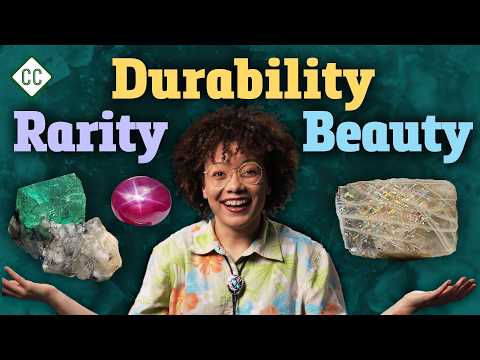
- Gems are defined by their value, rarity, beauty, and durability, often being minerals with a specific crystalline structure.
- Libyan Desert Glass, a gem found in King Tut's tomb, is believed to have formed from a meteorite impact that melted desert sand.
- Many gemstones, including emeralds, aquamarines, and topazes, originate from molten rock cooling slowly beneath the Earth's surface.
- Hydrothermal processes, involving hot, mineral-rich water circulating through rock cracks, are another significant method for gem formation.
- The color of gemstones is frequently determined by trace amounts of other elements present during their formation, such as chromium in rubies and sapphires.
- Synthetic gems, created in laboratories, replicate natural formation conditions but offer a more efficient and potentially sustainable alternative to mined gems.
Chapters
0:00
Introduction to Gems and the Mystery of Libyan Desert Glass
- Gems are valued for durability, rarity, and beauty, often composed of minerals with specific crystalline structures.
- Libyan Desert Glass, found in King Tut's tomb, formed from a meteorite impact melting desert sand.
- Minerals are inorganic materials with atoms arranged in an orderly, repeating pattern.
3:55
Geological Formation Processes of Gemstones
- Patrick Clayton discovered Libyan Desert Glass, estimated to be 28 million years old, formed under high pressure and temperature.
- Gems like emerald, aquamarine, and topaz form from molten rock cooling slowly underground.
- Hydrothermal processes, where hot water dissolves and recrystallizes minerals, create gems like quartz and fluorite.
- Geodes form when crystals grow in underground cavities, later exposed by erosion.
Summary, takeaways, and chapters were generated by AI from the video's transcript and may contain errors. The video belongs to its creator, CrashCourse.