How Do Fossils Form?: Crash Course Geology #18
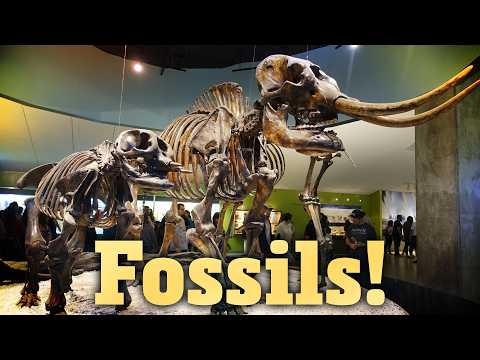 Watch on YouTube →
Overview
Crash Course Geology, hosted by Sage, explains that fossilization is a rare process requiring specific conditions, most commonly rapid burial in sediment. Fossils preserve remains or traces of organisms at least 10,000 years old, offering snapshots of past life and environments. Key formation processes include permineralization, carbonization, and preservation in amber, tar pits, or ice, with rapid burial and hard body parts increasing the odds of fossilization.
Key takeaways
- Fossils are defined as preserved remains or traces of organisms at least 10,000 years old.
- The most common fossilization process involves rapid burial in sediment, preventing decomposition and preserving the organism.
- Permineralization is a key process where minerals replace organic material, turning bone and wood into stone.
- Carbonization creates a thin carbon film from organic matter, often preserving delicate structures like leaves and insects.
- Trace fossils, such as footprints and burrows, provide evidence of ancient behaviors, not just physical remains.
- Exceptional preservation can occur in amber, ice, tar pits, or through mummification, preserving soft tissues and even whole bodies.
Chapters
0:00
Introduction to Fossils and Their Rarity
- Fossils are preserved remains or traces of organisms at least 10,000 years old, including bones, skin, feathers, footprints, and nests.
- Fossilization is a rare event, described as winning the 'geological jackpot', requiring specific conditions.
- The Notasaur fossil, preserved for 110 million years, exemplifies how a creature's 'worst day' can lead to fossilization.
2:00
Mechanisms of Fossil Formation
- Permineralization occurs when minerals from groundwater seep into and replace organic material, creating a denser 3D mold.
- Compression and carbonization transform lighter organisms like leaves and insects into a carbon silhouette under sediment pressure.
- Trace fossils preserve behavioral evidence like footprints or burrows, distinct from body part preservation.
7:26
Exceptional Preservation and Factors Influencing Fossilization
- Exceptional fossils can preserve whole bodies through methods like amber entrapment, mummification in deserts, or freezing in ice.
- Rapid burial by sediment and the presence of hard body parts (bones, shells) significantly increase the chances of fossilization.
- Erosion and weathering constantly threaten the fossil record, making discovered fossils even more extraordinary.
Summary, takeaways, and chapters were generated by AI from the video's transcript and may contain errors. The video belongs to its creator, CrashCourse.