Has the World Become Uninsurable?
 Watch on YouTube →
Overview
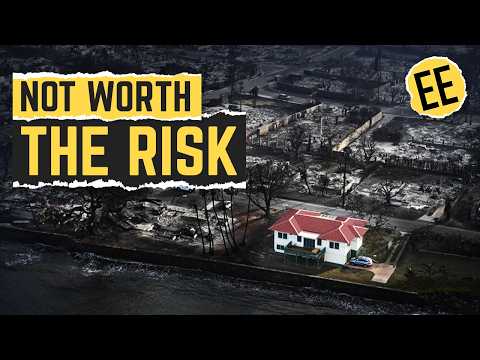
Economics Explained argues that insurance, once a stable economic pillar, is becoming uninsurable due to compounding risks like climate change, geopolitical conflict, and financial volatility. This breakdown, evidenced by rising premiums, reduced coverage, and market exits (e.g., State Farm in California, Farmers in Florida), threatens economic activity by limiting lending, investment, and growth, shifting risk back onto individuals and governments.
Key takeaways
- The number of billion-dollar weather and climate disasters in the US has more than tripled in recent decades compared to the prior four decades.
- Insurance acts as 'economic permission,' enabling activities like construction, financing, and trade; its withdrawal cripples these sectors.
- Insurers are squeezed by increased frequency and severity of climate disasters, rising rebuilding costs due to inflation, and higher reinsurance prices.
- High-cost medical treatments (e.g., gene therapies over $2 million) and an aging population are driving up health insurance claims and premiums.
- When private insurers retreat, governments are often forced to fill the gap, potentially weakening risk signals and encouraging development in hazardous areas.
- Emerging solutions like parametric insurance and incentivizing risk reduction are being explored to address the growing uninsurability crisis.
Chapters
0:00
The Breakdown of Traditional Insurance Models
- Insurance historically relied on local, infrequent, and independent risks, allowing predictable pricing and loss spreading.
- In 2023, the US faced 28 weather/climate disasters exceeding $1 billion damage, up from an average of fewer than nine annually over the past four decades.
- Compounding risks (climate, geopolitical, financial, demographic) make risk prediction and pricing difficult, leading insurers to withdraw coverage.
- Home insurance costs have jumped 10-12% annually, and reinsurance has become significantly more expensive due to heavy losses.
5:05
Insurance as Economic Permission and Its Systemic Impact
- Insurance operates on casino mathematics: premiums collected fund claims, with excess capital invested in stable assets like government bonds.
- Insurers hold over $1.4 trillion in the US for property casualty, financing infrastructure and corporate debt, demonstrating insurance's role in underwriting economic activity.
- Lack of insurance prevents financing, building, shipping, and growing at scale, as seen with mortgage lending and crop insurance.
- Insurers' withdrawal from disaster-prone areas like California and Florida leads to credit drying up, slowing construction, and declining property values.
11:48
Cascading Risks and the Search for New Models
- Climate-related disasters have more than doubled, and 'man-made natural disasters' have nearly tripled, disrupting historical patterns insurers rely on.
- Reinsurers have sharply raised prices due to consistent global insured losses exceeding $100 billion annually since 2017.
- Rising inflation increases rebuilding costs by over 40% (US construction costs), making claims more expensive.
- Health insurance faces similar pressures from advanced treatments (e.g., gene therapies >$2 million) and aging populations, quadrupling premiums since 2000.
- Alternatives like parametric insurance and risk reduction incentives are being explored, but challenges remain in pricing and adoption.
Summary, takeaways, and chapters were generated by AI from the video's transcript and may contain errors. The video belongs to its creator, Economics Explained.