Gene Regulation, BIO105 Introductory Biology, David Champlin, USM
 Watch on YouTube →
Overview
David Champlin explains how cells with the same DNA express different genes because tissue-specific transcription factors bind promoters and help recruit RNA polymerase. He distinguishes the proximal promoter, distal promoter, transcription unit, and coding region, then uses testosterone signaling and a collagen-promoter/PDGF example to show how gene regulation can activate genes in particular tissues.
Key takeaways
- The insulin gene is present in pancreatic and brain cells, but pancreatic transcription factors bind its promoter and enable insulin transcription in the pancreas.
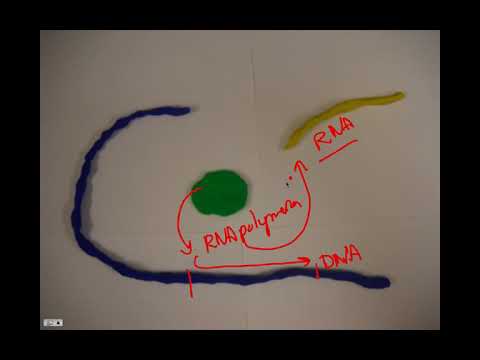
- RNA polymerase transcribes a gene's DNA template into RNA; transcription factors regulate whether RNA polymerase can efficiently engage that gene.
- The proximal promoter helps position RNA polymerase, whereas the distal promoter binds regulatory transcription factors.
- The coding region is part of the transcription unit, and its codons are used later by cytoplasmic ribosomes to make a protein.
- Testosterone can activate certain genes when it binds a transcription factor's receptor, linking hormone signals to changes in gene expression.
- Moving the PDGF gene near a collagen promoter could place it under the control of skin-specific transcription factors, causing inappropriate expression in skin.
Chapters
0:00
Insulin Expression Depends on Pancreatic Transcription Factors
- The insulin gene is present in the DNA of cells throughout the body, but insulin protein is produced in the pancreas.
- Pancreatic transcription factors bind the insulin gene's promoter and help recruit RNA polymerase to activate transcription.
- The DNA sequence stays the same across cells; the presence of different transcription factors helps explain differences between pancreatic and brain cells.
2:30
Promoters Direct RNA Polymerase and Regulate Transcription
- RNA polymerase reads a DNA template and catalyzes RNA synthesis during transcription.
- The proximal promoter helps position RNA polymerase, while the distal promoter provides binding sites for regulatory transcription factors.
- The transcription unit contains the coding region, whose codons are later used by ribosomes in the cytoplasm to synthesize protein.
5:00
Hormone Signaling and Promoter Relocation Can Switch Genes On
- Some transcription factors act through hormone receptors: testosterone binding can activate genes involved in growth during adolescence.
- Champlin compares transcription factors to flashlights that make a gene accessible to RNA polymerase; without the regulatory signal, the gene remains inactive.
- A rearrangement that places the PDGF gene near a collagen promoter could expose it to skin-specific transcription factors and trigger PDGF expression in skin.
Summary, takeaways, and chapters were generated by AI from the video's transcript and may contain errors. The video belongs to its creator, The New Evolution for Everyone.