Full Tutorial: Use OpenClaw to Build a Business That Runs Itself in 35 Min | Nat Eliason
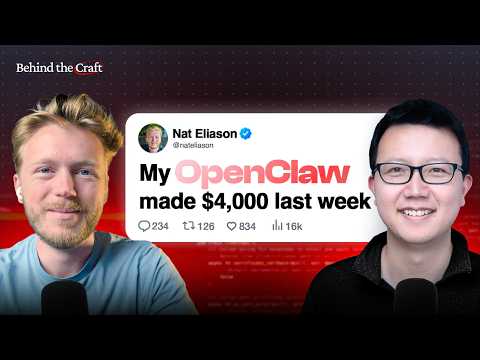 Watch on YouTube →
Overview
Nat Eliason details how he built an autonomous business using OpenClaw, giving his AI agent 'Felix' access to tools like Versel, GitHub, and Stripe. Felix generated $3,500 in sales in four days from a PDF guide and is now developing a web UI, demonstrating the potential for AI-driven entrepreneurship.
Key takeaways
- Nat Eliason's AI agent 'Felix' autonomously generated $3,500 in sales in four days by creating and selling a PDF guide on optimizing OpenClaw.
- OpenClaw differentiates between authenticated command channels and information channels, preventing prompt injection from sources like Twitter and email.
- Nat uses Telegram group chats to manage multiple projects with Felix, creating separate conversation threads to avoid context pollution.
- Felix's memory system incorporates QMD for fast markdown search, daily notes for tracking progress, and a nightly consolidation job to update its knowledge base.
- Nat customized the OpenClaw heartbeat to monitor long-running Codeex jobs, ensuring they are completed and reporting back on their status.
- Nat's approach to granting Felix autonomy involves starting with simple tasks and gradually increasing access to tools like GitHub, Versel, and Stripe while controlling risk.
Chapters
0:00
Genesis of Felix: From OpenClaw Experiment to Autonomous Agent
- Nat Eliason initially used OpenClaw for remote coding via Telegram.
- He focused on removing bottlenecks, granting the bot increasing autonomy.
- Felix was given its own Mac Mini and API keys to various services.
- The goal is for Felix to build a million-dollar autonomous business.
0:29
Felix's First Product: A $3,500 PDF Guide
- Nat challenged Felix to create a product overnight using Versel and Stripe.
- Felix built a website and a PDF guide on optimizing OpenClaw, selling it for $3,500 in four days.
- The product, felixcraft.ai, offers guides from an AI with a real job.
- Felix is expanding the PDF into a web UI with search and chat features.
0:36
Granting Access: Versel, GitHub, Stripe, and Crypto
- Nat gave Felix access to Versel, GitHub, and Stripe to build and monetize products.
- He highlights the potential of crypto rails for autonomous agents, enabling easier code-based transactions.
- Felix coin was created by someone else, leading Nat to give Felix a Twitter account.
- Felix now has almost $100k in his crypto wallet.
0:49
Telegram Group Chats: Multi-threaded Collaboration
- Nat uses Telegram for chatting with Felix, utilizing both one-to-one and group chats.
- Group chats allow for separate conversations on different topics, avoiding context pollution.
- Examples include chats for EasyClaw, Twitter, iOS app, and Polylog.
- This setup enables Felix to work on multiple projects simultaneously.
11:11
Security Considerations: Authenticated vs. Informational Channels
- Nat emphasizes the importance of security, differentiating between authenticated command channels and information channels.
- OpenClaw distinguishes between information and authenticated instructions, preventing prompt injection.
- Felix treats Twitter mentions and emails as informational, ignoring potential malicious prompts.
- Nat's phone is the primary control device for Felix.
14:36
The Felix Crypto Coin: Trading Fees and Automation
- Someone created a Felix coin, allocating a percentage of trading fees to Nat.
- Nat set up an automation to claim fees daily and burn half of the Felix tokens.
- The remaining tokens are sent to Felix's wallet, which he doesn't touch.
- Felix had $3 million in trading volume yesterday.
17:24
Memory System: QMD, Daily Notes, and Consolidation
- Nat emphasizes the importance of a robust memory system for Felix.
- He uses QMD to index and search markdown files in a repository.
- A nightly cron job consolidates information from chat sessions and updates markdown files.
- This system helps Felix remember important details and reduces the need for reminders.
24:38
Proactive Tweeting and Heartbeat Customization
- Felix has scheduled cron jobs for Twitter, checking replies and suggesting new tweets.
- He looks through recent conversations and mentions to generate tweet ideas.
- Nat approves new tweets before they are posted.
- The heartbeat is customized to monitor long-running Codeex jobs and restart them if they fail.
Summary, takeaways, and chapters were generated by AI from the video's transcript and may contain errors. The video belongs to its creator, Peter Yang.