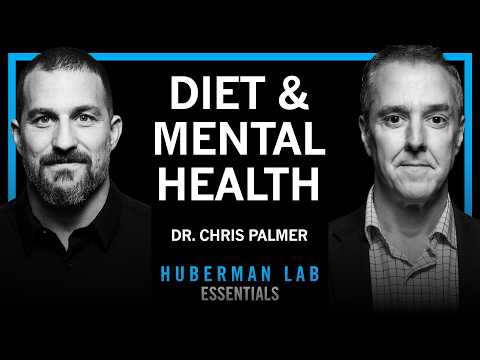
Essentials: Diet & Nutrition for Mental Health | Dr. Chris Palmer
 Watch on YouTube →
Overview
Dr. Chris Palmer discusses the profound impact of nutrition on mental health, drawing from his personal journey with metabolic syndrome and his clinical experience treating treatment-resistant mental illnesses. He highlights the ketogenic diet's efficacy, particularly its role in stimulating mitophagy and mitochondrial biogenesis, which he posits as key to its therapeutic benefits for conditions like epilepsy, depression, and schizophrenia.
Key takeaways
- Dr. Chris Palmer's personal experience with metabolic syndrome, resolved by the Atkins diet, led him to explore nutrition's impact on mental health.
- Ketogenic diets have shown remarkable efficacy in treating treatment-resistant mental illnesses, including schizoaffective disorder, depression, and bipolar disorder.
- The ketogenic diet's therapeutic benefits are linked to its ability to stimulate mitophagy and mitochondrial biogenesis, improving cellular energy production and function.
- Mitochondria are central to brain health, influencing neurotransmitter production, hormone synthesis, inflammation, and stress response.
- While severe mental health conditions require medical supervision for dietary interventions, simple carbohydrate restriction can improve mood and energy for individuals experiencing burnout.
- The historical use of fasting and the ketogenic diet for epilepsy underscores nutrition's long-standing role in treating neurological disorders.
Chapters
0:00
Introduction to Nutrition and Mental Health
- Andrew Huberman introduces Dr. Chris Palmer for a discussion on diet and mental health.
- The intimate and causal link between long-term nutrition and mental well-being is explored.
- Palmer shares his personal history with mental illness and metabolic syndrome.
2:25
Palmer's Personal Health Transformation
- Dr. Chris Palmer experienced OCD, depression, and suicidality in his youth.
- Diagnosed with metabolic syndrome (high blood pressure, lipids, pre-diabetes) despite a low-fat diet and exercise.
- Switching to the Atkins diet (low-carbohydrate) resolved his metabolic syndrome within 3 months.
- Noticed dramatic improvements in mood, energy, concentration, and sleep after dietary change.
5:29
Ketogenic Diet for Treatment-Resistant Mental Illness
- Palmer began recommending low-carbohydrate diets to patients with treatment-resistant mental illness.
- Observed significant antidepressant effects, with some patients experiencing hypomania.
- A 33-year-old man with schizoaffective disorder saw his symptoms (hallucinations, delusions) resolve on a ketogenic diet.
- This patient lost 160 pounds and was able to taper off long-term medications.
11:02
Ketogenic Diet Mechanisms and Targets
- Ketogenic diets aim to achieve ketosis, which Palmer found crucial for clinical benefit.
- Highly processed foods, high in sugar and fat, are detrimental to metabolic and mental health.
- Target blood ketone levels: >0.8 mmol for depression, >1.5 mmol for psychotic and bipolar disorders.
- The ketogenic diet is an established treatment for epilepsy, developed in 1921.
14:09
Mitochondria: The Brain's Motherboard
- Mitochondria are crucial for energy production, neurotransmitter regulation (serotonin, dopamine, glutamate, acetylcholine), and hormone synthesis (cortisol, estrogen, testosterone).
- They play a role in gene expression, inflammation control, and the stress response.
- The ketogenic diet stimulates mitophagy (removing defective mitochondria) and mitochondrial biogenesis (creating new ones).
- Improved mitochondrial health is proposed as the mechanism for the ketogenic diet's efficacy in neurological and psychiatric disorders.
29:06
Dietary Interventions for General Well-being
- For general burnout or subclinical mood issues, carbohydrate restriction can be beneficial.
- Serious mental disorders require professional guidance for dietary changes and potential medication adjustments.
- Palmer advocates for considering nutrition as a primary tool in mental health treatment.
- He emphasizes the need for structured support when using diets to treat severe conditions.
Summary, takeaways, and chapters were generated by AI from the video's transcript and may contain errors. The video belongs to its creator, Andrew Huberman.